
It's a question we hear all the time, and it’s one rooted in hope: are juvenile records sealed automatically once a person turns 18? The straightforward answer, especially here in Georgia, is no. It's a common misconception that causes a lot of problems down the road. Getting a juvenile record sealed isn’t something that just happens; it requires action.
Understanding Juvenile Records and Sealing
Many people assume a juvenile record just fades away with time. In reality, these records can absolutely follow a young person into adulthood, creating real roadblocks to getting a job, applying for college, or even renting an apartment. While the juvenile justice system was designed to focus on rehabilitation, not lifelong punishment, today’s digital world means those records are more accessible than ever.
Think of an unsealed juvenile record like a personal journal left open on a coffee table—anyone who walks by can pick it up and read it. Sealing that record is like locking the journal away in a safe. The journal still exists, but nobody can access its contents without the key.
This difference is critical. Sealing restricts access; it doesn’t destroy the record entirely. That's a separate process called expungement, which is much rarer in Georgia.
Why You Have to Be Proactive About Sealing
The responsibility for getting a record sealed falls squarely on the individual. The courts won't automatically review a case when someone turns 18 and seal it for them. If the necessary steps aren't taken, a mistake made as a teenager could stay visible for years, long after you've moved on.
To get started, it helps to understand the specific language the courts use. These terms can be confusing, but knowing what they mean is the first step toward clearing a name.
Here's a quick guide to break down the key terms you'll encounter when dealing with juvenile records in Georgia.
Understanding Juvenile Record Terminology in Georgia
| Term | What It Means in Practice | Common Misconception |
|---|---|---|
| Juvenile Record | A confidential history of a minor's interactions with the juvenile justice system. | That it automatically vanishes at age 18. |
| Sealing | The process of making a juvenile record private and inaccessible to the public. | That the record is physically destroyed (that's expungement, which is different). |
| Adjudication | The juvenile court’s version of a "guilty" verdict in adult criminal court. | That it's the same thing as a criminal conviction (it is legally distinct). |
Getting a handle on this terminology clarifies what sealing actually accomplishes. It’s a powerful tool that prevents a past mistake from defining a person’s future, offering a genuine second chance as they step into adulthood.
What Sealing a Juvenile Record Really Means
To get a handle on what it means to have a juvenile record sealed, we first need to be clear on what “sealed” actually means in the real world. Think of it like this: sealing a record is like locking a sensitive document away in a filing cabinet. Expunging a record is like putting that same document through a paper shredder.
When a record is sealed, the information still technically exists, but getting access to it becomes incredibly difficult. It’s not totally erased from existence. This is a critical distinction because it sets realistic expectations for what this process can—and can't—do for someone's future.
Sealing vs. Expungement
People often throw these terms around interchangeably, but sealing and expungement are two completely different actions. As mentioned, a sealed record is just hidden from public view, not destroyed. Under very specific circumstances, law enforcement and certain government agencies might still be able to see it.
Expungement, on the other hand, is the total and complete destruction of the record. The file is gone, period. Here in Georgia, true expungement of juvenile records is extremely rare. For almost everyone, sealing is the primary way to move on from a past mistake. You can read a more detailed breakdown of the difference between expunged and sealed records to understand these crucial differences.
Sealing a juvenile record makes it invisible to the general public. For most practical purposes—like applying for a job, an apartment, or college—it's as if the incident never even happened.
That separation from public view is exactly the point. It’s designed to prevent a youthful mistake from shadowing someone for the rest of their life.
Who Can Still See a Sealed Record?
Even after a juvenile record is sealed in Georgia, it doesn't just vanish into thin air. While it's locked away from the public, a very small and specific group of people may still have access.
So, let's break down who is blocked and who might still get a look.
Who CANNOT typically see a sealed record:
- Most Employers: Companies running standard background checks for a job won't see a sealed juvenile record.
- Landlords: Your sealed record will not pop up on rental history checks when you're trying to get an apartment.
- Colleges and Universities: Admissions offices generally cannot access these confidential files.
Who MIGHT still be able to see a sealed record:
- Law Enforcement Agencies: Police and prosecutors can sometimes access sealed records for official criminal justice purposes.
- The Military: All branches of the armed forces conduct deep background checks, and recruiters may have access during the screening process.
- Certain Government Jobs: If you're applying for a position that requires a high-level security clearance, the investigation is far more thorough and could uncover sealed records.
Understanding this is key. Sealing offers powerful protection for day-to-day life, opening doors to jobs, housing, and education that might otherwise be shut. It’s how the system provides a genuine fresh start, ensuring a mistake made as a kid doesn't unfairly define you as an adult.
So, Can Your Juvenile Record Be Sealed?
This is the first and most important question to answer. Getting a juvenile record sealed isn't an automatic process—it all comes down to the specifics of a case. The courts in Georgia are going to look at several key factors before they make a decision.
The two biggest things they’ll consider are the type of offense and how the case ended. For example, if charges were dismissed or the case was discharged without an adjudication (which is the juvenile court's version of a guilty verdict), the individual is in a much stronger position. Those outcomes mean the system didn't find the person delinquent, making them a prime candidate for sealing the record.
But what if there was a finding of delinquency? Sealing is still on the table. In that situation, the court will look at how serious the offense was and, crucially, whether the person has kept a clean record since. That’s where the waiting period comes in.
The Waiting Period and Other Key Factors
In Georgia, an individual generally has to wait at least two years after the case is officially closed and they've finished everything the court ordered. During that two-year stretch, they can't have been convicted of any new felony or misdemeanor, and they can't have another delinquency case pending.
Think of this waiting period as a chance to prove a clean slate. It gives a person an opportunity to show the court that whatever happened in the past was a one-time mistake and that they are on the right track now.
Meeting this two-year "clean slate" requirement is huge. It sends a strong message to the judge that the person has been rehabilitated and that sealing their record will help them continue moving forward in a positive direction.
Are There Offenses That Can't Be Sealed?
While most juvenile offenses can be sealed, some serious charges will make it much tougher, or even impossible. Georgia law is very specific that records for certain severe, felony-level acts committed by a juvenile might not be eligible.
These usually include offenses that would be considered serious violent felonies if an adult had committed them, such as:
- Aggravated assault or battery
- Certain sexual offenses
- Crimes involving serious bodily harm
The whole point of sealing juvenile records is to support rehabilitation and make sure a youthful mistake doesn’t follow someone for the rest of their life. It's a widely accepted idea; in fact, about three-quarters of law enforcement agencies across the U.S. have policies that allow for sealing. Still, the system isn't perfect. It's worth noting that fewer than a quarter of those agencies require written reports for every single juvenile contact, which can sometimes create inconsistencies. You can actually explore more data on juvenile record-keeping policies to see the bigger picture.
Ultimately, figuring out if a specific record can be sealed requires a hard look at Georgia's laws and the unique facts of the case. The nature of the charge, the final outcome, and what a person has done since the case closed are all pieces of the puzzle.
A Look at the Record Sealing Process
Navigating the court system can feel like trying to find your way through a maze blindfolded. This section is designed to give a clear, step-by-step guide on how a Georgia court is petitioned to seal a juvenile record. We'll walk through the entire journey, from filing the first piece of paper to getting a final decision, so you know what to expect.
The whole thing kicks off when a petition to seal is filed with the juvenile court that handled the original case, whether that was in Forsyth County, Cobb County, or somewhere else nearby. This isn't just a simple form—it's a formal request asking a judge to restrict public access to the record, and it has to be done right.
Gathering Your Documents and Filing the Petition
Before a petition can even be filed, all the paperwork has to be in order. This is a critical first step, and the details really matter.
Typically, the petitioner (the person whose record it is) will need to pull together:
- A copy of the original court disposition, which is the document showing how the case ended.
- Proof of successful completion of everything the court ordered, like probation, fines, or community service.
- The official petition form, filled out completely and without any errors.
Once the petition and all the supporting documents are submitted to the clerk of the juvenile court, the process officially starts. The court will then notify the prosecutor's office, giving them time to look over the request and decide if they want to support it or fight it. Our guide on how to seal criminal records provides a bit more background on the initial steps in these kinds of cases.
The Court Hearing and the Judge's Decision
After the petition is filed, the court might schedule a hearing. This isn't always a requirement. If the prosecutor doesn't object and the judge agrees all the criteria are met, they might seal the record without anyone ever setting foot in a courtroom.
But if the prosecutor objects or if the judge simply wants more information, a hearing will be scheduled. This is the chance to make the case for why the record should be sealed. The judge will weigh several factors, like what the original offense was, how the individual has conducted themself since the case closed, and the real-world impact the record is having on their future. The prosecutor gets to present their side, too. In the end, it’s the judge who makes the final call.
This flowchart gives you a good visual of the general progression, showing how the offense, the outcome, and the time that has passed all play a role.
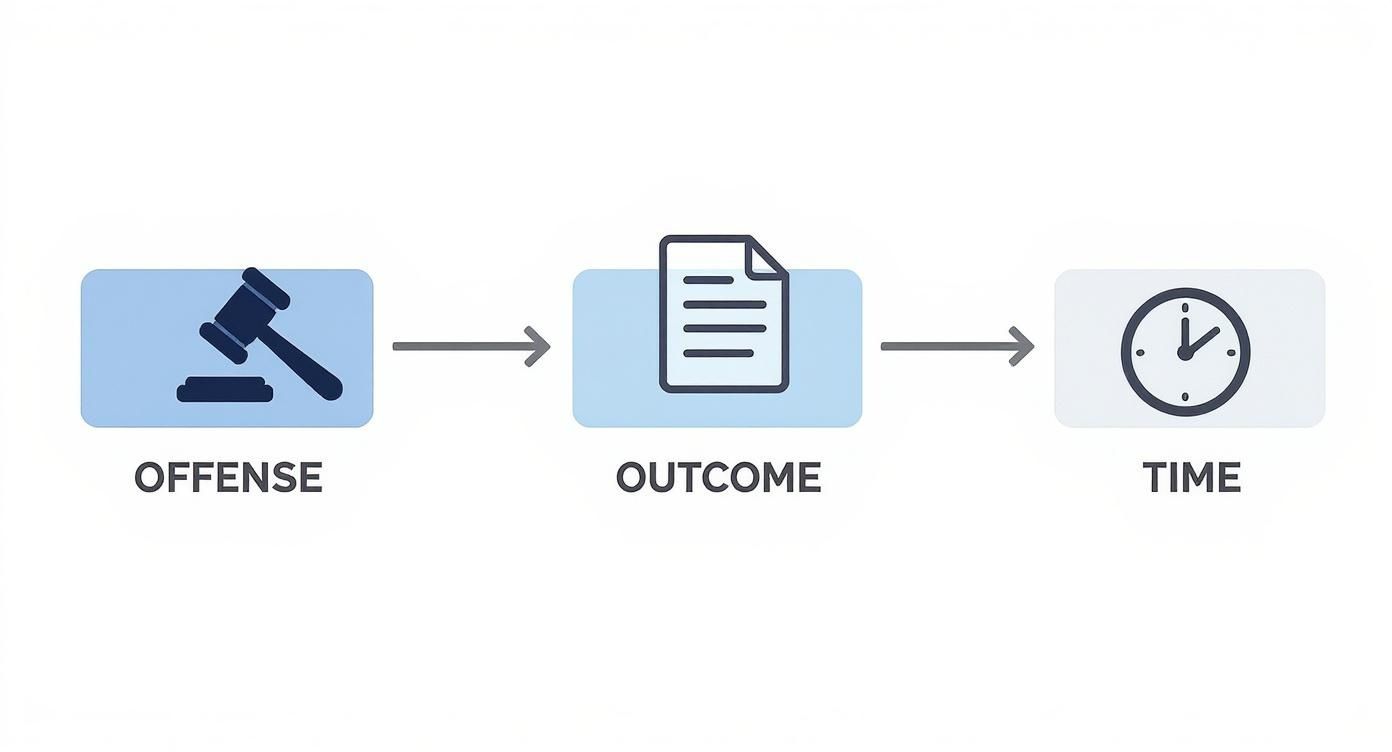
As you can see, sealing a record is a structured journey, not something that just happens automatically.
How long does it all take? That can vary a lot. In some Georgia counties, the process might wrap up in a few months. In busier jurisdictions, it could take closer to a year. It's a system that requires proactivity, which is a bit different from how some other countries handle it. For example, China’s system automatically seals juvenile records for misdemeanors with sentences under five years, without the individual having to apply.
How Sealing a Juvenile Record Impacts Your Future

Getting a juvenile record sealed is a huge deal. It’s so much more than just a box to check off; it’s about clearing a path forward so a past mistake doesn't define a young person's entire life. The benefits aren't just theoretical—they are tangible, real-world advantages that can completely change someone's future.
Think of it like hitting a reset button. When a juvenile record is sealed, it triggers a positive ripple effect that touches almost every important part of life.
Unlocking Future Opportunities
The biggest and most immediate impacts are on things like jobs, school, and even finding a place to live. An unsealed record can be a massive roadblock. But once it's sealed, an individual can legally and truthfully say they were not adjudicated for that offense on most standard applications.
This gives them a clean slate for:
- Applying for Jobs: The vast majority of employers running a background check will never see the sealed record.
- Seeking Higher Education: College and university applications are far less likely to be complicated by a past offense.
- Securing Housing: Landlords doing routine checks won't find the sealed information, making it easier to get an apartment.
At its core, sealing a record gives someone the freedom to move on without the constant weight of a mistake hanging over them. It lets them build a life based on who they are now, not who they were then.
The negative consequences of an open juvenile record are well-documented. Research consistently shows that kids with records often struggle to find full-time work and see their wages grow much slower. Those records are also tied to poorer educational outcomes, including lower college enrollment rates.
On the flip side, studies also show that when it's easier to clear these records, the chances of attending and graduating from college go up significantly.
If you're trying to figure out how to have a criminal record expunged, knowing just how much it can change things is the first step. For employers, understanding what shows up in their searches is also critical. A good guide on criminal record checks for employers can shed light on that process. Ultimately, sealing a juvenile record is one of the most powerful tools available for securing a true second chance.
When Do You Need a Lawyer to Seal a Juvenile Record?
While sealing a juvenile record in Georgia is something a person can technically handle on their own, the process isn't always as simple as filling out a few forms. The path from filing the petition to getting a judge's signature can have unexpected twists and turns.
For instance, what happens if the prosecutor’s office objects to the request? That immediately adds a layer of complexity, turning a simple administrative process into a formal argument. Even small mistakes on the paperwork can cause major delays or, even worse, get the petition denied outright.
When to Consider Getting Assistance
Navigating court procedures can be intimidating. A person might want to think about getting professional guidance if they run into specific roadblocks. A knowledgeable attorney can manage the hurdles and make sure every document is filed correctly and on time.
An individual should seriously consider hiring a lawyer in these situations:
- The Prosecutor Objects: When the state formally opposes sealing a record, preparing for a hearing is necessary. This isn't just a conversation; it's a proceeding where a persuasive case needs to be made.
- Your Case is Complicated: If a record involves multiple charges, was transferred to Superior Court, or has other unusual circumstances, an attorney can figure out the best way forward.
- You’re Not Sure If You’re Eligible: Doubts about whether the two-year waiting period or other specific Georgia requirements have been met can be a major source of stress. Getting clear answers from the start is critical.
When it comes to juvenile records, having access to genuine criminal law expertise can make all the difference in navigating the system effectively. Ultimately, having an experienced guide in your corner gives you the confidence that you're taking the right steps toward a fresh start.
Common Questions About Sealing Juvenile Records
Even after you get the basics down, you’re bound to have more specific questions. When you're trying to figure out the real-world impact of sealing a juvenile record, the details are everything. Here are a few straightforward answers to the questions we hear most often from families.
How Long Does the Record Sealing Process Take in Georgia?
The timeline for sealing a juvenile record in Georgia can really vary. It's not a one-size-fits-all answer because it depends heavily on the county court's caseload, the specifics of a case, and whether any snags pop up along the way. Generally speaking, a person should prepare for the process to take anywhere from a few months to over a year.
A few things can slow it all down:
- Court Backlog: Busier courts, like those in Forsyth or Cobb County, often have longer wait times simply due to the volume of cases they handle.
- Prosecutor Objections: If the prosecutor objects to sealing the record, it triggers a formal hearing, which adds another step and extends the timeline.
- Paperwork Accuracy: Simple mistakes or missing information on the petition can cause major delays while everything gets sorted out.
Can a Sealed Juvenile Record Be Used Against Me Later?
For most situations a person will encounter in daily life—like applying for a job, renting an apartment, or getting into college—the answer is no. Once a record is officially sealed, it's treated as if it never happened for those purposes. This is the single biggest benefit of getting it done.
However, it's not a total wipe. There are some important exceptions to be aware of. Law enforcement agencies and prosecutors can typically still access these records for official criminal justice matters. For instance, a sealed juvenile adjudication could potentially be brought up during sentencing if a person is convicted of a new crime as an adult.
Think of a sealed record as a powerful shield that protects a person's public-facing life. It’s not a complete erasure, but understanding its limitations is just as critical as knowing its benefits for moving forward.
Do I Have to Disclose a Sealed Offense on Applications?
In most cases, a person can legally and honestly answer "no" when an application asks if they have a criminal record. This applies to the vast majority of jobs, educational programs, and housing applications.
But always read the question carefully. Some applications for highly sensitive positions, like those requiring a government security clearance or certain professional licenses (like for law or medicine), may have stricter disclosure rules and phrase their questions in a very specific way. When in doubt, it's always best to be sure.
Navigating the fine print of sealing a juvenile record can feel overwhelming. If you have questions about a specific situation in Cumming, Alpharetta, or the surrounding North Georgia communities, the experienced team at Brian Hansford Law is here to help clear things up. Contact us for guidance on securing your future.
