
A fraud arrest usually doesn't happen in a calm, orderly moment. It happens in the middle of work, at home, during a traffic stop, or after a call from an investigator who says they “just want to clear a few things up.” Then you're in a patrol car, a holding cell, or standing in front of a judge trying to understand what just happened.
If you've been arrested for fraud in Georgia, the first question usually isn't about legal theory. It's much more immediate. Can I get out? What should I say? Is this state court or federal court? Did they already charge me, or are they still building the case? Those are the right questions.
The first 72 hours matter more than is often realized. What you say, who you call, what records you touch, and how quickly your lawyer gets involved can shape bond, charging decisions, and the evidence trail that prosecutors later rely on. In North Atlanta, including Alpharetta, Roswell, Johns Creek, Milton, Cumming, Marietta, and the surrounding counties, fraud cases often move fast and carry consequences far beyond a fine.
The Shock of an Arrest What You Need to Know First
The first mistake people make after a fraud arrest is talking too much. They try to explain. They try to sound cooperative. They think that if they can clear up a misunderstanding on the spot, the whole thing might go away.
In fraud cases, that approach usually makes things worse.

Many online articles spend their time describing fraud generally and never answer the questions people have right after an arrest. That gap matters. Recent federal reporting shows why people need immediate procedural guidance, including the difference between a complaint and an indictment, how pretrial release works, and why an arrest warrant matters, especially where a case may involve state and federal exposure in metro Atlanta, as described in the IRS report on an arrest made on a federal complaint.
What to do immediately
Start with four moves.
- Say you want a lawyer: Use plain words. “I want to remain silent and I want a lawyer.” Then stop talking.
- Don't explain documents or transactions: Fraud cases often turn on wording, timing, and intent. A rushed explanation can become the prosecution's roadmap.
- Don't ask family to clean up records: Deleting emails, texts, accounting files, app data, or business records can create a separate problem fast.
- Don't consent to extra searches if officers ask: Be polite. Don't argue. Just don't volunteer access.
Practical rule: Silence is not an admission. It's how you keep the government from building intent out of your own words.
Why silence matters in fraud cases
Fraud charges usually depend on intent, knowledge, and what prosecutors claim you meant to do. That's different from many street-level arrests where the issue is whether something was found on you or in a car. In a fraud case, investigators often already have records. They may have bank statements, emails, merchant data, account applications, payroll records, insurance forms, or phone extractions.
What they may still need is your explanation.
That's why statements like “I was only borrowing it,” “my employee handled that,” “I meant to pay it back,” or “I didn't know the account was in that name” can become central evidence. Even a partial denial can lock you into a version of events before your lawyer sees the paperwork.
The right frame of mind
You do not need to solve the case from the booking desk. You need to protect it from getting worse.
That means thinking in this order:
- Release
- Charge review
- Evidence preservation
- Defense strategy
Families often panic and start calling employers, alleged victims, banks, or investigators. That usually backfires. Keep the circle tight, preserve records, and get defense counsel involved before anyone starts trying to “fix” things.
Your Timeline from Arrest to Arraignment in Georgia
Once the arrest happens, the process gets mechanical very quickly. The pace can make people feel like they have no options, but you do have rights at each stage. Knowing what usually happens in Forsyth County, Cobb County, Fulton County, or nearby courts helps you stay calm and avoid costly mistakes.
Here's the basic sequence.
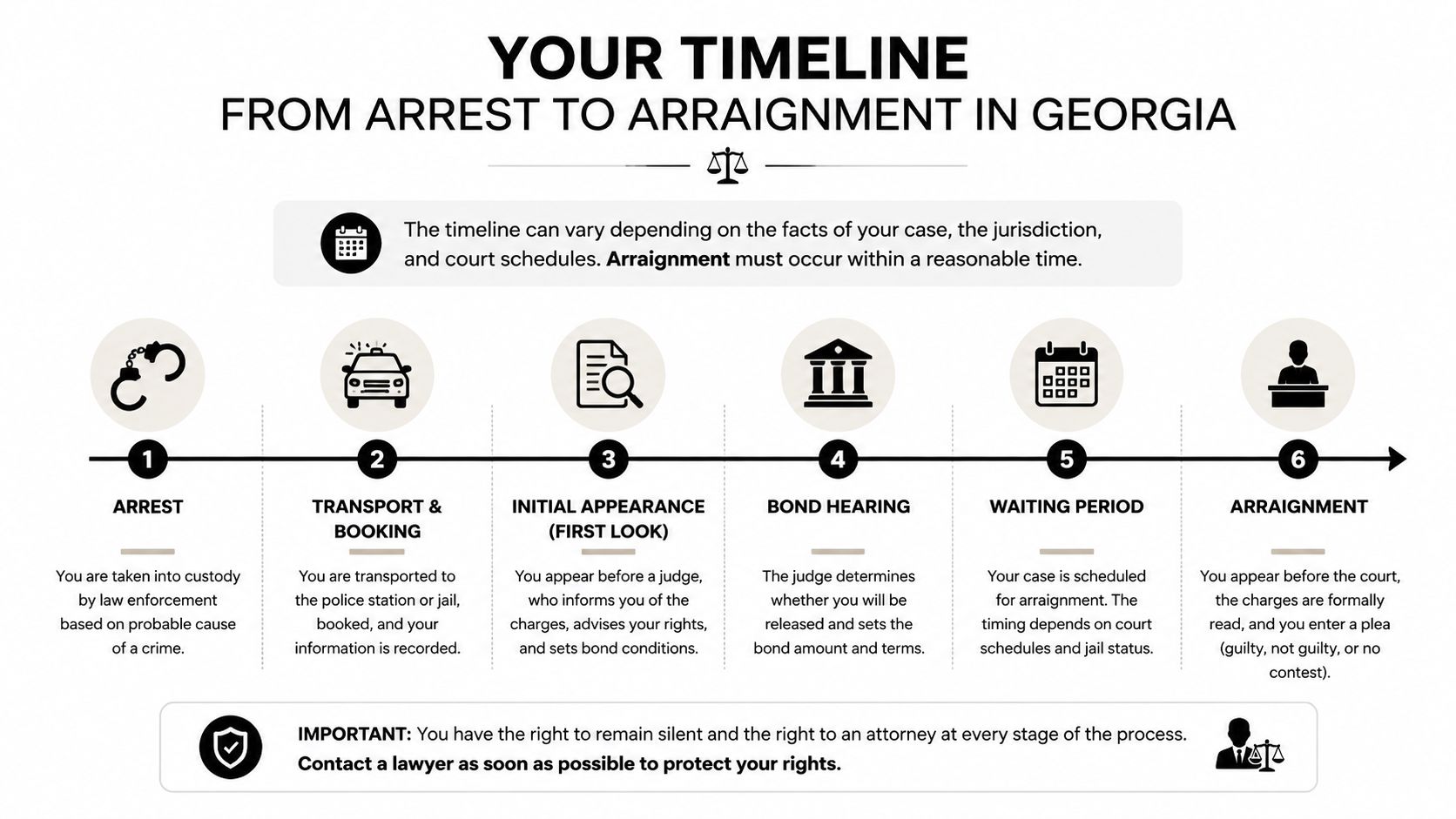
First hours after booking
Booking usually includes fingerprinting, photographs, basic identifying information, and property intake. If the allegation involves business records, identity misuse, access devices, or electronic transfers, don't assume the arresting agency is the only player involved. Local police may be working with state investigators or federal agents.
During this stage:
- Expect routine questions: Name, date of birth, address, medical needs. Those are different from case questions.
- Watch for conversational questioning: Officers often keep talking casually after formal Miranda warnings or while moving you through intake.
- Ask how bond is being handled: Some charges may have a standard bond process. Others need a judge.
Bond and first appearance
For many people arrested for fraud, the first urgent goal is release. Whether that happens quickly depends on the charge, the court, your record, and whether prosecutors argue that you present a flight risk, a financial risk, or a witness-contact problem.
A first appearance is often where the court addresses the charge, counsel, and bond issues. If you want a plain-English overview of that hearing, this guide on what happens at an arraignment hearing is a useful starting point.
The practical question isn't just “Can I bond out?” It's “What conditions will the judge attach when I do?”
Those conditions can include no-contact orders, limits on business activity, travel restrictions, surrender of passports, or instructions not to access certain accounts or platforms. In a fraud case, those limits can affect your ability to work almost immediately.
Complaint cases and indictment cases
One of the biggest points of confusion is whether you were arrested on a warrant, a complaint, an accusation, or after an indictment. Those aren't small technical differences. They can affect how quickly formal charges advance and how your lawyer responds in the first few days.
A complaint-led case often means the government moved first and is still organizing the broader charging theory. A post-indictment arrest means prosecutors have usually spent more time building the file before taking you into custody.
That distinction changes the defense work in the first 72 hours:
| Stage | What it usually means for the defense |
|---|---|
| Complaint or warrant arrest | Move fast on bond, preservation of records, and early factual review |
| Accusation or indictment already filed | Analyze charging language, possible co-defendant issues, and discovery demands |
| State case with possible federal overlap | Be careful about statements that could affect both matters |
What works in the first 72 hours
The strongest early response is disciplined and boring. That's a good thing.
- Preserve everything: Emails, texts, invoices, payroll records, app messages, logins, calendars, contracts.
- Create a timeline privately for your lawyer: Don't post it online. Don't send it to witnesses.
- Identify access points: Who had passwords, devices, cards, signatures, or authority.
- Stop discussing the facts on recorded jail calls: Those calls are not private.
A lot of damage in fraud cases happens after arrest, not before. People call a business partner, ask a relative to move funds, or text a witness with “remember what really happened.” Prosecutors love those messages.
Common Types of Fraud Charges in North Atlanta
“Fraud” sounds like one accusation, but it isn't. In Georgia courts, that word can cover very different allegations with very different proof problems. The label on the warrant matters. So does the alleged loss, the type of records involved, and whether the prosecution says someone used another person's identity or account information.
Charges people commonly mean when they say fraud
In North Atlanta courts, fraud-related arrests often involve allegations such as:
- Financial identity fraud: Using another person's identifying information in a transaction or account-related setting.
- Credit or debit card misuse: Charges tied to unauthorized use, possession, or transaction activity.
- Insurance-related misrepresentation: Claims, applications, or billing issues where the state says false information was used.
- Forgery and false documents: Allegations involving checks, signatures, business records, payroll documents, or submitted forms.
Some cases look like theft with paperwork. Others are prosecuted as white-collar offenses because the government claims deception happened before the money moved. If you want a broader definition of how these cases fit into the criminal system, this explanation of what is considered a white-collar crime helps frame the issue.
Why digital evidence now matters so much
Modern fraud cases are rarely built on one witness alone. They're often built on electronic trails. That can include account access logs, transaction histories, IP-based records, email headers, banking activity, cloud documents, payroll systems, messaging apps, and device data.
Federal enforcement trends reflect that focus. The DOJ's Health Care Fraud Unit reported cases in 2025 involving more than $15 billion in intended losses, and the IRS highlighted major fraud sentencings including one case with a 20-year sentence tied to defrauding victims of more than $14 million, as discussed in Wiley's review of the DOJ Fraud Section year in review.
That doesn't mean every person arrested for fraud in Alpharetta, Cumming, or East Cobb is facing a large federal case. It does mean prosecutors are trained to organize fraud files around records, loss claims, and digital proof.
Benefit fraud is not the same as classic white-collar fraud
A lot of people hear “fraud” and think fake checks or credit cards. That's too narrow now. Cases involving public benefits, EBT allegations, unemployment claims, nonprofit funds, and other public-money programs raise different issues than a traditional business fraud file.
A defense that works in a merchant dispute may fail completely in a benefit-fraud case because the records, rules, and agency witnesses are different.
That's why the first defense question shouldn't be “How do I beat a fraud charge?” It should be “What kind of fraud case is this?” A forged document case, an insurance case, an access-device case, and an alleged misuse of public funds may all carry the same label in casual conversation, but they don't defend the same way.
Misdemeanor or felony
In practice, the line between misdemeanor exposure and felony exposure often turns on the exact statute charged, the alleged amount involved, the number of transactions, and whether the case includes identity misuse, multiple claimed victims, or records the state says were intentionally falsified.
Don't guess from the arrest language alone. Fraud warrants are often drafted in broad terms. The actual charging decision may become clearer only after a lawyer reviews the warrant, booking sheet, bond paperwork, and any formal accusation or indictment.
Understanding the Penalties for a Fraud Conviction
The danger in a fraud case isn't limited to jail. A conviction can affect your work, your licensing, your reputation, and your ability to explain yourself later. Even before sentencing, the accusation alone can trigger account freezes, job problems, internal discipline, and public embarrassment.
That's why people looking for a felony defense lawyer in Alpharetta, a misdemeanor defense attorney in Marietta, or urgent court representation in Forsyth County are asking the right question. The penalties can spread far beyond the courtroom.
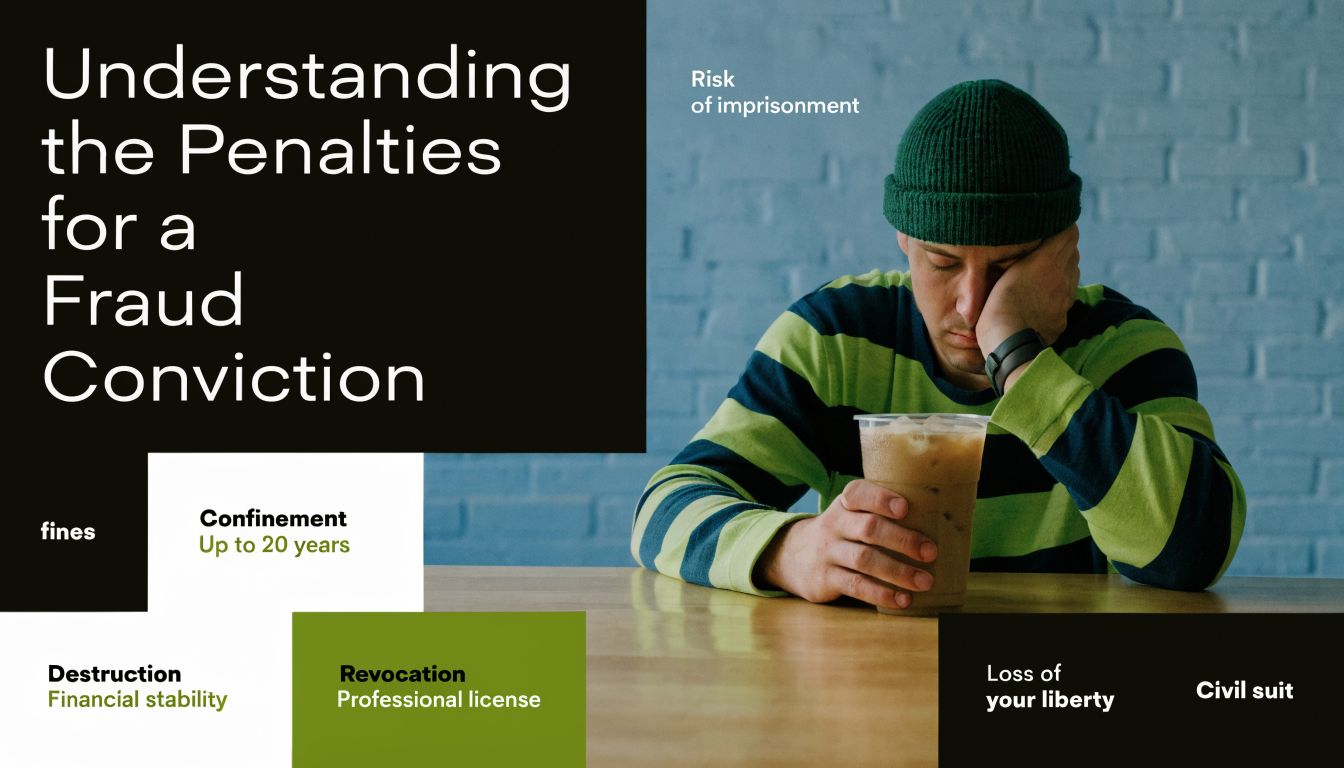
What courts look at in fraud sentencing
Sentencing exposure depends on the specific charge, but certain issues tend to matter repeatedly:
- Alleged loss amount: Prosecutors often structure the case around money.
- Victim count: More claimed victims usually means a more aggressive posture.
- Records and planning evidence: Spreadsheets, applications, emails, or identity documents can make a case look deliberate.
- Restitution claims: Even when the defense disputes intent, courts may still confront loss and repayment arguments.
Why these cases are prosecuted so aggressively
Fraud remains a major enforcement priority. The U.S. Sentencing Commission reported that in fiscal year 2025, 4,804 of 66,662 federal cases involved Theft, Property Destruction, and Fraud, and those cases were up 13% since fiscal year 2021. The Department of Justice's Fraud Section also reported that in 2025 it publicly charged 265 individuals, a sign that these cases often move quickly from investigation to formal charging, according to the U.S. Sentencing Commission quick facts on theft, property destruction, and fraud.
That federal data matters even in local Georgia practice because it shows the larger environment. Prosecutors do not treat fraud like an afterthought.
The hidden penalties people underestimate
Some consequences don't appear on the sentence sheet but still shape your life:
| Consequence | Why it matters |
|---|---|
| Permanent criminal record | Employers, landlords, and licensing boards may see it |
| Professional discipline | Nurses, teachers, brokers, and other licensed professionals may face separate proceedings |
| Reputation damage | Fraud allegations can look worse publicly than many other charges |
| Financial pressure | Restitution, court costs, lost work, and defense costs can all hit at once |
If your case involves a business, a family member's identity, public funds, or digital records, assume the fallout could continue even after the court date unless the defense addresses it early.
State and federal risk aren't always separate
Some fraud allegations stay in state court. Some don't. A case that starts with a local arrest in Roswell, Johns Creek, or Milton can draw broader attention if the facts involve interstate wires, large claimed losses, identity misuse, or multi-person activity.
That's one reason early strategy matters so much. A quick guilty plea to “just get it over with” can create long-term damage that far outweighs the short-term stress of fighting the charge correctly.
Common Defenses Against Fraud Allegations
An arrest doesn't prove a fraud case. The government still has to prove each element, and in these cases the hardest element is often intent. The prosecution may be able to show that money moved or records existed. That doesn't automatically prove a criminal scheme.
A good defense starts by refusing to accept the government's framing.
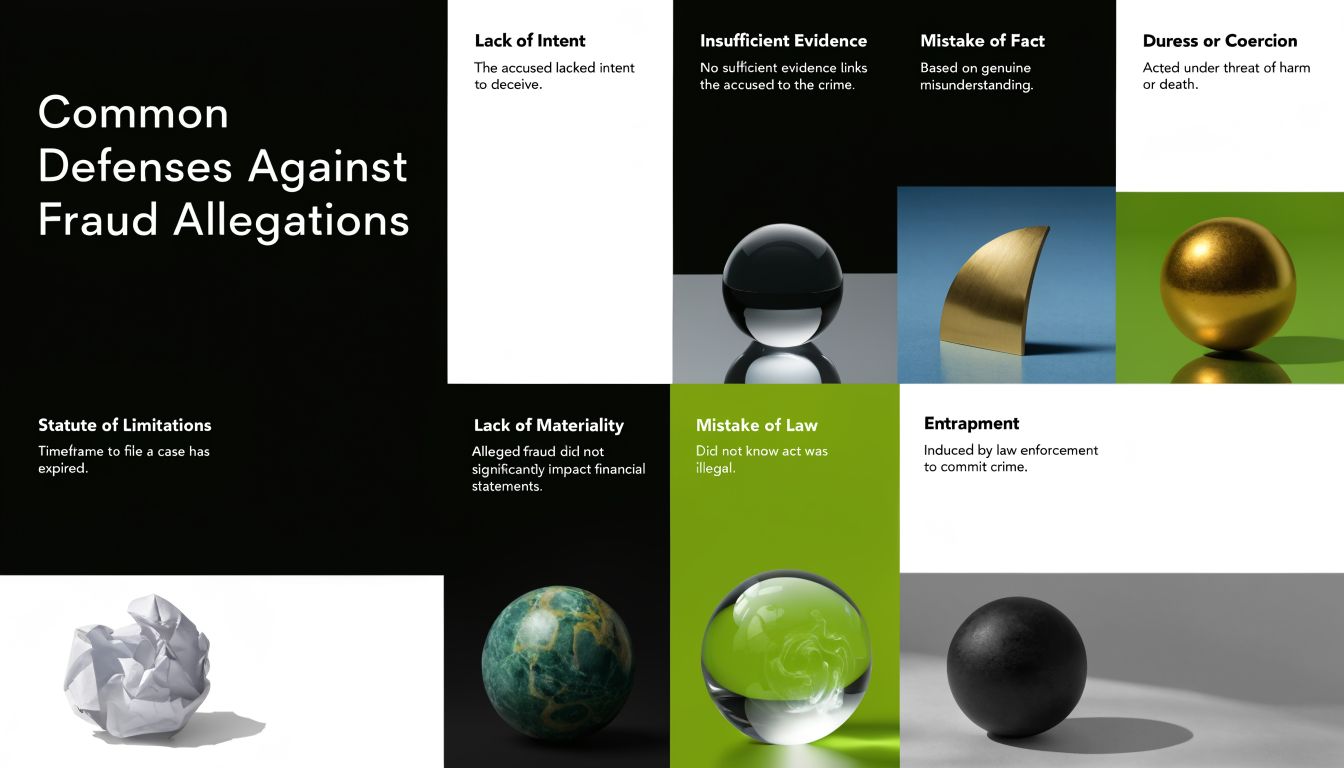
Lack of intent is often central
In complex fraud cases, prosecutors must prove scienter, meaning knowledge of wrongdoing and intent to deceive. Federal guidance discussing AI-facilitated fraud issues makes the point clearly: a key defense is distinguishing intentional fraud from technical failure or mere misrepresentation, which requires careful examination of internal records and communications, as reflected in the FBI IC3 alert on generative AI and fraud risk.
That principle applies far beyond AI cases.
A defendant may have been sloppy, over-optimistic, disorganized, or reliant on bad information from someone else. None of that automatically equals criminal fraud. The defense often turns on whether the evidence really shows deliberate deception, or just a transaction the government now interprets in the worst possible light.
Common defense themes that actually matter
These are some of the arguments that often matter in real fraud litigation:
- Good-faith belief: You believed the transaction, claim, account use, or paperwork was authorized or legitimate.
- No knowing deception: The state can show an error, but not a lie you knew was false.
- Someone else had access: Shared devices, shared credentials, delegated accounting, or multiple signers can complicate attribution.
- Poor investigation: Law enforcement may have skipped context that explains the records.
- Illegal search or seizure issues: Device searches, account grabs, or statements may be challengeable.
- Witness motive problems: Business disputes and family disputes often get relabeled as fraud.
Defense insight: In many fraud cases, the records don't speak for themselves. Someone has to interpret them. That interpretation can be attacked.
What doesn't work
Some responses feel instinctive but hurt more than they help.
- Partial admissions with excuses: “Yes, but…” statements often fill gaps for the prosecution.
- Informal repayment efforts without legal advice: Paying someone back may be spun as consciousness of guilt.
- Self-selected records: Handing over only the documents you think help can make you look selective or deceptive.
- Contacting witnesses to align stories: Prosecutors may call that pressure or tampering.
Early defense work changes leverage
The best fraud defenses usually begin before the case hardens. That means reviewing warrant language, identifying missing documents, tracing who had authority over accounts, preserving metadata, and separating civil disputes from criminal allegations where possible.
Sometimes the defense is a trial defense. Sometimes it's a charging defense. Sometimes it's a bond strategy that protects your ability to keep working while the case proceeds. Those are different jobs, and a serious fraud defense usually requires all three.
Clearing Your Name Record Restriction and Expungement
Even if your case ends well, the arrest can keep causing problems. People search court dockets. Employers run background checks. Licensing boards ask whether you've ever been arrested or charged. In Georgia, that's why record restriction matters.
Many people still call it expungement, but the practical question is the same. Can the public still see this arrest?
When record restriction may matter
Record restriction becomes especially important when:
- Charges were dismissed
- The case was never formally prosecuted
- You completed a qualifying resolution
- The arrest record keeps appearing in screening results
If you're trying to move past a fraud arrest, don't assume a favorable outcome automatically cleans up the record. Often it doesn't. You may need a separate process to limit public access.
What the process usually involves
The exact path depends on how the case ended and which agency or court handled it, but the work usually includes reviewing the final disposition, identifying eligibility, preparing the right filing, and making sure the requested relief matches the actual record entries.
This overview of getting records expunged in Georgia is a helpful place to start if you're trying to understand whether your case may qualify for relief.
Why people wait too long
People often postpone record restriction because they're exhausted after the criminal case. Then a job application, apartment screening, or license renewal brings the arrest back to the surface.
Clearing a record isn't just cosmetic. It can change how often you have to explain one of the worst moments of your life.
The smartest time to ask about record restriction is when the case is ending, not months later when the damage is already repeating itself.
How Brian Hansford Law Defends Clients in North Atlanta
A fraud case in North Atlanta isn't just about the statute. It's about where the case is pending, how the prosecutor's office handles financial allegations, what the judge focuses on at bond, and whether the facts suggest a local case only or something broader. A person arrested in Alpharetta, Cumming, Johns Creek, Roswell, Milton, or Marietta needs a defense strategy built around both the charge and the court.
That matters because fraud is no longer one neat category. Benefit-fraud enforcement has become a distinct area, with prosecutors targeting misuse of public funds, EBT theft, and unemployment-related allegations. Those cases don't defend exactly like a classic white-collar file, and the defense has to be customized for the charge and the county, as reflected in the Justice Department's report on a large California benefits-theft prosecution.
What practical defense looks like
A useful lawyer in these cases should be doing more than repeating the charge back to you. The primary work includes:
- Reading the paperwork closely: Warrant, accusation, indictment, bond conditions, and any search documents.
- Testing intent evidence: Fraud cases often rise or fall on what the records really prove.
- Protecting parallel issues: Employment fallout, license concerns, no-contact restrictions, and record strategy.
- Managing local procedure: Different counties have different rhythms, calendars, and expectations.
Brian Hansford Law handles criminal defense matters in this space, including fraud and other white-collar allegations, and also represents clients in related high-stakes matters such as DUI, reckless driving, drug possession, traffic offenses, and license-related cases across North Atlanta. For many clients, that overlap matters because an arrest can raise more than one legal problem at once.
Local court knowledge matters across charge types
Someone searching for a DUI lawyer in Alpharetta, a reckless driving lawyer in Roswell, a speeding ticket lawyer near me, or a drug possession lawyer in Cumming usually wants the same thing a fraud client wants. Fast answers, clear deadlines, and a lawyer who already understands the local courts.
The same is true in fraud cases. Early action often determines whether the case stays contained or becomes harder to manage. Families also need reliable information, which is one reason law firms increasingly invest in educational resources. For readers interested in how law firms make practical legal guidance easier to find online, Outrank's guide to legal SEO services gives a useful overview of that side of the profession.
What clients should ask before hiring counsel
Before you hire anyone for a fraud case, ask direct questions:
| Question | Why it matters |
|---|---|
| Have you handled fraud or white-collar cases like this before? | Fraud defense is different from general criminal defense |
| What happens in my court first? | Procedure drives timing and urgency |
| What should I preserve right now? | Early evidence mistakes can hurt the case |
| What should I stop doing immediately? | Contact with witnesses, accounts, or records may create new risk |
The first 72 hours are not the time for vague answers. You need a lawyer who can tell you what to do today, what not to touch, and what the next hearing means.
If you or a family member has been arrested for fraud in Alpharetta, Roswell, Johns Creek, Milton, Cumming, Marietta, or the surrounding North Atlanta area, Brian Hansford Law can help you understand the charge, protect your rights, and act quickly on bond, court deadlines, and defense strategy. The sooner you get legal advice, the more options you usually have.
