
When you're facing a criminal charge, one of the first questions that probably comes to mind is, "What's this going to cost me?" It’s a completely fair question, but the honest answer is: it depends. The price tag for a criminal defense lawyer in places like Alpharetta, Marietta, or anywhere in Forsyth County isn't a single number. Think of it like building a house—a small cottage won't cost the same as a sprawling mansion, and the same logic applies here.
Demystifying Criminal Defense Costs in North Georgia
Before you can make a good decision, you need to understand how legal representation is priced. The cost isn't arbitrary; it’s a direct reflection of the specifics of a case and the way an attorney structures their fees. That initial uncertainty can be unsettling, but breaking it all down provides some much-needed clarity.
The complexity of a case is the biggest factor driving the cost. A straightforward misdemeanor is going to require far fewer resources than a serious felony charge that could spiral into a deep investigation, multiple court appearances, and even a full-blown trial. The goal is always to match the fee to the work required to build a strong defense.
The Three Core Fee Structures
To get a handle on what you might be looking at, it helps to understand the three main ways criminal defense attorneys bill for their work. Each model fits different types of cases and gives a different level of financial predictability.
The table below breaks down these common fee structures.
Quick Overview of Common Criminal Defense Fee Structures
| Fee Structure | How It Works | Best Suited For |
|---|---|---|
| Flat Fee | A single, all-inclusive price for a defined scope of legal work, paid upfront. | Standard, predictable cases like a first-offense DUI or a simple misdemeanor where the workflow is clear from the start. |
| Hourly Rate | The attorney bills for their time in increments (e.g., tenths of an hour) based on an agreed-upon hourly rate. | Complex, unpredictable felony cases where the time commitment is unknown and could involve extensive research or trial prep. |
| Retainer Fee | An upfront payment that the attorney places in a trust account. They then bill their hourly work against this "deposit." | Cases that are likely to be lengthy or complex. The retainer ensures the attorney is available and covers initial costs. |
Each of these models has its place, and a good attorney will explain which one makes the most sense for a situation and why.
The fee structure is a foundational part of your agreement with an attorney. It dictates not just the total cost but also how and when payments are made, ensuring transparency throughout the legal process.
Why Every Case Has a Different Price Tag
Even if two people are facing the same charge, their cases will never be identical. A DUI in Roswell might involve different facts, evidence, and circumstances than one in Cumming. Things like a prior criminal record, the specific details of what happened, and the evidence the prosecution has all play a huge role in shaping a defense strategy.
This is exactly why that initial consultation is so critical. It’s the attorney’s opportunity to dig into the specifics of a situation and explain which fee structure fits best. If you're just starting this process, it's a good idea to first get familiar with what to look for. Understanding how to find a criminal lawyer who is a good fit for you is a crucial first step. That initial conversation is what sets the stage for a clear financial understanding and a solid attorney-client relationship.
How Lawyers Structure Their Fees for Criminal Cases
When you start looking into what a criminal lawyer might cost, the first thing to understand is how they actually bill for their time. It’s not a one-size-fits-all situation. Attorneys here in Cumming, Johns Creek, and Milton generally use one of three main fee structures, and the right one really depends on the specifics of the case.
Think of it like choosing a cell phone plan. Some people want a predictable, flat monthly rate. Others prefer a pay-as-you-go plan that bills by the minute. Legal fees work in a surprisingly similar way, and the best model is tied directly to the details of the charge.
The Predictability of a Flat Fee
A flat fee is exactly what it sounds like: a single, all-in price for handling a case. This approach is most common for straightforward cases where an experienced attorney can reliably predict how much work will be involved from beginning to end.
For example, a first-offense DUI in Roswell with no major complications is a classic flat-fee case. The lawyer knows the steps—court appearances, negotiations with the prosecutor, paperwork—and can quote one price to cover everything. This gives cost certainty, which is a huge relief when dealing with enough stress already.
The Flexibility of an Hourly Rate
For more complex or unpredictable cases, an hourly rate is the norm. Here, the attorney bills for the actual time they spend working on a defense, usually broken down into small increments. This includes everything from legal research and drafting motions to phone calls with the prosecutor or time spent in the courtroom.
Serious felony charges in Cobb or Forsyth County almost always fall into this category. The path forward is often unclear—it might involve digging through mountains of evidence, filing multiple pre-trial motions, or even preparing for a full jury trial. An hourly rate ensures the final fee accurately reflects the work that was actually required.
The national average hourly rate for lawyers is around $341, but that number shifts based on the market and the lawyer's experience. In Georgia, the average is right around $340, putting the Atlanta metro area on par with other major legal hubs.
Demystifying the Retainer Fee
The retainer fee is probably the most misunderstood of the three. A retainer isn't an extra fee—it's a down payment against future legal work. It works just like putting money on a prepaid debit card that a lawyer draws from as they work on a case.
A retainer fee is an upfront payment held in a special trust account. As the attorney works on a case at their agreed-upon hourly rate, they withdraw funds from that account to cover their time.
If that initial retainer is used up, you may be asked to add more funds to cover the ongoing defense. This model is common for cases expected to last a long time, making sure the attorney is available and initial costs are covered. The choice between these models is often connected to the larger decision about legal representation, and knowing the differences between a public defender vs. a private attorney can give you a better sense of how legal services are structured and paid for.
Okay, you've seen the different ways lawyers bill for their time. Now for the million-dollar question: "What does that actually look like for a specific charge?"
It's impossible to slap a universal price tag on justice, but we can definitely walk through some common cost ranges seen here in North Georgia. Think of these numbers as a starting point. They're here to give you a clearer picture of the financial gap between defending a simple misdemeanor and fighting a serious felony.
And that gap exists for a very good reason. A misdemeanor might just take a few court appearances and some back-and-forth with the prosecutor. A felony, on the other hand, is a whole different ballgame. It can demand a massive investment of time and resources—poring over stacks of evidence, filing complex legal motions, and gearing up for a full-blown trial.
Sample Cost Estimates by Charge Type (For Informational Purposes)
The table below breaks down potential legal fee ranges for some of the more common criminal charges seen in areas like Cobb and Forsyth County. Remember, these are just estimates. The actual cost can swing pretty dramatically based on the specifics of a case.
| Type of Charge | Typical Fee Structure | Estimated Fee Range |
|---|---|---|
| First-Offense DUI (Misdemeanor) | Flat Fee | $2,500 – $7,500 |
| Simple Assault/Battery (Misdemeanor) | Flat Fee | $1,500 – $5,000 |
| Minor Drug Possession (Misdemeanor) | Flat Fee | $2,000 – $6,000 |
| Theft/Shoplifting (Misdemeanor) | Flat Fee | $1,500 – $4,500 |
| Serious Felony (e.g., Aggravated Assault) | Hourly / Retainer | $10,000 – $30,000+ |
| Drug Trafficking (Felony) | Hourly / Retainer | $15,000 – $50,000+ |
| Complex Felony Trial | Hourly / Retainer | $25,000 – $100,000+ |
Every case is unique. A "simple" charge can get complicated fast, and a seemingly complex case might have a straightforward resolution. That's why a direct conversation with an attorney is the only way to get a real number.
A Closer Look at Misdemeanor Charges
Misdemeanors are less severe offenses, and the legal costs usually reflect that. For cases in places like Marietta and Alpharetta, attorneys often lean toward a flat fee because the process is fairly predictable.
- First-Offense DUI: A standard DUI case without any complicating factors (like a car accident or an extremely high BAC) tends to fall into a predictable pattern. The work usually involves handling both the administrative license suspension hearing and the criminal court proceedings.
- Simple Assault or Battery: These charges are all about the circumstances. A straightforward case with minimal evidence and clear self-defense arguments will naturally cost less than a messy situation with conflicting witness statements.
- Minor Drug Possession (e.g., Marijuana): When dealing with a small, personal-use amount of a substance, the defense strategy is often much less complex than it would be for trafficking, which keeps the fee more contained.
Just a heads-up: these are general examples. The final cost always hinges on the unique details of a situation—a prior record, the specific evidence against someone, and even the courthouse they are in (Forsyth County can be very different from Cobb County).
Why Felony Defense Costs So Much More
Felony charges are a major league problem, and the cost of defense escalates accordingly. The potential penalties can be life-altering, and the legal work required to build a solid defense is far more intense. This is where you'll see attorneys switch to hourly rates and ask for substantial retainers.
The data below gives you a sense of how average lawyer hourly rates in Georgia stack up against the national average and a high-cost market like Washington D.C.
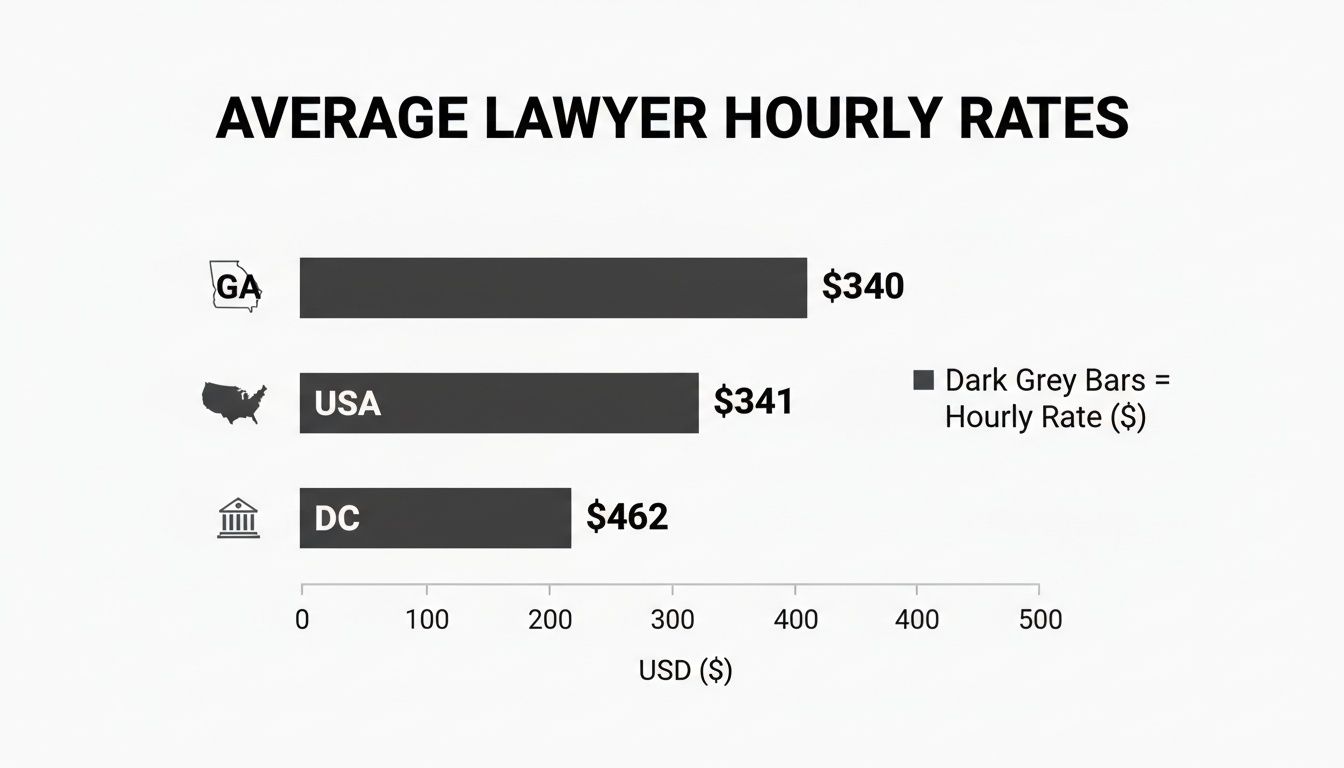
As you can see, Georgia's average rate is right in line with the national average, which tells you our legal market is pretty competitive.
This price jump is a direct reflection of the complexity and the incredibly high stakes of a felony case. The trend holds true across the country. National data shows a clear divide: misdemeanor defense might run from $1,500 to $5,000, while felony cases often start at $10,000 and go up from there. That huge difference comes down to the work involved. Serious charges like gun crimes, drug trafficking, and violent felonies require exhaustive defense strategies, expert witnesses, and meticulous case prep. For anyone facing charges in Cobb County, Forsyth County, or surrounding areas like Cumming and Johns Creek, understanding this financial reality is the first step in preparing for the road ahead. You can read more about these cost differences to get a broader perspective.
The Only Way to Get a Real Number is a Consultation
At the end of the day, all these ranges are just ballpark figures. The only way to know for sure what a defense will cost is to sit down with an attorney and talk through the case.
During a consultation, a lawyer can dig into the specifics of the charge, review the evidence the state has, look at a personal history, and then give a realistic estimate. That conversation is the most reliable way to understand the potential average cost of a criminal lawyer for a unique situation.
Key Factors That Influence the Final Cost of Your Defense
Those price ranges we talked about are a good starting point, but they really don't tell the whole story. The final number on a legal bill is shaped by a handful of factors that can either dial up or dial down the amount of work a case requires. Understanding these variables is the key to figuring out why the average cost of a criminal lawyer is so specific to each person's situation.
Think of it like a car repair. Two cars might come in with "engine trouble," but one might need a simple spark plug change while the other needs a complete engine rebuild. The underlying problem is similar, but the work—and the cost—are worlds apart. A legal defense is the same way; it's tailored to a unique set of circumstances that directly drive the final cost.
The Attorney's Experience and Reputation
One of the biggest factors is simply the experience level of the attorney hired. A lawyer with over two decades in the trenches, especially a former prosecutor, brings a depth of knowledge that a newer attorney just can't have. That background gives them invaluable insight into how the other side builds its cases and, more importantly, where to find the weak spots.
An attorney's reputation in the local legal community—from Alpharetta and Roswell to Marietta—also matters. Well-respected lawyers often have working relationships with prosecutors and judges, which can sometimes make negotiations run a lot smoother. That seasoned perspective usually comes at a higher price, but it reflects a proven track record and a much deeper strategic playbook.
The Complexity of Your Case
Beyond the name of the charge, the specific details of what happened are a primary cost driver. A case with straightforward evidence and only a couple of witnesses is far less demanding than one involving tricky legal arguments or a mountain of discovery to dig through.
Several things add to a case's complexity:
- Volume of Evidence: Sifting through hours of body camera footage, dozens of police reports, and endless digital records takes a significant amount of time.
- Number of Witnesses: Every single witness has to be found, interviewed, and prepped for potential testimony. Each one adds another layer of work to the case.
- Need for Expert Testimony: Cases that hinge on scientific evidence, like a DUI with a questionable breathalyzer reading or a drug case needing a toxicologist, require hiring expert witnesses. These experts charge their own fees, which are on top of the attorney's costs.
- Pre-Trial Motions: Filing motions to suppress evidence or get charges dismissed requires a ton of legal research, writing, and arguing in court—all of which adds to the workload.
The more moving parts a case has, the more hours and resources a defense team will need to invest. Each piece of evidence and every legal motion is a building block in the defense, and each one adds to the final cost.
The Specific Jurisdiction
Where a case is filed also makes a difference. Even though they're right next to each other, the court systems in Forsyth County and Cobb County can have different procedures, local rules, and even different personalities among the prosecutors and judges. An attorney who is deeply familiar with the specific courthouse where a case is being heard brings a home-field advantage.
This local knowledge helps them navigate the system more effectively, anticipate roadblocks, and understand the people in the courtroom. That familiarity can lead to a more efficient, targeted defense strategy, which in turn can impact the cost.
Plea Agreement Versus Going to Trial
Finally, the single biggest factor that determines the final cost is whether a case gets resolved with a plea agreement or goes all the way to a trial. A plea negotiation involves working with the prosecutor to reach a resolution without a trial. While it still requires a lot of work, it's a much more contained process.
Going to trial is a massive undertaking. It involves jury selection, opening and closing statements, examining witnesses, and intensive preparation that can add tens, or even hundreds, of hours to a case. A case that goes to trial will always be substantially more expensive than one that is settled beforehand. The costs can get even more extreme in complex cases. For example, large-scale federal cases have shown just how high legal fees can get, with some high-profile trials costing defendants millions. One defense in the Enron-related cases was estimated to cost between $40 million and $70 million. While that's an extreme example, it shows why experienced strategic management is so important. You can read more about the high cost of complex defense to get a sense of the financial stakes in major litigation.
Looking Beyond Attorney Fees at Other Case Expenses
When you're figuring out the budget for a criminal defense, the lawyer's fee is obviously the biggest piece of the puzzle. But it's not the only piece.
Think of it like buying a ticket to a concert. The ticket gets you in the door, but you still have to plan for parking and anything else you might need inside. A strong legal defense is similar—it often needs support from other services and resources that come with their own costs.
Getting a handle on these extra expenses early on gives a much more realistic financial picture. It helps avoid surprises later and makes sure a defense has all the tools it needs to be successful. These costs aren't part of an attorney's fee; they're operational expenses needed to build a powerful case.
Common Ancillary Costs in a Criminal Case
The specific extra expenses someone might run into really depend on the details of their case. A straightforward misdemeanor in Roswell might have very few, while a complex felony case in Cobb County could involve several different costs.
Here are some of the most common ones seen:
- Court Filing Fees: Every court system, from Forsyth County to East Cobb, charges administrative fees to file motions and other legal paperwork. They’re small on their own, but they can definitely add up.
- Record and Report Retrieval: It will be necessary to get official documents like police reports, 911 transcripts, or body cam footage. The agencies that hold them almost always charge a fee to release them.
- Bail Bonds: If a bond is set, you may need to work with a bail bondsman to get out of jail while a case is pending. Their fee is non-refundable and is typically around 10% of the total bail amount.
These are often the first costs that pop up, and they're essential for gathering the basic information needed to start crafting a defense.
The Role and Cost of Expert Witnesses
In some cases, an entire strategy can hinge on what a specialized expert has to say. These professionals are hired to analyze evidence and offer an authoritative opinion that can poke holes in the prosecution's story. Their expertise is a critical advantage, but it is a significant additional expense.
An expert witness can be the key to creating reasonable doubt. Whether it's a toxicologist questioning the results of a blood test in a DUI case or a forensic accountant tracing funds in a white-collar case, their testimony adds a layer of scientific or technical authority to a defense.
A few examples include:
- Toxicologists: Absolutely vital in DUI or drug cases. They can analyze blood or breath tests and challenge the state's scientific conclusions.
- Private Investigators: They can be hired to find new evidence, track down witnesses the police overlooked, or uncover inconsistencies in the official story.
- Medical or Psychological Experts: They are often brought in for cases where someone's mental state, injuries, or complex medical evidence is a central issue.
The cost for an expert can run anywhere from a few thousand dollars to tens of thousands, depending on their field, reputation, and how much work a case requires. These fees are paid directly to the expert, separate from legal fees. Knowing this might be a possibility is a key part of understanding the total financial commitment needed for the strongest possible defense.
How to Get an Accurate Cost Estimate for Your Case

While the price ranges we've discussed are a helpful starting point, they're just that—a start. The internet can give you a ballpark figure, but it can't account for the unique facts of a case.
The only way to get a real handle on the potential average cost of a criminal lawyer for a specific situation is to sit down for a one-on-one consultation. This is where an attorney can dig into the details, understand the charges being faced, and map out a realistic financial picture.
To get the most out of that meeting, showing up prepared is key.
What to Bring to Your First Meeting
Walking into a consultation with the right paperwork immediately shifts the conversation from hypotheticals to specifics. It allows an attorney to start building a real strategy and give a far more accurate assessment of the costs involved.
Before the meeting, do your best to pull these items together:
- Police Reports: Any incident reports or narrative summaries that were provided.
- Citations or Tickets: The actual documents the officer handed over.
- Bond Paperwork: Anything and everything related to a release from jail.
- A Written Timeline: Personal notes on what happened, put in chronological order.
Having these documents on hand gives an attorney a clear snapshot of the case from the get-go. To learn more about what to expect from this initial conversation, it's worth understanding the benefits of a criminal lawyer free consultation.
Key Questions to Ask About Fees
The main objective during the consultation is to leave with zero confusion about the money part. This is not the time to be shy. Ask direct questions about fees, billing, and any other potential costs you can think of. A frank conversation now is the best way to prevent surprises down the road.
A productive consultation is a two-way street. It's an opportunity to gather the information needed to make a confident decision about representation and a budget.
Make sure to get answers to these crucial questions:
- What is the fee structure for a case like this? Will this be a flat fee, an hourly rate, or a retainer?
- What does the initial fee or retainer cover? Does that include filing motions, negotiating with the prosecutor, and all pre-trial court appearances?
- What other expenses should I anticipate? You should ask about potential costs for private investigators, expert witnesses, or even court filing fees.
- Is there a separate fee if the case goes to trial? This is a huge one. Trial work is incredibly intensive and always costs more, so it's important to know how that's handled.
- Do you offer payment plans? Understanding the payment schedule and if there's any flexibility is essential for financial planning.
Asking these questions gives you the power to properly compare options and find an attorney who fits not just the legal needs, but the financial reality, too.
Common Questions About Criminal Defense Costs
When facing a criminal charge, the financial side of things can feel just as daunting as the legal process itself. Here are some straightforward answers to the questions heard most often from people trying to understand the average cost of a criminal lawyer.
Can I Get a Refund if the Case is Lost?
This is a common and understandable question, but the answer in criminal defense is almost always no. You are not paying for a specific result—you are paying for the attorney's time, their expertise, and the actual work they put into the defense.
Legal ethics rules actually forbid lawyers from taking criminal cases on a "contingency fee," which is where payment depends on winning. Whether a case ends in a dismissal, a favorable plea deal, or a verdict after a trial, the fee covers the professional service provided along the way. Because of this, legal fees are not refundable based on the outcome.
Do Most Attorneys Offer Payment Plans?
Many in the legal community know that hiring a good lawyer is a major financial decision. To help ease that burden, some attorneys in Marietta, Johns Creek, and the surrounding areas do offer payment plans.
The specifics of these plans really vary from firm to firm. They're usually worked out on a case-by-case basis, depending on things like the total fee and how long the case is expected to last. The best thing to do is just ask about payment options during the first meeting.
It's smart to have a clear, upfront conversation about payment plans. Even with a plan, most lawyers will need a significant portion of the fee paid before they can officially start working on a case.
Is the Initial Consultation Really Free?
Yes, almost every criminal defense attorney offers a free initial consultation. This meeting is incredibly important for both the individual and the attorney. It’s a completely confidential space for someone to explain what happened and for the lawyer to get a basic handle on the facts.
During that talk, the attorney can give a general idea of what to expect and lay out a fee structure that fits the specific situation. There’s no commitment. Think of it as an informational interview to help decide on the right person to have in your corner.
If you're facing criminal charges in Alpharetta, Cumming, or anywhere else in North Georgia, the first step is understanding your options. Brian Hansford Law is here to build a clear, comprehensive defense strategy for you. To talk about the details of your case, contact us today at https://challengemycharge.com.
