
Immediate Considerations After a DUI Charge
Facing a DUI charge can be disorienting. Prompt action often influences the outcome of license retention. Common early considerations include securing bail, preserving test results, and meeting Georgia DDS timelines.
Common steps often include:
- Arranging for a bond service or family support to facilitate release.
- Collecting records tied to breath or blood tests—calibration logs, chain-of-custody forms, and related documents.
- Sending a written notice to the Georgia DDS within 30 days to request an administrative hearing.
- Consulting a DUI attorney early to discuss case strategy.
- Reviewing detailed recommendations in what to do after a DUI arrest for additional context.
Summary of Immediate Steps
This table outlines key actions frequently taken after a DUI stop or arrest to address license issues and lay groundwork for a defense.
| Action | Timeframe | Possible Contact |
|---|---|---|
| Arrange bail support | Within hours | Bond service or family |
| Preserve test records | Within 7 days | Testing lab and DMV |
| Request DDS hearing | Within 30 days | Georgia DDS |
| Consult DUI counsel | ASAP | Brian Hansford Law |
Missed deadlines are often interpreted as a forfeiture of driving privileges.
Why Deadlines Matter
Georgia treats any late hearing request as a forfeiture of driving privileges. Only 30 days from the arrest date are allowed to file the request, or automatic suspension follows.
Only 30 days are available to protect driving privileges after a DUI charge; missing this window usually means no hearing.
In Forsyth County, an example driver who missed the deadline was unable to renew a learner’s permit for several months.
Statistical Context
Despite awareness campaigns, DUI remains a significant road hazard. According to the FBI, about 1 million drivers faced DUI charges nationwide in 2018. Courts, law enforcement, and informed individuals all play roles in enhancing road safety.
Read the full research about DUI statistics
Preparing for an Administrative Hearing
A DUI charge in Georgia often leads to a suspended driver’s license, which can disrupt work, school and daily life. A written request for an administrative hearing with the DDS must arrive within 30 days of the arrest to avoid automatic suspension.
Case outcomes sometimes turn on details—calibration logs, witness letters or medical records. In one Cobb County matter, an organized packet resulted in a limited permit extension. Another case faced a 3-month delay due to a missing calibration report.
Common hearing materials include:
- Calibration logs detailing machine serial numbers and service dates.
- Witness statements describing timing and observations.
- Medical records, including prescriptions or doctor notes that may affect test validity.
- Proof of insurance documentation.
- A hearing outline illustrating testimony points and exhibits.
Drafting a Hearing Outline
Hearing outlines often begin with a chronological timeline of events, followed by highlighted exhibits and targeted questions designed to clarify critical points.
“A well-ordered packet demonstrates preparedness and credibility,” notes a former DDS hearing officer.
Questioning Police Testimony
Discrepancies in officer logs—such as time gaps or missing stamps—can weaken the state’s case.
| Scenario | Typical Outcome |
|---|---|
| Well-packed packet in Cobb | Permit extended 6 weeks |
| Missing calibration report | 3-month delay on appeal |
Organizing exhibits often involves numbering each document and inserting a summary page at the front of every section. Additional practices include:
- Maintaining duplicate sets in sealed envelopes.
- Using color-coded binders for visual cues.
- Aligning page numbers with outline tabs for efficient navigation.
Further insights on license matters can be found in license suspension after DUI.
Final Checklist
Before a scheduled hearing, mock sessions with a peer can verify preparedness:
- Ensuring outline tabs match numbered exhibits.
- Confirming calibration logs include correct serial numbers.
- Verifying witness statements are signed and dated.
- Testing any audio or video for smooth operation.
Professional attire and calm presentation often support a more positive impression.
After the Hearing
Typical follow-up tasks include:
- Retrieving written rulings or notes from the clerk.
- Requesting official copies of findings and future hearing dates.
- Reviewing hearing feedback with a DUI attorney to assess appeal options.
Early debriefs tend to streamline subsequent steps.
Organizing confirmations, emails and receipts helps prevent unnecessary suspension days.
Key Takeaways
- Prepare exhibits in advance.
- Challenge breath-test details.
- Conduct timely debriefing.
Navigating the Criminal Court Process
After the administrative hearing, the criminal court phase begins with arraignment—charges are read, bail is set and pleas entered. This appearance triggers deadlines for discovery motions and strategic planning.
Common court steps include:
- Reviewing the indictment to identify vague or missing elements.
- Filing discovery motions for police reports, lab results and video footage.
- Considering diversion programs like first-offender status or mandated treatment.
- Gathering witness statements and expert analyses before cut-off dates.
Courtroom practices vary by jurisdiction, so local adaptation proves important. Shared calendars can help track multiple deadlines.
Reviewing Indictment and Discovery
Indictment review often uncovers potential defense angles. Discovery motions typically seek:
- Breathalyzer calibration certificates and lab records.
- Officer notes and field sobriety instructions.
- Dashcam video, bodycam footage and in-car audio.
Witness interviews and expert affidavits on breath test accuracy or road conditions can influence early hearings.
Plea Negotiations and Diversion Options
Diversion packages often include alcohol-education enrollment, community-service plans and local treatment referrals. In Cumming, a first-time DUI matter resulted in no jail time after presenting such a proposal.
Common diversion criteria:
- No DUI within the past 5 years.
- BAC under 0.15% without injuries.
- Completion of court-approved programs and community service.
- No pending charges in the jurisdiction.
Infographic on Administrative Hearing Timeline
The infographic below illustrates the 30-day period for requesting hearings, gathering documents and scheduling the hearing.
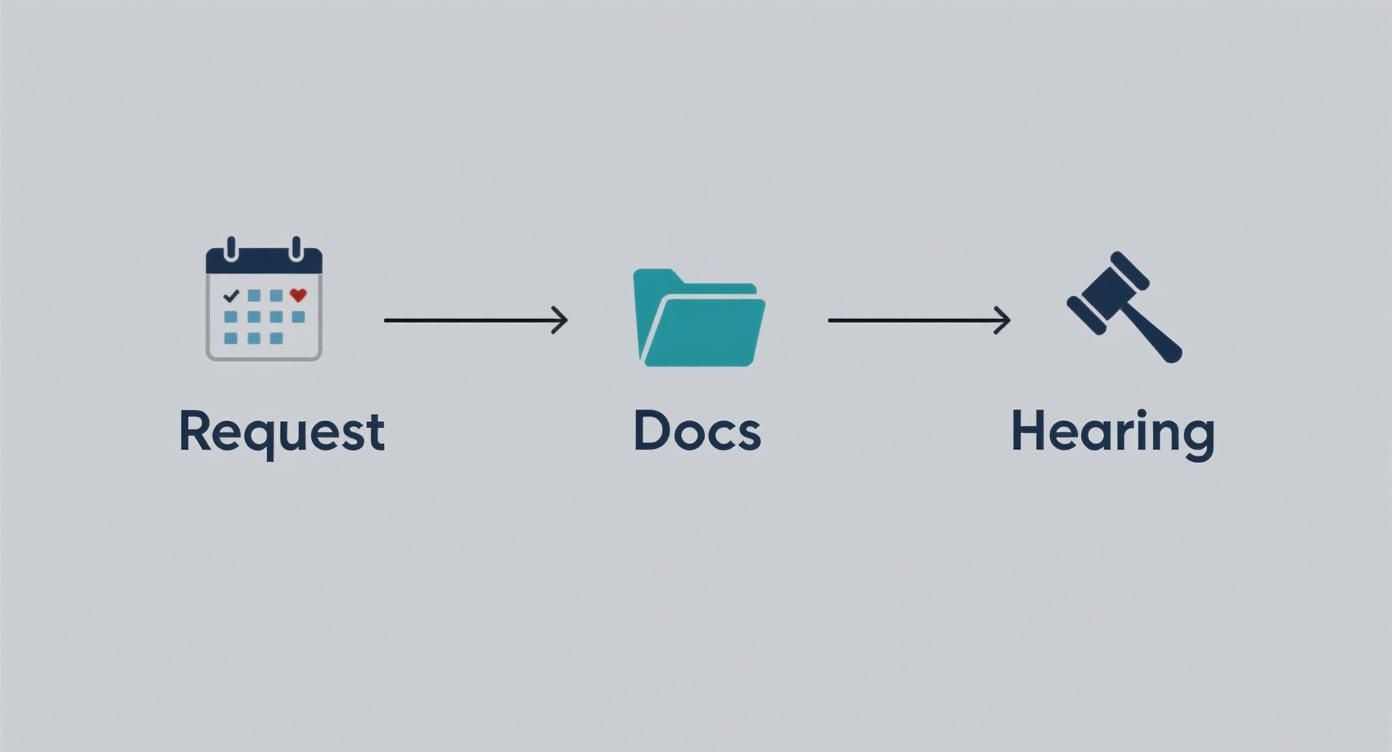
Past the deadline, new timeframes for motions to suppress and state responses come into play.
Preparing for Trial and Sentencing
Building a trial file early can pay dividends. Typical components include:
- Witness lists and contact information.
- Expert summaries on breath tests or arrest procedures.
- Demonstrative exhibits, such as photos or diagrams.
- Draft motions to suppress based on procedural issues.
Georgia court systems generally schedule bench or jury trials within 60–120 days, with exhibit exchanges and status conferences in between.
| Phase | Typical Timeline |
|---|---|
| Arraignment | 1–2 weeks post-arrest |
| Discovery Deadline | 30–60 days |
| Trial Setting | 60–120 days |
| Sentencing | 1–2 weeks after verdict |
Early organization and timely filings can mitigate scheduling issues and fees.
Efficient case management often influences plea outcomes.
Exploring Common DUI Defenses With Real Examples
Each aspect of a DUI case—from the initial stop to the admission of test results—presents potential challenges. Common defense angles include:
- Absence of probable cause for the traffic stop.
- Inconsistencies in field sobriety testing conditions.
- Calibration errors in breathalyzer maintenance logs.
- Chain-of-custody gaps for blood samples.
For advanced strategies, see the complete guide on beating DUI charges in Georgia.
Challenging Traffic Stop Legality
A traffic stop must be supported by articulable reasons. In Roswell, dashcam footage contradictory to weaving allegations led to suppression of the stop.
Key review items:
- Officer’s notes for timing and location accuracy.
- Dashcam timestamps aligned with citation details.
- Police radio logs for consistency.
A flawed stop can undermine the entire prosecution.
Disputing Breathalyzer Accuracy
Regular calibration is required for breath machines. In one Milton matter, a 30-day service lapse invalidated test results.
Steps often taken:
- Verifying machine serial numbers and service dates.
- Comparing lab logs to Georgia DFS standards.
- Utilizing expert analysis to highlight calibration defects.
| Error Type | Impact on Results |
|---|---|
| Expired calibration | Inaccurate BAC readings |
| Missing service logs | Chain of custody gaps |
| Improper temperature | Overestimation of alcohol |
Questioning Field Sobriety Conditions
Environmental factors like uneven surfaces or low lighting can affect field sobriety tests. Common documentation practices include:
- Photographing the test area.
- Recording weather, footwear and lighting details.
- Securing expert testimony on test reliability.
International models in Sweden and Germany pair strict limits with procedural standards, keeping DUI fatalities near 9% of road deaths. See research on successful prevention measures for more.
Understanding DUI Penalties in Georgia and Beyond
DUI penalties in Georgia depend on BAC levels, prior convictions and accident involvement. The tiered system includes:
- Tier One (Under 0.08% BAC): Fine up to $300 and up to 24 hours in jail.
- Tier Two (0.08–0.14% BAC): Fines up to $1,000 and up to one year in jail.
- Tier Three (Above 0.15% BAC or refusal): Fines up to $2,000 plus mandatory minimum jail sentences.
- Injury or Death: Felony DUI with up to five years in prison.
For example, an Alpharetta driver at 0.12% BAC faced a $1,600 fine and a nine-month license restriction. Eastern Cobb judges often combine short jail terms with counseling requirements.
Georgia Tiered Penalty Structure
Tier-specific requirements typically include:
- Alcohol education courses.
- License suspension periods ranging from six months to five years.
- Ignition interlock installation after higher-level offenses.
Understanding tier distinctions can inform negotiation strategies.
International Comparisons
Georgia’s 0.08% threshold contrasts with South Africa and Germany, which enforce a 0.05% limit. Germany’s income-based fines and South Africa’s extended prison terms for repeat offenses demonstrate varied approaches.
| Region | BAC Limit | Typical Penalty |
|---|---|---|
| Georgia | 0.08% | Fines $300–2,000, 24 hrs–1 yr jail |
| South Africa | 0.05% | Up to 6 years prison for repeats |
| Germany | 0.05% | Income-based fines, license suspension |
Georgia’s fixed fines and education programs differ significantly from these international models.
Choosing the Right DUI Attorney Near You

Selecting a qualified attorney shapes hearings, negotiations and trial outlooks. Key vetting questions include:
- Track record with Georgia DDS hearings and license preservation.
- Local trial results in jurisdictions like Forsyth, Cobb and East Cobb.
- Communication preferences and responsiveness.
- Availability of support resources, including expert witnesses.
- Fee transparency and structure.
| Fee Model | Pros | Cons |
|---|---|---|
| Flat Fee | Predictable cost | May lack flexibility |
| Hourly Billing | Pay for actual time | Final invoices can vary |
| Hybrid Retainer | Mix of fixed and hourly rates | Requires detailed tracking |
Evaluating local court tendencies is also crucial. Typical focuses include:
- Forsyth County: Work-release alternatives.
- East Cobb: Short jail sentences with rehabilitation.
- Milton: Alcohol treatment plans.
- Johns Creek: Community service expectations.
Insights from understanding how criminal defense attorneys market their services can highlight firm strengths.
FAQ
This FAQ addresses common queries for those charged with a DUI in regions such as Alpharetta, Cumming, Johns Creek, Milton, Roswell, Marietta, Forsyth, East Cobb and Cobb County.
How Soon Must a Hearing Be Requested After a DUI Arrest?
Georgia law allows 30 days from arrest to submit a written hearing request to the DDS. Beyond this, the license suspension becomes automatic.
What Happens When a Breathalyzer Test Is Refused?
Refusal results in administrative suspension and additional penalties. Typical documentation includes:
- Notice of suspension from DDS.
- Officer’s consent affidavit.
- Required SR-22 insurance proof.
Is a Hardship Permit Available Before Case Resolution?
Successful administrative hearings can lead to limited permits, depending on BAC, prior history and SR-22 status. Strict adherence to permit terms is expected.
How Long Does a DUI Case Typically Take?
Most DUI cases in Georgia resolve within 3 to 9 months, although discovery disputes and court schedules can extend this timeline.
Next Steps to Consider
Common early tasks include:
- Obtaining arrest reports and citations.
- Reviewing breath-machine calibration logs.
- Collecting witness statements and officer notes.
Organized preparation tends to support more informed decision-making.
Brian Hansford Law offers further resources.
