
When you're facing a criminal charge, the situation can feel overwhelming. Taking that first step to find a criminal defense attorney near me is a move toward understanding your options. It's about more than just a quick online search; you may want to dig into trusted sources to build a solid list of potential lawyers. This can be the groundwork for an important decision.
Starting Your Search for Local Representation
Knowing where to look is an important part of the process. While a search engine is a decent start, a more focused approach could yield better results. Your goal at this stage might be to assemble a list of qualified, local professionals. Think of it as creating a strong pool of candidates that you can vet later on.
To do this, it can be helpful to look past flashy ads and get to verified sources. Some people focus on three main avenues to build their initial list:
- Online Legal Platforms: Websites designed to connect people with attorneys are a popular resource. They usually have detailed profiles, list an attorney's specific practice areas, and, most importantly, feature client reviews that give you a sense of their practice.
- Bar Association Directories: Every state, and many counties, has a bar association with a directory of all licensed attorneys. These are official lists, so you can be confident that anyone you find here is in good standing and licensed to practice in your area.
- Personal Referrals: This one can be powerful. Asking friends, family, or colleagues you trust for a recommendation can provide insights you may not find online. A firsthand story about someone's experience can be very helpful. For example, if you specifically need a criminal defense attorney in Alpharetta, a local referral could be very valuable.
Where People Typically Begin
The data shows just how important digital tools have become in this process. Take a look at where most people start their search.
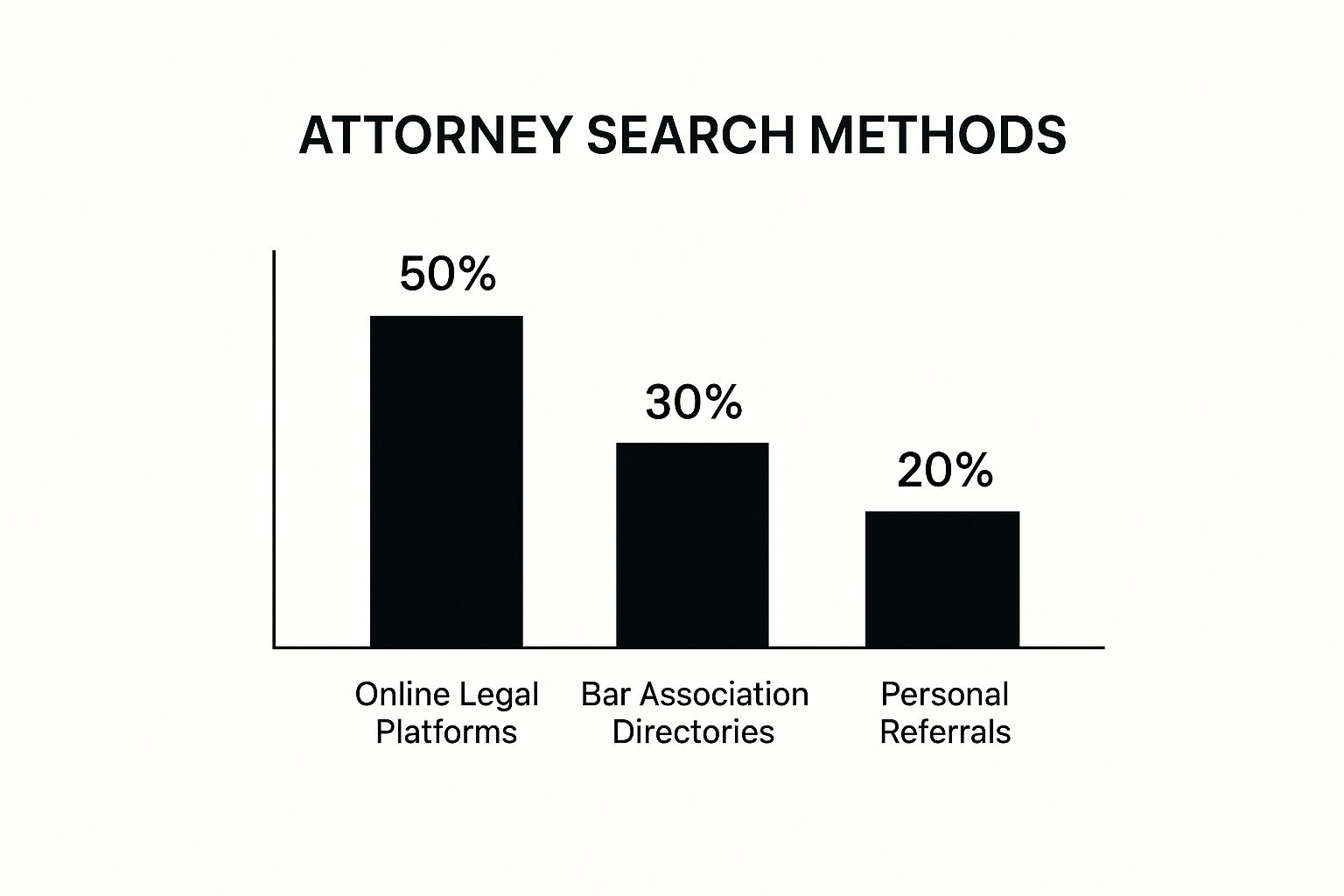
As you can see, a full 50% of searches now begin on legal platforms. They've really become a central hub for finding legal assistance.
The sheer number of lawyers out there can feel overwhelming at first. As of 2025, there are more than 252,000 criminal defense lawyers practicing in the United States. That's a huge slice of the nation's 1.3 million total attorneys. This large number means you have options. It just reinforces why a methodical, step-by-step approach can be useful to find the right person for your specific situation.
Qualities That Matter in a Defense Attorney

Once you’ve gathered a few names, the next step begins. Moving from a long list to a short one means looking past a fancy website and digging into the qualities that often define an effective criminal defense attorney.
Not all legal experience is created equal. A lawyer’s background can dramatically shape their courtroom strategy. For instance, an attorney who was once a prosecutor brings a unique perspective to the table. They’ve been on the other side, so they know how the prosecution builds a case, thinks about evidence, and negotiates plea deals. That kind of insider knowledge can be a game-changer when it comes to crafting a defense.
Verifying Experience and Track Record
One of the most important qualities to look for is relevant experience. A brilliant tax attorney is likely not the right person to call for a felony drug charge. You may want to find someone who lives and breathes criminal law—and, even better, has a history of handling cases similar to yours.
When you’re vetting candidates, you might focus on these key areas:
- Case-Specific History: Don't just ask if they handle criminal cases. Ask if they’ve successfully defended clients facing the exact same charges you are.
- Local Court Knowledge: There’s a potential advantage to hiring someone who is a familiar face in the local courthouse. An attorney who regularly practices in Forsyth or Cobb County already knows the tendencies of the local judges and has working relationships with the prosecutors. That’s not something you can learn from a book.
- Verifiable Results: While no attorney can guarantee a specific outcome, a strong and consistent track record of achieving dismissals, reduced charges, or acquittals speaks volumes about their competence and dedication.
An attorney's communication style is just as crucial as their courtroom skill. They should be able to explain complex situations in a way you can understand, keep you informed, and be accessible when you have questions.
Clear, consistent communication is the foundation of trust. The last thing you need is to be left in the dark, wondering what’s happening with your case. For a deeper look at what separates a good lawyer from a great one, our guide on how to find a good criminal lawyer breaks it down even further. The right person won’t just represent you; they’ll be your partner through this entire process.
Checklist for Evaluating Attorney Qualities
As you meet with different lawyers, it can be tough to keep track of who said what. Using a simple checklist can help you stay organized and compare your top candidates side-by-side. It encourages you to look at the tangible credentials that matter most.
| Quality or Credential | What to Look For | Why It Matters for Your Case |
|---|---|---|
| Specialization in Criminal Law | Their practice is 100% focused on criminal defense, not split between multiple areas of law. | A dedicated specialist is current on the latest laws, defenses, and courtroom strategies for criminal cases. |
| Local Courtroom Experience | They regularly appear in the specific courthouse where your case will be heard (e.g., Forsyth, Cobb, Gwinnett). | Familiarity with local judges, prosecutors, and procedures provides a significant strategic advantage. |
| Experience with Your Charge | They have a documented history of handling and resolving cases with the same charges you are facing. | They won’t be learning on your case; they'll already know the common pitfalls and most effective defense tactics. |
| Former Prosecutor Background | The attorney previously worked in a District Attorney’s office. | This provides invaluable insight into how the prosecution builds cases and what negotiation tactics they will use. |
| Clear Communication Style | They explain legal concepts clearly, answer your questions directly, and outline a transparent process for communication. | You should understand what's happening at every stage and feel confident that you can reach them when it matters most. |
| Realistic Case Assessment | They provide an honest, straightforward assessment of your case—including potential weaknesses—not just promises. | An attorney who only tells you what you want to hear may be setting you up for unrealistic expectations and disappointment. |
This isn't about finding a perfect score but identifying the attorney whose strengths best align with the specific needs of your case. Choose the one who makes you feel confident and understood.
Making the Most of Your Initial Consultation

That first meeting with a potential lawyer is more than just a chat. Think of it as an interview—you’re the one hiring. This is your single best chance to see if an attorney’s experience, style, and proposed strategy actually fit what you need.
It can be beneficial to walk in prepared with pointed, smart questions that cut through the fluff. The goal is to leave that office with a clear idea of how they’d handle your specific case and what it would be like working with them.
Key Questions to Ask a Potential Attorney
To get real value out of this meeting, it helps to have a game plan. Your questions might zero in on their direct experience with cases like yours, their process, and the practical details of how they run their practice.
Here are a few questions people often ask to get the conversation started:
- Experience with Similar Cases: "How many cases similar to mine have you personally handled here in Forsyth County in the last couple of years?" This is way more telling than a general question about their criminal defense experience. Local knowledge matters.
- Case Strategy: "Based on what I've told you, what do you see as the biggest strengths and weaknesses in my case?" A good, honest lawyer will often give you a balanced view, not empty promises or guarantees.
- Communication Protocol: "Will you be my main point of contact, or will I be dealing with a paralegal? What’s your policy for returning calls and emails?" This sets expectations from day one.
- Fee Structure: "Can you give me a detailed breakdown of your fees? I want to understand your retainer, what it covers, and any other costs I might face." Financial transparency is non-negotiable.
A consultation can be a two-way street. Pay attention to whether the attorney is genuinely listening and asking follow-up questions about your situation. Their engagement level in this first meeting is often a preview of the attention your case will get down the road.
Observing Beyond the Answers
Sometimes what an attorney doesn't say is just as important as what they do. Are they patient with your questions, or do they seem rushed and eager to get you out the door? Can they explain complicated legal concepts in plain English you can actually understand? You're not just looking for a good lawyer; you're looking for the right partner for your case.
The United States has a lot of lawyers—around 402 lawyers per 100,000 people, in fact. But that doesn't mean they're all the right fit for you. This abundance of options gives you the power to be selective. You can, and should, find someone you truly trust. You can read more about these global legal statistics to see just how wide the field is.
Understanding Legal Fees and Agreements

Talking about money is rarely comfortable, but when you're hiring a criminal defense attorney, it's a conversation that has to happen upfront. You should know exactly what you’re getting into financially. A clear understanding of how an attorney structures their fees from the start prevents any nasty surprises down the road.
Most lawyers work with a few common fee models. The one they suggest usually comes down to the specifics of a case. For instance, a more predictable misdemeanor charge might be handled for a flat fee—one single payment that covers the entire case from start to finish.
On the other hand, complex felony cases that could drag on for months often call for an hourly rate. This means you pay for the actual time the attorney and their staff put into the defense. In these situations, clients almost always start with a retainer, which is basically a down payment that the attorney bills against as they work.
Getting a Handle on the Different Fee Structures
It’s one thing to hear the terms, but it is important to know what they actually mean for your wallet. Let's break them down.
-
Flat Fee: A one-and-done payment. This is most common for cases where the lawyer has a good idea of the workload, like a first-offense DUI or a straightforward shoplifting charge. You know the full cost right away.
-
Hourly Rate: You're billed for every hour the legal team spends on your case. This is standard for serious felonies or any charge that looks like it's heading to trial, simply because the time commitment is so unpredictable.
-
Retainer Fee: This is an upfront deposit paid to the law firm. As the attorney works, they deduct their hourly fees from this retainer. If the initial amount runs out, you may be asked to deposit more funds to keep the work going.
No matter which payment model you agree on, always insist on a written fee agreement. This document is for your protection. It should spell out exactly what services are covered and what costs extra, leaving no room for confusion later.
A good fee agreement won't just list the attorney's rate. It should also detail other potential costs you might be responsible for, like hiring an expert witness, paying for a private investigator, or covering court filing fees. This way, you have a complete picture of your financial obligations from day one.
Making Your Final Decision with Confidence
You’ve done the research, you’ve sat through the consultations, and now it’s time to decide. This isn't just about picking the lawyer with the most impressive resume or the lowest price tag; it's about finding the right fit for you and your case. You want an advocate who makes you feel confident and seen.
Start by laying out your notes from each meeting. How did each lawyer make you feel? Did they explain their strategy in a way you understood, or did they talk over your head? Think about their specific experience with cases similar to yours.
A simple pros and cons list for your top two or three choices can help organize your thoughts, balancing things like courtroom track record against their communication style and fee structure. This simple exercise can turn a gut feeling into a well-reasoned, solid choice.
Your Final Checklist Before You Sign
Before you commit to anyone, run through one last mental checklist. Have you read the fee agreement from top to bottom? Do you understand how and when you'll get updates on your case? Answering these questions now prevents surprises later.
Trust your gut. If one attorney made you feel heard and respected during the consultation, that’s a huge factor. The best attorney-client relationships are often built on that kind of trust and straightforward communication.
The legal world is always changing. The criminal justice field continues to grow, and more attorneys are using technology to manage their cases. In fact, recent trends in the criminal justice field show that nearly half of all legal professionals are now familiar with AI tools, with many believing it helps them do their job better.
Ultimately, this choice is about empowering yourself. By carefully thinking through your options, you can move forward knowing you have the right partner on your side.
To see our firm’s approach and what we stand for, you can learn more about why to choose Brian Hansford Law.
Questions That Come Up When Looking For An Attorney
When you start the process of finding a criminal defense attorney in your area, a few questions almost always come up. Getting good answers to them can help you move forward with more confidence, knowing you’re making a solid choice.
Private Attorney vs. Public Defender
One of the first things people want to know is the difference between hiring a private attorney and working with a public defender. It's a fair question. A public defender is an attorney appointed by the court if an individual cannot afford to hire their own lawyer. A private attorney, on the other hand, is someone you hire directly.
Public defenders are often incredibly experienced simply due to the sheer volume of cases they handle. However, that high caseload is also their biggest challenge. A private attorney usually has more time and resources to dedicate specifically to your case. The right choice often boils down to a person's financial situation and just how complex the charges against them are.
How to Prepare for Your First Meeting
Another common question is what you should bring to an initial consultation. To get the most out of that first meeting, you will want to gather every document you have related to the case.
Think about pulling together things like:
- Any citations or paperwork the police gave you.
- Bail or bond documents.
- A timeline of what happened, written out as you remember it.
Being organized for your first meeting is key. The more information you can provide upfront, the more specific and useful the attorney's initial assessment will be. They will need the full picture to understand the situation.
Walking in with these materials gives a potential lawyer a much clearer picture of your situation right away. It can also be helpful to prepare a list of your own questions. This ensures all your concerns get addressed and helps the attorney provide information that is relevant to you.
Does Specific Experience Really Matter?
Finally, people often wonder if it’s truly important for a lawyer to have experience with their specific type of charge. While any licensed criminal defense attorney can technically handle a variety of cases, experience with situations just like yours can be a huge benefit.
For instance, an attorney who specializes in DUI defense will likely already know the laws, local court procedures, and most effective defenses for that specific charge inside and out. That kind of focused experience can be a real advantage.
If you are facing criminal charges in Alpharetta, Cumming, or the surrounding areas, having an experienced advocate on your side is critical. The team at Brian Hansford Law is ready to help you understand your options and protect your future. Contact us today for a consultation.
