
If you’re facing a criminal charge, your head is probably spinning. The first step toward getting some control back is often a criminal lawyer free consultation. This is your chance to sit down with an attorney, tell your side of the story, and figure out if they’re the right person to have in your corner—all without any initial financial commitment.
What a Free Consultation Really Offers You

Let’s be clear about what this meeting is—and what it isn’t. You likely won’t walk out with your entire case solved. The real goal is to lay the groundwork. It’s an opportunity for you to explain what happened, ask some preliminary questions, and just get a feel for the lawyer’s personality and how they approach things.
Offering these initial meetings for free has become pretty standard practice. It’s a way for law firms to connect with people who need help, allowing them to explore their options without the pressure of an upfront fee. Some firms will offer a confidential chat for up to 20 minutes just to help you understand your situation and what the road ahead might look like. For more context on this common practice, you can get insights from the National Security Law Firm.
Understanding the Purpose
Think of the consultation as a two-way interview. You’re sizing up the attorney, and they’re evaluating your case. It’s the perfect time to gauge their experience with charges similar to yours and see if their strategic thinking aligns with what you might be looking for.
A productive consultation should leave you with:
- A preliminary take on your case based on the facts you’ve shared.
- A better grasp of the potential charges and the process you might be facing.
- A chance to see the lawyer’s professionalism and knowledge in action.
- Some clarity on how the firm communicates and what their fees look like.
This brief meeting is your first real chance to take back some control. It’s about arming yourself with information so you can move from a state of uncertainty to a place where you have a clear, actionable plan.
How to Find Lawyers Who Offer Free Consultations

Knowing you need a criminal lawyer free consultation is a great first step, but how do you actually find the right one? A quick Google search will give you a ton of names, but a little strategy goes a long way in connecting you with a qualified professional in your area, whether that’s Alpharetta, Cumming, or Marietta.
A good starting point can be official, vetted resources. Most state and local bar associations have lawyer referral services. These are useful sources because every lawyer listed is confirmed to be in good standing, which removes a lot of the initial guesswork.
Using Online Legal Directories
Reputable online directories are another excellent tool. What makes them so useful is the ability to filter your search. You can get really specific, narrowing down the list to lawyers who only handle DUI or theft charges—and most importantly, who offer that free initial meeting.
As you browse these platforms, keep a sharp eye out for a few key details:
- Case Experience: It can be beneficial to find someone who frequently handles cases like yours. A lawyer whose practice is 90% white-collar crime may not be the best fit for a drug charge.
- Client Reviews: Go through the testimonials, but read between the lines. Are there patterns? Look for consistent feedback on things like communication, professionalism, and how the case was ultimately handled.
- Firm Location: If your case is out of Forsyth or Cobb County, an attorney who knows the local court system, the prosecutors, and the judges can be a real advantage.
A common mistake people make is stopping their search after finding one decent-looking option. It can be helpful to aim for a shortlist of three to five potential lawyers. This gives you the power to compare their personalities and approaches before you commit.
This initial legwork is more than just busywork; it’s about finding the right advocate for your specific situation. Getting this part right sets the stage for a productive consultation where you can get meaningful information. For a deeper look into what makes an attorney a good fit, check out our guide on how to find a good criminal lawyer. The goal here is simple: build a solid list so that your first meeting is with someone who is genuinely equipped to assist.
Getting Ready For A Productive Consultation
That first meeting with a potential lawyer is a big deal, and your time is limited. To make sure you squeeze every ounce of value out of a criminal lawyer free consultation, it helps to walk in prepared. Don’t worry, this doesn’t mean hours of homework, but a little organization goes a long, long way.
First things first, pull together every piece of paper you have related to your case. This can include police reports, charging documents, any bail or bond paperwork, and citations. If they gave it to you, it could be helpful for the lawyer to see it. Handing these over right at the start lets the attorney get a quick, official grasp of the situation. To get a better feel for what these documents mean in the grand scheme of things, it can be helpful to understand what happens when someone is arrested.
Map Out Your Side of the Story
Next, you may want to write out a simple, chronological summary of events from your point of view. Think of it as your case timeline. Just jot down what happened, when it happened, and who was there. This is an incredibly useful tool that saves precious consultation time—the attorney can get the facts straight from the get-go instead of trying to piece the story together from a conversation.
This simple infographic breaks down how to get your information ready.
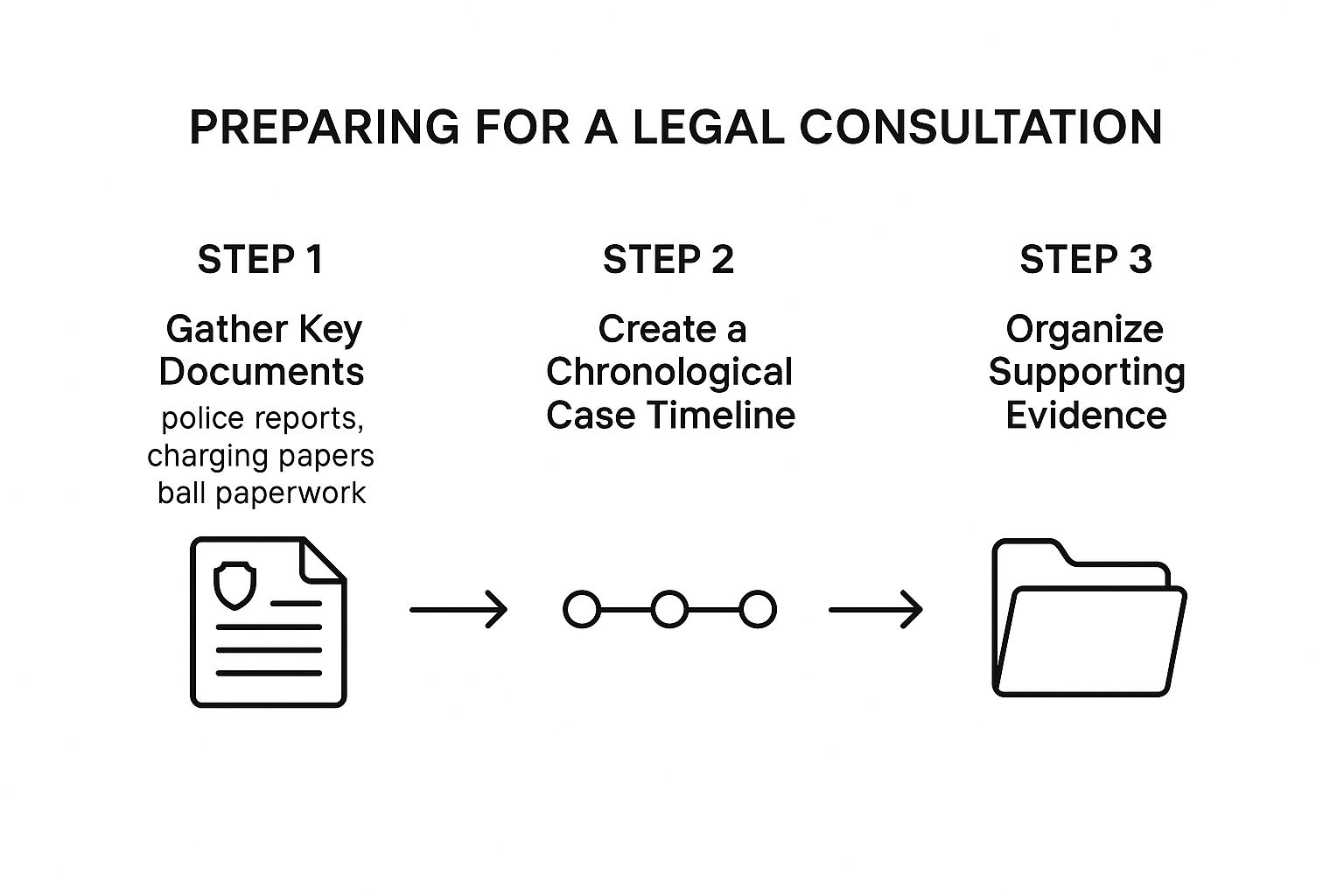
As you can see, a straightforward approach to gathering your documents and outlining the events gives you a solid foundation for the meeting.
Don’t stress about making it perfect. The key is just to be clear and honest. This prep work does more than just save time, though.
Coming prepared shows you’re serious and organized. It leads to a much more focused, insightful discussion, which allows the lawyer to give you a more accurate initial assessment based on actual information, not just a verbal story.
Ultimately, being ready turns a simple meet-and-greet into a genuine strategy session. This proactive mindset sets a positive tone from the start and helps you walk away with the clear information you need to figure out what to do next.
To make this even easier, use this checklist to gather what you may need before you head to your appointment.
Your Pre-Consultation Checklist
| Item Category | What to Bring or Prepare | Why It Helps |
|---|---|---|
| Official Documents | Any police reports, charging sheets, citations, or bail/bond paperwork you have. | Provides the attorney with the official version of events and the exact charges you are facing. |
| Personal Timeline | A written, chronological summary of events from your perspective. Who, what, when, and where. | Saves valuable time and ensures you don’t forget key details. Helps the lawyer understand your side quickly. |
| List of Questions | Write down every question you have about the case, potential outcomes, fees, and the lawyer’s experience. | Guarantees you get the information you need and helps you compare different attorneys effectively. |
| Contact Information | Names and contact details for any witnesses or other individuals involved in the incident. | Allows the attorney to identify potential people to contact if they take your case. |
| Prior Criminal History | An honest summary of any past arrests or convictions. | Your history can impact the current case, and the attorney will need to know this upfront to give an accurate perspective. |
Having these items organized and ready to go can make your consultation far more effective and less stressful. It puts you in control and helps the attorney provide their best possible feedback.
Smart Questions to Ask a Criminal Lawyer

A criminal lawyer free consultation isn’t just your chance to lay out the facts—it’s an interview. You are sizing up the person who might be responsible for protecting your future. If you walk in without a plan, you might get a good sales pitch but leave without any real answers. Having a list of targeted questions is a great way to cut through the noise and see if they have the experience you might need.
Start with their direct experience. It’s not enough to know they handle “criminal defense.” That’s too broad. The details matter.
For example, if you’re facing charges in Cobb County, you may want an attorney who knows that specific courthouse, its prosecutors, and its judges. That kind of local familiarity is an unstated advantage that can make a real difference in how a case moves through the system.
Digging Into Their Experience and Strategy
Don’t just ask if they’ve handled cases “like yours.” Get specific. An experienced lawyer will expect these questions and should be able to answer them without hesitation.
Consider putting these questions on your list:
- How many cases like mine have you personally handled? This question helps you gauge their specific experience with your type of charge, whether it’s a DUI in Roswell or a theft charge in Alpharetta.
- Based on what I’ve shared, what is your initial impression of my situation? Their answer reveals a lot. Are they giving you a realistic, thought-out perspective, or are they just telling you what you want to hear?
- Who will be my primary point of contact? In bigger firms, you might meet with a senior partner for the consultation, only to have your case handed off to a junior associate. It’s good to know exactly who you will be working with day-to-day.
- How do you typically communicate updates, and how often should I expect to hear from you? Setting communication expectations from day one is critical. It can avoid a lot of frustration and anxiety down the road.
Don’t be timid about asking about their track record. A question like, “What are some potential outcomes for a situation like this?” is completely fair game. Their answer tells you how they approach strategy and whether they’re setting realistic expectations.
Understanding the Financial Aspect
The first meeting may be free, but the defense that follows is not. You will want absolute clarity on what this is going to cost before you agree to anything. Be direct and ask about how they structure their fees.
Key financial questions to ask:
- Do you charge a flat fee or an hourly rate?
- What does the initial retainer cover?
- Are there other potential costs I should know about, like investigator fees or expert witness expenses?
Getting clear, straightforward answers to these questions is non-negotiable. A lawyer who is vague about their experience, their communication style, or their fees during a free consultation is showing you exactly how they’ll operate once you’ve hired them. This meeting is your best opportunity to find an advocate who is transparent, experienced, and trustworthy.
Once your meeting wraps up, the real work begins. It’s time to move past first impressions and really dig into the substance of that criminal lawyer free consultation. Having a clear head and a solid framework for your decision is what counts now.
Think back to how the lawyer actually communicated with you. Did they make complex ideas easy to grasp, or did they leave you swimming in a sea of jargon? A great lawyer empowers you with information; they don’t just talk at you. Just as important, did you feel like they were genuinely listening and respected what you had to say?
Comparing Your Options and Next Steps
If you sat down with a few different attorneys, this is where you lay everything out on the table. Make a simple list for each one and compare them side-by-side.
- Experience: Who has a background that fits your situation best? Do they have real-world experience handling cases like yours in places like Forsyth County or Marietta?
- Strategy: Whose game plan made the most sense? Did one lawyer’s initial thoughts on a defense strategy feel more logical or creative?
- Transparency: Who was straight with you about their fees and how they’d keep you in the loop? No hidden costs, no communication blackouts.
Criminal cases are only getting more complicated, especially when they cross state or international lines. Finding someone with specialized experience is no longer a luxury—it’s a necessity. Some firms are even offering free consultations just to help people sort through these complex cases, and you can see how that works by exploring insights on navigating international criminal law.
The right lawyer isn’t always the one with the fanciest office or the cheapest rate. It’s the advocate who gives you confidence and shows a real commitment to your situation. Trust your gut, but make sure you back it up by looking at their actual skills and approach.
After you’ve made your choice, you’ll typically sign a retainer agreement, which makes the attorney-client relationship official. It’s also a smart move to check out reviews for the lawyer and their firm—our team’s own client feedback can give you an idea of what to look for. By taking these steps, you can move ahead knowing you’ve made a solid, well-informed decision.
Your Top Questions About Free Legal Consultations
When you’re looking for a criminal lawyer offering a free consultation, a few key questions almost always come up. It’s completely normal to feel a bit uncertain, but getting some answers upfront can make the entire process feel more manageable, whether you’re in Cumming, Roswell, or anywhere else nearby.
Let’s clear the air on some of the most common concerns.
Is My Consultation Confidential?
One of the biggest worries people have is whether what they share in a consultation can somehow be used against them. It’s a valid concern.
You can rest assured that in most professional settings, the information you share is protected by attorney-client privilege. This critical protection often applies even if you don’t end up hiring that particular lawyer.
For your own peace of mind, it’s always a good idea to confirm this right at the start of your meeting. A simple, “Before we begin, can you just confirm that our conversation is confidential?” is all it takes.
What Should I Say? And How Long Do I Have?
Knowing how to approach the conversation is key. While honesty is essential, it’s usually best to stick to the facts as you know them. Try to avoid guessing or speculating about details you’re unsure of. A good lawyer knows how to ask the right questions to piece everything together.
Time is also a factor. These initial meetings are designed to be concise and productive.
- How long will it last? The length can vary from one firm to another, but most free consultations are scheduled for 15 to 30 minutes. Some attorneys may set aside up to an hour.
- Is it really free? Yes. If it’s advertised as a “free consultation,” you should not be charged for this initial meeting.
- What’s the purpose? The main goal is pretty simple: for you and the attorney to see if you’re a good fit. They’re evaluating your case, and you’re evaluating their expertise and approach.
Because your time is limited, coming prepared with your documents and a list of questions is the single best way to get the most out of the conversation.
Facing a criminal charge is a serious matter, and you don’t have to navigate it alone. Brian Hansford Law has the experience to protect your rights and fight for your future. Schedule your free consultation to discuss your case today. Learn more at https://challengemycharge.com.
