
When you type "defense attorney near me" into a search bar, you're usually in a stressful situation and looking for practical help—fast. The goal isn't just to find a list of names, but to quickly build a short list of qualified, local lawyers who know the ins and outs of your specific courthouse.
It starts with a smart search.
How to Start Your Search for a Local Defense Attorney
When facing a criminal charge, the pressure to find a lawyer can be overwhelming. The key is to turn that urgency into a methodical search that goes far beyond a generic Google query. A structured approach can help you find someone whose experience fits your specific situation and jurisdiction. This initial research is the foundation for everything else.
This graphic breaks down the first few steps, from getting specific with your search to tapping into professional directories.
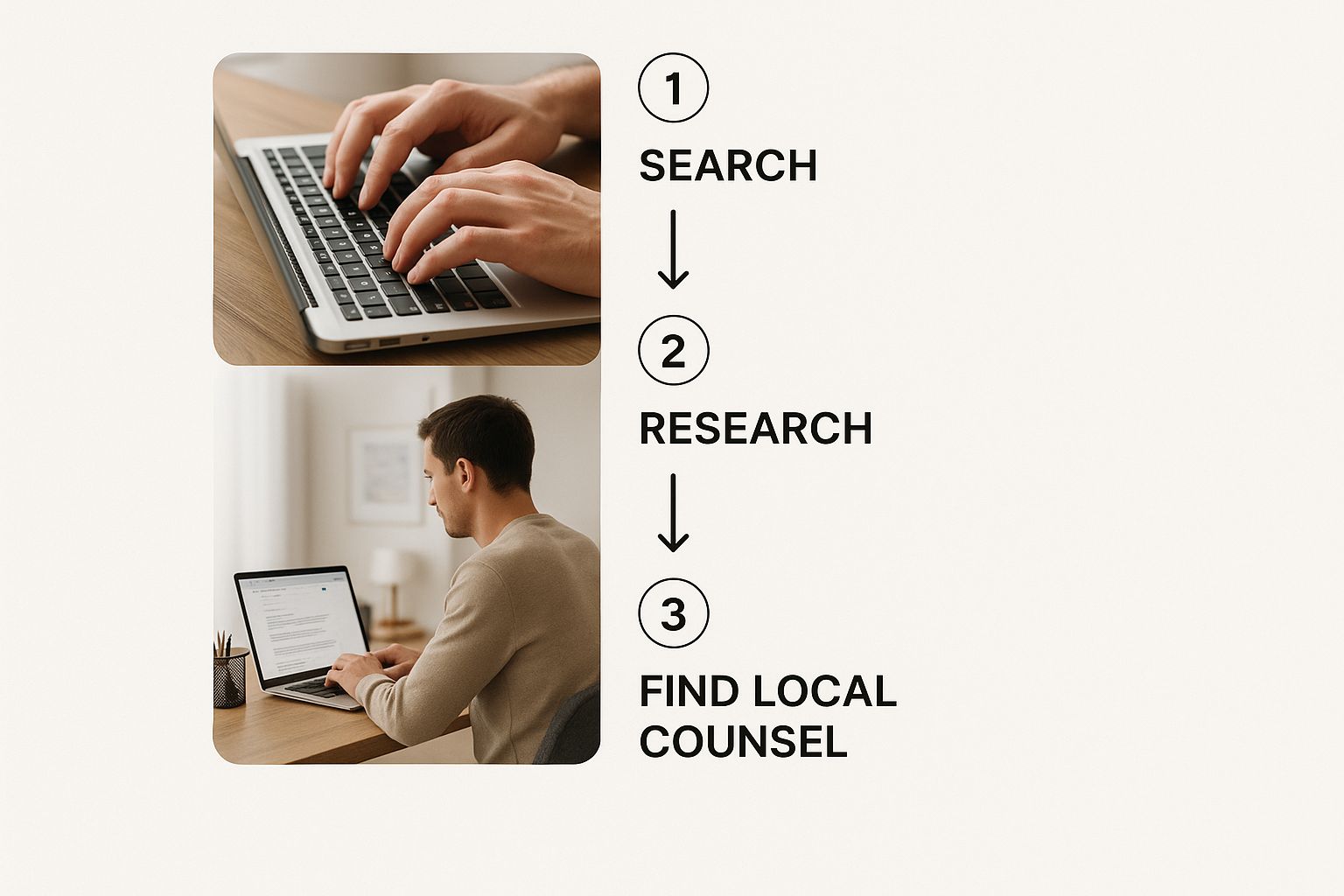
As you can see, a focused, multi-channel approach is what can separate a frustrating search from one that lands you a qualified list of potential attorneys.
Refining Your Initial Search Terms
Vague searches often get you vague results. Instead of just "defense attorney near me," it can be helpful to get specific. If an arrest occurred in Forsyth County, Georgia, one might try searching for "DUI defense lawyer in Cumming, GA" or "theft charge attorney near Milton."
This simple tweak can filter out attorneys who don't practice in that area or handle that type of case. It may narrow the field to relevant professionals who are familiar with the local prosecutors and judges.
This local focus can be critical. The legal landscape can vary wildly from one place to another. While there are over 463,000 law firms in the U.S., you're looking for the one that's right for your situation, right where you are.
The goal isn't to find every attorney in the state. It’s to identify a handful of highly relevant local professionals who know the local system. Specificity can be a powerful tool.
Using Professional Directories and Associations
Once a few names pop up from your initial search, it's time to do some vetting. Relying on a slick website alone might not be enough. Starting with these more reliable sources to gather initial information can help weed out certain options.
| Where to Begin Your Attorney Search |
| :— | :— | :— |
| Platform or Method | What Information to Gather | Key Advantage |
| State Bar Association Website | Attorney's full name, license number, disciplinary history, and date of admission. | Official verification that the attorney is in good standing and licensed to practice law in your state. |
| Reputable Legal Directories | Areas of specialization, client reviews, peer endorsements, and case history. | Provides a more detailed professional profile and social proof beyond what the attorney's own website might show. |
| Local Court Records Search | See which attorneys frequently handle cases similar to yours in your specific courthouse. | Unfiltered insight into an attorney's actual local experience and activity level. |
These resources can help you move beyond marketing and into the facts. Every licensed attorney in Georgia, for example, is registered with the State Bar. You can go to their website, look them up, and confirm they are in good standing—a crucial first step.
From there, you can explore directories for reviews and see what their peers and past clients have to say. For more guidance on building a solid, well-vetted list, you can find additional tips in our article about how to find a good criminal lawyer. This groundwork prepares you to move forward with a strong list of candidates.
Evaluating an Attorney's Experience and Specialization
Once you have a short list of names from your "defense attorney near me" search, the next step is digging deeper than a website's homepage to figure out what kind of experience each lawyer actually brings to the table.
Not all professional experience is created equal, especially when your future is on the line. A lawyer who handles divorces one day and car accidents the next may not have the focused knowledge your case might demand. A professional whose practice is dedicated to criminal defense is constantly dealing with local prosecutors, judges, and the specific laws relevant to your situation.
Look for Relevant Case Experience
The number of years an attorney has been practicing is a decent starting point, but it doesn't tell the whole story. For instance, a lawyer with 20 years of general practice might have less relevant criminal defense knowledge than someone with five years focused solely on DUI and drug charges.
Look for proof of experience that mirrors your own circumstances. If you're facing a felony drug charge in Forsyth County, an attorney whose website or professional profile is filled with their work on similar cases, in that specific jurisdiction, might be a good fit.
This kind of focused experience is critical because a specialist understands the small details that can make a huge difference. They may already know the common tactics prosecutors use for your type of charge and have a playbook of effective defense strategies.
A general practitioner knows a little about a lot of things. A criminal defense specialist knows a lot about the one thing that matters to you right now. Their focused practice can be a distinct advantage.
Distinguishing Between Types of Experience
It's also important to understand the different kinds of experience an attorney has. Some lawyers are exceptional negotiators who are masters at securing favorable plea deals before a case ever sees a courtroom. Others are battle-tested trial attorneys with years of experience arguing in front of a judge and jury.
Consider what your situation is most likely to require. An attorney with a background as a former prosecutor, for example, brings a unique and powerful perspective. They have an insider’s view of how the other side builds a case, which can be invaluable when crafting a defense.
- Negotiation Skills: Look for mentions of successfully reduced charges or outright case dismissals. This shows they may know how to work effectively with prosecutors.
- Trial Experience: An attorney who frequently goes to trial is comfortable and confident in a courtroom. This may be important if your case is complex or if a plea deal is off the table.
Understanding the difference between a bench trial and a jury trial will also help you assess an attorney's background. To get a better handle on these courtroom scenarios, you can learn more about the key differences between a bench trial and jury trial in Georgia in our detailed guide. This knowledge will equip you to ask more pointed questions about their specific trial experience during your initial consultation. By carefully evaluating these factors, you can cut through the noise and narrow your list down to professionals with the proven skills your case may need.
Why Local Courtroom Knowledge Matters
When you search for a "defense attorney near me," that last part—"near me"—is way more important than just finding an office with a short commute. It's about hiring someone who truly understands the specific courthouse, and the people in it, where your case will be decided.
Think of it as home-field advantage. This isn't just a small detail; it can be a massive strategic edge that can change the direction of a case.
An attorney who is in the same courts day in and day out picks up on all the unwritten rules and local procedures. They may know exactly how certain clerks want documents filed or which specific motions are handled a certain way. These are the little things that can prevent frustrating delays and show the court you're taking this seriously.
Understanding the Local Players
One of the biggest benefits of hiring local is the attorney’s existing relationships within that legal community. This doesn't mean they can call in favors to make a case disappear. It’s not about that at all.
What it does mean is they have a real-world understanding of the people involved. A lawyer who works in Forsyth or Cobb County courts every day knows the personalities, habits, and legal philosophies of the local judges and prosecutors.
This kind of insight can be invaluable. A local attorney might know from experience that one prosecutor is often willing to negotiate reasonable plea deals for first-time offenders, while another is known for being particularly aggressive. They may also have a sense of which legal arguments a particular judge finds persuasive, based on years of observing them in action. You can't learn that from a textbook.
An attorney's familiarity with the local legal landscape—the prosecutors, the judges, and the standard procedures—is one of the most powerful, yet often overlooked, assets in building a strong defense.
Navigating Prosecutorial Norms and Community Standards
Every jurisdiction has its own culture. The way prosecutors approach cases in Roswell might be completely different from how they handle them in Marietta, even for the exact same charge. A local defense lawyer understands these nuances and can anticipate the prosecution's next move.
They may know what kind of evidence the local DA’s office tends to focus on and what a "standard" plea offer looks like for a specific crime in that particular courthouse.
This local feel also extends to understanding community standards, which becomes critical if a case ever goes before a jury. An attorney who lives and works in the area may have a much better sense of the local jury pool. They can build a defense that connects with the values and perspectives of the people who will actually be deciding the case.
Whether you're in Alpharetta, Milton, or Johns Creek, having a lawyer who is part of the community fabric truly matters. To see how this local knowledge plays out across different regions, you can find more information about the legal system in Georgia and how a dedicated attorney navigates it. It's this deep understanding that makes a local expert an effective guide.
Reading Online Reviews and Client Testimonials
After your search for a "defense attorney near me" turns up a few names, the next natural step is to see what past clients are saying online. It’s a smart move—over 90% of people check online reviews before making almost any decision. These testimonials can give you a real glimpse into how a lawyer actually operates.
But you have to approach this with the right mindset. Reading online reviews isn’t just about tallying up stars; it’s about learning to read between the lines. A single, vague five-star review isn't nearly as useful as a detailed four-star one that explains how the attorney handled communication during a tough case.
Looking for Patterns in Feedback
Don't get hung up on one or two individual ratings. The real gold is in the patterns you find across multiple reviews and platforms. Are clients saying the same things over and over, good or bad? That's what you want to pay attention to.
Here are a few consistent themes to watch for:
- Communication: Do people consistently say the lawyer was easy to get ahold of and kept them in the loop? Or do you see a string of complaints about unreturned calls and feeling left in the dark?
- Demeanor: Look for words like "respectful," "professional," or "compassionate." How an attorney and their staff treat people during a stressful time says a lot about their practice.
- Case Details: The best reviews are specific. A comment like, "They helped me with my DUI in Forsyth County and knew exactly how that court works," tells you a lot more than just "they were great."
A single bad review could just be an outlier. But a pattern of complaints about poor communication or lack of preparation could be a red flag. On the flip side, when you see consistent praise for a lawyer’s diligence and straight-talk, you can feel more confident.
How to Spot Authentic and Helpful Reviews
Real reviews usually tell a story, even if it’s a short one. They feel like they came from a real person who was in a real, stressful situation. Be wary of feedback that’s overly generic or vague.
You want to find reviews that mention specifics—things like how the attorney prepared them for a court appearance or took the time to explain a confusing legal document. These details paint a much clearer picture of what it’s actually like to have that person in your corner.
At the end of the day, you’re not just looking for a lawyer with a high rating. You’re looking for someone whose approach gives you confidence when you need it most.
How to Prepare for Your Initial Consultation

That first call to a criminal defense lawyer is a huge step. Think of the initial consultation as a two-way interview—it’s your chance to size them up, and their chance to get the basics of your situation. If you walk in prepared, you make every minute of that meeting count.
The whole point is to leave that meeting feeling confident you can trust this person with your future. Good preparation helps you get the answers you need to make a solid decision.
Gathering Your Documents and Information
Before you head to their office, try to get all your relevant paperwork together. This gives the attorney a much clearer picture of what you're up against right from the start and saves everyone valuable time. Don’t stress if you can’t find everything; just bring what you have.
An organized file can help a lawyer grasp the key facts of your case in minutes.
- Official Documents: Bring any paperwork the court or police gave you. This means bail papers, the citation or ticket, any search warrants, or documents listing the official charges against you.
- Your Written Account: Before the meeting, take some time to write down everything you remember about what happened. Jot down dates, times, locations, and the names of anyone else involved or who was there. This keeps critical details from slipping your mind when you're talking to the attorney.
- A List of Questions: Prepare a list of questions to ask. This is your chance to learn about their background, how they communicate, and their strategy for cases like yours.
Questions to Ask a Potential Defense Attorney
This first meeting is your opportunity to interview the person who might be defending you. The questions you ask should give you a real sense of their professional style and how they actually run their cases.
For instance, the legal field is changing. According to recent data, 54% of legal professionals are now using AI for tasks like drafting documents, and many are looking at it for analyzing firm data. An attorney's willingness to use modern tools can point to a more efficient, forward-thinking practice. You can read more about this in the latest legal industry trends.
The purpose of the initial consultation is to determine if you feel a sense of confidence and trust. You are looking for a professional who not only has the right experience but also communicates in a way that makes you feel heard and respected.
To get a feel for their practice, try asking questions like these:
- How much of your practice is dedicated to criminal defense?
- Have you handled cases similar to mine in this specific court (e.g., in Forsyth or Cobb County)?
- Who will be my primary point of contact at your firm?
- How do you typically communicate updates to your clients?
- What is your general approach or philosophy when handling a case like this one?
- Can you explain your fee structure and what it includes?
These questions are designed to get past the qualifications on their website and give you a real look at what it would be like to work with them during a tough time. The right "defense attorney near me" isn't just someone with the right skills—it's someone who makes you feel supported.
Common Questions About Finding a Defense Attorney
When you're looking for a criminal defense attorney, questions come up fast. It's a confusing process, and getting straight answers can make all the difference. Let's walk through some of the most common things people ask when they start their search.
The legal world is massive. As of recently, there were over 252,159 defense attorneys practicing in the United States alone, part of a legal profession that tops 1.3 million lawyers. Sifting through all those options can feel overwhelming. You can find more details on employment trends for defense attorneys at Zippia.com, but the key is to focus on what matters for your case.
When Is the Right Time to Hire an Attorney?
This is probably the most frequent—and most critical—question we hear: "When do I actually need to get a lawyer?"
While every situation is different, many people find it beneficial to contact an attorney as early in the process as possible. If you've been arrested or have any reason to believe you're under investigation, that may be a good time.
Getting an attorney involved early means they can begin working on the situation before formal charges are even filed. They can handle all communication with law enforcement, which can prevent someone from accidentally saying something that could be used against them, and start preserving evidence. If you wait until the first court date, valuable time and potential opportunities to build a strong defense from day one may have been lost.
Understanding Attorney Fees and Costs
Worries about the cost of hiring a "defense attorney near me" are completely normal and valid. Most criminal defense lawyers use a few standard ways to handle fees.
- Flat Fee: This is a single, set price for handling an entire case, or at least a specific stage of it. It’s very common in criminal defense because it gives you certainty about the total cost.
- Hourly Rate: Some attorneys bill for their time by the hour. You'll usually pay an upfront retainer, which is like a down payment they draw from as they work.
- Payment Plans: Many firms understand that not everyone has the full fee ready to go. Many law firms are willing to arrange a payment schedule to make their services more accessible.
The most important thing is to get a clear, written fee agreement before you commit. It should spell out exactly what services are included, how billing works, and any other costs you might have to cover, like fees for expert witnesses or court filings. No surprises.
The Role of a Former Prosecutor
People often ask if it's a good idea to hire a defense attorney who used to be a prosecutor. From our experience, many find this background to be very beneficial.
An attorney with a prosecution background brings an invaluable perspective to a defense. They know exactly how the other side builds a case because they've done it themselves.
They may understand the internal politics of the DA's office, what evidence they prioritize, and what their go-to strategies are. This isn't about "secret handshakes"; it's about having a deep, practical understanding of the opponent's playbook. That kind of insider knowledge can be a game-changer when negotiating a plea deal or preparing for a fight in court.
Facing criminal charges in Alpharetta, Cumming, or anywhere in Forsyth County demands a defense built on local experience. Brian Hansford Law offers just that, with over 25 years of legal practice, including crucial time served as a prosecutor. We use that knowledge to protect your rights and fight for the best possible outcome. If you need a dedicated defense, learn more about how we can help at https://challengemycharge.com.
