
An officer in Cobb County takes the stand and says, “A witness told me the driver admitted he was high.” A bystander never appears. The speaker is not under oath. Yet the prosecutor still tries to get the statement in front of the judge or jury. That is where hearsay becomes a defense issue, not a law school definition.
In plain terms, hearsay is an out-of-court statement offered to prove the truth of the statement. Under FRE 801(c), that is the basic definition, and FRE 802 generally excludes it unless a rule allows it in. Georgia practice tracks the same fight closely enough that defendants in Alpharetta, Roswell, Cumming, and Marietta run into this issue all the time in DUI, drug possession, theft, juvenile, and probation cases.
I saw this repeatedly as a prosecutor, and I challenge it now from the defense side. The State often tries to present hearsay through an officer, a 911 call, a passenger, a confidential informant, or a report summary because that version of the evidence can sound cleaner than live testimony. In Forsyth County and Cobb County courts, the outcome often turns on one practical question: is the prosecutor offering the statement for its truth, or for some other limited reason?
That fight can change the direction of a case fast. It affects whether an officer can repeat what a store clerk said in a shoplifting case, whether a passenger’s roadside statement comes into evidence in a DUI stop, and whether the jury hears an accusation from someone your lawyer cannot effectively cross-examine.
If you are dealing with a Georgia impaired-driving charge, it also helps to understand the legal distinctions between DUI and DWI in Georgia.
The hard part is not spotting the word “hearsay.” The hard part is knowing which exception the prosecutor will claim, whether the Confrontation Clause gives you a stronger argument, and how to object in a way that works in a courtroom in North Atlanta. A useful objection is usually short and specific: “Objection, hearsay. No foundation for an exception.” In some cases, the better follow-up is just as important: “And admitting it would deny the defense the right to confront the declarant.”
That is the difference between academic evidence law and trial strategy. The examples that follow focus on the statements prosecutors rely on most, the exceptions they invoke, and the pressure points a defense lawyer can use to keep weak secondhand evidence from carrying the case.
1. Excited Utterance Exception – The Statement Made in the Heat of the Moment
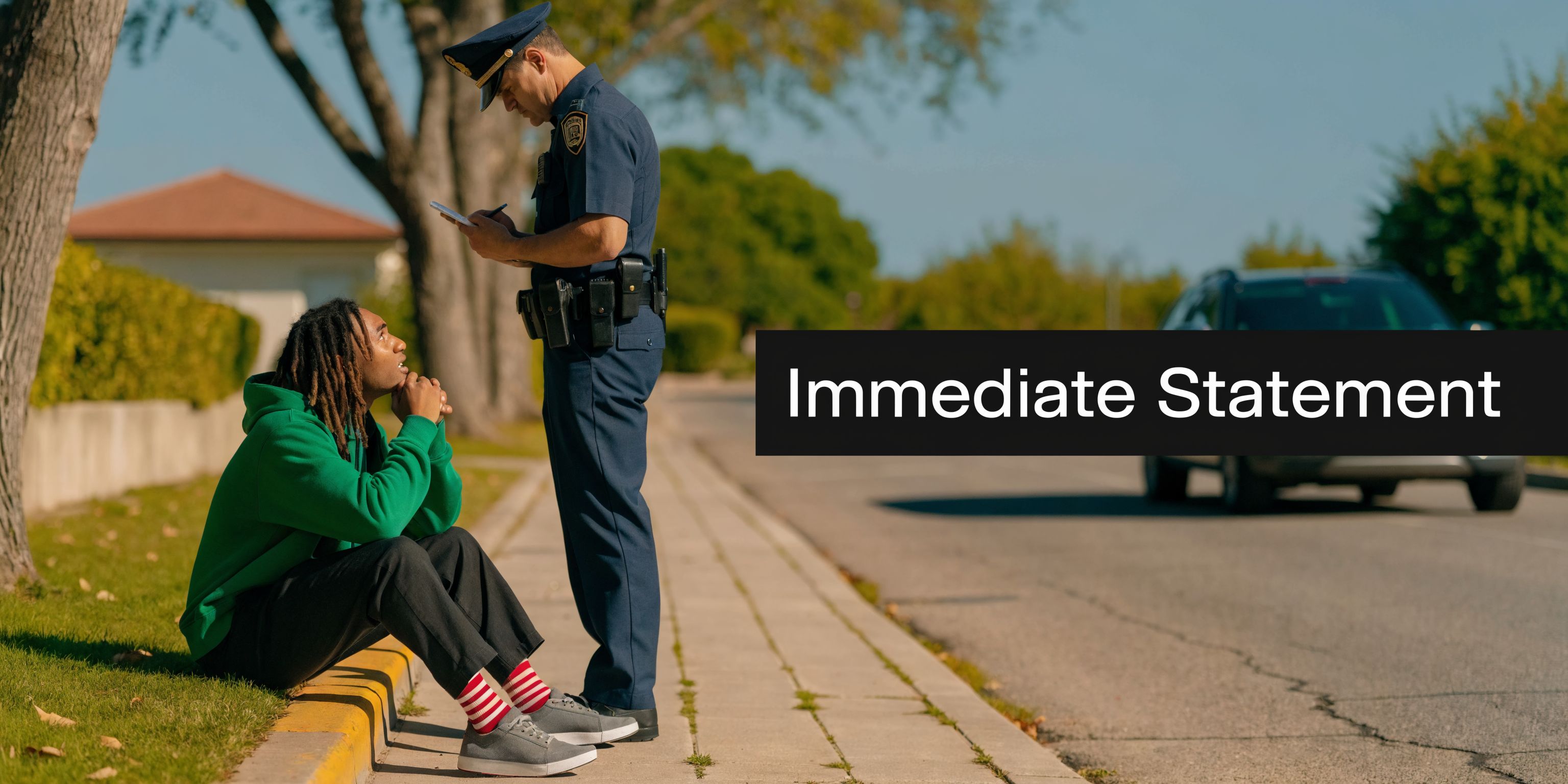
A Cobb County officer arrives at a crash on Barrett Parkway. One driver is crying, a passenger is yelling, and a bystander points at a truck and says the driver was drunk. Ten minutes later, the prosecutor wants the jury to hear every word of that scene through the officer.
That is the setting where the excited utterance exception becomes a trial issue, especially in DUI, assault, and drug cases across North Atlanta.
Georgia courts may admit an out-of-court statement if the speaker made it while still under the stress of a startling event. Prosecutors use this exception often because it gives them a path to place dramatic statements in front of the judge or jury without calling the original speaker first. In Alpharetta, Cumming, Marietta, and Roswell cases, I watch the State rely on it for roadside comments, 911 descriptions, and statements officers collect in the first few minutes after police arrive.
Typical examples are familiar. A bystander says, “That black truck ran the light.” A driver blurts out, “I only had two beers,” during a DUI stop. A complainant says, “He hit me,” while still crying and shaking outside an apartment.
The legal fight is usually over reliability, and the practical fight is over foundation.
From a defense standpoint, stress alone does not answer the question. A frightened person may speak fast, but that same person may also be confused, intoxicated, injured, angry, or repeating what someone else just said. In Forsyth County and Cobb County courtrooms, judges want details. How much time passed. What the witness observed. Whether officers asked questions before the statement came out. Whether the speaker had a reason to guess, exaggerate, or latch onto crowd chatter.
If an officer describes a witness as “excited,” I press on specifics. Was the person at the scene when the event happened? Did the person personally see the car cross the center line? Did police separate witnesses, or did everyone stand together and talk before the statement was recorded? Those answers often decide whether the statement stays in or gets limited.
Practical rule: Focus on timing, stress, and firsthand perception. Weak proof on any one of those points can give the defense a solid objection.
What tends to work for the defense
The strongest challenges are fact-specific and easy for the judge to follow.
- Pin down the timeline: Ask when the event occurred, when the statement was made, and what happened in between.
- Force the witness to identify the basis of knowledge: Ask whether the speaker saw the event, heard it from another person, or assumed what happened from the aftermath.
- Test the speaker’s condition: Fear, injury, intoxication, and confusion may affect accuracy as much as spontaneity.
- Use the recordings: Bodycam, dashcam, surveillance footage, and 911 audio often show whether the statement was spontaneous or came after prompting.
- Object with precision: “Objection, hearsay. No foundation that the declarant personally observed the event or made the statement while still under the stress of it.”
That last point matters. As a former prosecutor, I can say the State benefits when defense counsel objects in general terms and sits down. A better objection forces the prosecutor to build the record in real time, and sometimes they cannot do it.
Roadside statements in DUI cases are a common example. Officers may try to repeat what a passenger, bartender, or bystander said about drinking, driving, or impairment. Those statements can trigger both hearsay and constitutional problems, particularly if police questioning produced the statement. If police interrogation is part of the timeline, it helps to understand how Miranda rights apply during police questioning.
Georgia’s hearsay rule under OCGA § 24-8-802 follows the general rule that hearsay is inadmissible unless an exception applies. The women’s law overview of common hearsay exceptions gives a basic reference point, but the courtroom fight in a local criminal case is narrower. The judge will want a clean showing that the speaker reacted to a startling event, spoke before reflection set in, and spoke from personal knowledge.
What usually does not work
A bare objection rarely wins this issue.
If defense counsel says only, “hearsay,” the prosecutor will answer, “excited utterance,” and the court may admit the statement unless someone forces the missing details onto the record. The better approach is direct and practical: ask how long after the event the statement was made, who was present, whether officers had started questioning, what the declarant perceived, and whether the witness is repeating someone else’s version.
That is how hearsay objections become trial tools instead of law-school vocabulary.
2. Statement Against Interest – When a Statement Helps the Defense Because It Incriminates the Speaker
Some hearsay fights aren’t about keeping evidence out. They’re about getting defense evidence in.
A statement against interest can help when another person says something that exposes that person to criminal or civil trouble. In plain English, if someone says, “I did it, not him,” that statement may matter a great deal. But it doesn’t walk into evidence automatically.
Drug cases are where I see this issue most often. Police find narcotics in a vehicle or a shared apartment. One person later says the drugs were theirs. In a theft case, a co-worker may admit taking the merchandise. In a hit-and-run investigation, another driver may say they caused the crash.
Why this exception can be powerful
Jurors understand self-inculpatory statements differently from self-serving ones. If a third party says something that hurts themselves, that can carry considerable force.
Still, courts scrutinize these statements hard. Judges want to know whether the person is unavailable, whether the statement was against that person’s interest, and whether outside facts support it.
That corroboration piece is where many defense efforts rise or fall. If the statement stands alone, the State will attack it as a favor, a lie, or a last-minute attempt to rescue the accused.
What strengthens the argument
In practice, I want surrounding proof.
- Match the statement to physical evidence: Location, fingerprints, texts, access to the property, or vehicle control can all matter.
- Lock in the timing: A statement made before anyone knows the defense theory is usually stronger than one made after charges are filed.
- Preserve the exact language: Paraphrases are weaker. Recordings, signed statements, or reliable witness testimony are better.
- Show why the speaker would know the facts: If they confess to conduct only the person involved would know, that helps.
Clients are often surprised that a favorable statement can still face resistance. That’s one reason early case preparation matters. If police questioned your friend or co-defendant, issues about warnings, custodial interrogation, and statement handling can become important. This explanation of Miranda rights in Georgia criminal cases helps frame part of that problem.
A defense-friendly hearsay exception is only as good as the foundation under it.
The trade-off many miss
There’s risk here.
If you try to introduce a third party’s incriminating statement, the prosecution will often argue the speaker is lying to protect you. They may also seek to introduce other damaging context around that same statement. Sometimes a defense lawyer should fight to admit it. Sometimes using the statement for advantage in negotiation or investigation is a better move than making it the centerpiece at trial.
That’s especially true in conspiracy, drug possession, and white-collar cases in Johns Creek, Milton, and Roswell, where one statement can open the door to a broader argument about who knew what, and when.
3. Prior Inconsistent Statement – Using Contradictions to Undermine Prosecution Witnesses
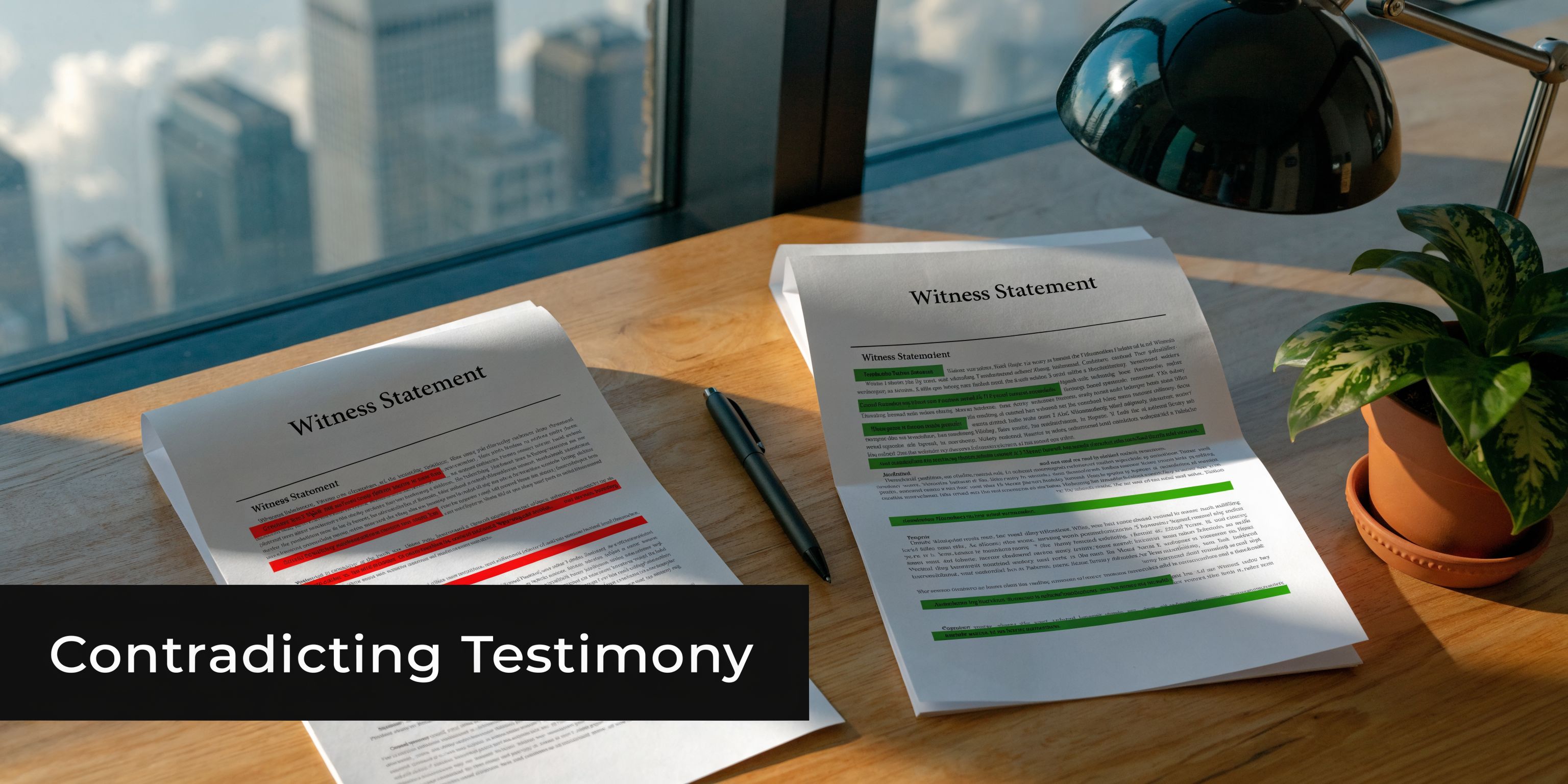
A deputy in Cumming testifies that your car drifted across the center line twice. The bodycam shows a shorter stop, less detail, and no clear description of two lane violations. By the time the case reaches a courtroom in Forsyth or Cobb County, that gap matters.
Prior inconsistent statements often become one of the best tools for the defense because they expose how a prosecution story changed over time. Under Rule 801(d)(1)(A), some prior inconsistent statements are not treated as hearsay if the legal requirements are satisfied. The primary fight is usually narrower. Can the earlier statement come in only to attack credibility, or can the judge let the jury consider it for the truth of what it says?
That distinction changes trial strategy.
I used to evaluate these issues from the prosecution side, and now I use them against the State. In DUI, drug possession, and assault cases around Alpharetta, Roswell, and Marietta, witnesses rarely repeat a story the same way three times. The officer's incident report says one thing. The dashcam suggests another. Trial testimony grows more certain after months of preparation. A good defense does not just point out that something changed. It shows the court why the change affects identity, impairment, possession, or intent.
Where these contradictions show up
DUI cases are full of them. An officer may write that a driver had slurred speech, then the video shows clear answers. A report may claim bloodshot eyes and strong odor of alcohol, while the recording captures no follow-up questions about allergies, fatigue, or recent smoking.
Drug cases have their own version. A witness first says the drugs were in "the car," then later says they were in "his backpack," then eventually says everyone in the vehicle knew they were there. That is not a minor wording issue. In a constructive possession case, it can decide guilt or innocence.
These cases turn on credibility fast.
How to use a prior inconsistent statement the right way
The strongest cross-examinations in Cobb, Fulton, and Forsyth are disciplined. Judges have heard plenty of lawyers argue with witnesses. What gets traction is precision.
- Lock in the current testimony: Get a clear answer before showing the contradiction.
- Pin down the earlier statement: Identify the report, bodycam clip, hearing transcript, text message, or recorded interview.
- Use the exact words when possible: A quotation is stronger than a paraphrase.
- Focus on points that matter to the charge: Driving pattern, field sobriety instructions, who possessed the drugs, where an alleged assault started, or whether the witness could see what they claim to have seen.
In practice, I often tell clients to resist the urge to explain the contradiction for the witness. Let the record do the work. A clean inconsistency is usually more persuasive than a long argument about why it happened.
If you may take the stand yourself, the same rule applies to you. Preparation matters because one loose answer can hand the prosecutor an impeachment point. This guide on how to testify in court without hurting your case addresses that problem directly.
The best inconsistency is one the jury understands immediately and the witness cannot explain cleanly.
What judges and prosecutors are watching for
Some prior inconsistent statements help only with impeachment. Others may come in substantively if they were made under oath in a prior proceeding and the rule's foundation is satisfied. That is a major tactical difference. If the statement only impeaches, the jury hears that the witness changed stories. If it comes in substantively, the earlier version may itself become evidence of what happened.
That is why foundation matters so much in local practice. In a Forsyth County DUI case, for example, counsel may need the bodycam timestamp, the officer's report, and the suppression hearing transcript ready to go. In Cobb County drug cases, it may be the discrepancy between the arrest affidavit and later testimony that opens the door.
There is also a trade-off. Chasing every contradiction makes a lawyer look unfocused. Jurors do not care whether a witness described a car as dark blue in one statement and navy in another unless color identification matters. They do care when the witness changes the number of drinks, the location of the drugs, the basis for the stop, or whether they saw your hands.
A contradiction is useful when it weakens the State's theory, not just when it exists.
4. Dying Declaration – Statements Made Believing Death Is Imminent
A man is pulled from a wreck on GA 400. He is bleeding, struggling to breathe, and tells a paramedic, “The other driver crossed the line.” By the time the case reaches court in Cumming or Marietta, that statement can become a centerpiece of the prosecution.
That is why dying declarations get so much attention. They carry obvious emotional force, and prosecutors know jurors tend to treat them as especially believable. In practice, though, the State still has to lay a precise foundation before the judge should admit one.
The rule usually covers a statement made by someone who believes death is near and speaks about the cause or circumstances of the injury. In a homicide case, that may be an identification of the shooter. In a fatal DUI prosecution, it may be a statement about who had the light, who crossed the center line, or what happened seconds before impact. In an aggravated assault case, it may be a wounded victim naming an attacker while emergency personnel are trying to keep that person alive.
The main fight is usually over belief, timing, and clarity
From a defense standpoint, the first question is simple. What shows this person believed death was imminent at the exact time of the statement?
That point drove the result in Shepard v. United States. As discussed in this law review treatment of Shepard and dying declarations, the Supreme Court rejected use of the statement because the record did not establish the settled, hopeless expectation of death required for the exception. The problem was not emotional weight. The problem was foundation. The evidence suggested the declarant may still have believed recovery was possible.
That distinction matters in local courtrooms. I would press it hard in Forsyth County, Cobb County, or Fulton County because I have seen the State gloss over timing when the facts are sympathetic. A later death does not answer the legal question. Neither does a severe injury by itself. The judge needs evidence of the declarant’s state of mind when the words were spoken.
What defense counsel should pin down early
These cases turn on details gathered fast, often before the prosecution has organized its own timeline.
- What medical personnel said: Did anyone tell the declarant they were dying, or did staff reassure them they were being stabilized?
- How the declarant responded: Did they say goodbye, ask someone to care for family, or say they thought they would pull through?
- Physical and mental condition: Were they alert, sedated, fading in and out, confused, or answering in fragments?
- Exact language used: “I think it was him” creates a different record than “He shot me.”
- Opportunity to perceive: Could the declarant see the driver, weapon, or person involved, or were they inferring from noise, movement, or prior conflict?
A prosecutor will often argue the circumstances speak for themselves. Sometimes they do. Sometimes they do not. In close cases, bodycam footage, EMS notes, trauma records, dispatch audio, and the sequence of treatment become the difference between admission and exclusion.
How this plays out in North Atlanta criminal cases
This exception shows up less often than excited utterance, but when it appears, the stakes are usually higher. A dying declaration in a vehicular homicide case out of Alpharetta or Cumming can shape charging decisions, plea posture, and trial strategy from the start.
The defense response should be disciplined. Do not argue only that the statement is unfair or dramatic. Force the State to prove each foundation fact with witnesses who can supply it. Which medic heard the words? Who wrote them down? Were the words quoted exactly, paraphrased later, or filtered through an officer’s report? If the statement changed as it moved from paramedic to officer to prosecutor, that should concern any trial judge.
A short objection can frame the issue cleanly: “Objection, hearsay. The State has not shown the declarant believed death was imminent when the statement was made, and the record does not establish reliability as to perception or wording.”
Even if it comes in, the fight is far from over
Admission is only part of the battle. Weight matters.
Jurors may hear a dying declaration and assume it settles the facts. A good defense presentation narrows that assumption. The declarant may have been sincere and still mistaken. That happens in chaotic crash scenes, shootings with poor visibility, and fast-moving assaults where the injured person catches only part of what happened.
From an ex-prosecutor’s perspective, defense counsel can do real damage to the State’s narrative at this point. Cross-examination should focus on what the declarant could perceive, whether medication or blood loss affected clarity, and whether later witnesses are repeating a polished version rather than the original words. In the right case, the strongest point is not exclusion. It is showing the jury that the statement was incomplete, uncertain, or based on assumption rather than firsthand knowledge.
5. Excited Utterance vs. Spontaneous Statement – Distinguishing Similar Exceptions in Traffic and Assault Cases
A crash on Georgia 400. Two drivers are on the shoulder. One woman shouts, “He came straight into my lane,” before any officer gets there. Ten minutes later, after talking with other drivers and answering questions, she gives a fuller version. In court, the State may treat both statements as if they carry the same weight. They do not.
I see this confusion often in Forsyth, Cobb, and Fulton courtrooms. Prosecutors use “spontaneous” as a loose label for almost any quick statement. The legal work is narrower than that. An excited utterance depends on stress from a startling event. A present-sense or spontaneous-style statement usually depends on timing, contemporaneous observation, and the speaker’s limited chance to reflect.
That difference matters in traffic and assault cases because the facts change fast. A witness at a wreck in Cumming may blurt something out while glass is still on the pavement. A witness in Marietta may speak only after hearing other people compare stories. Those are different evidentiary foundations, and a judge should treat them that way.
The timeline usually controls this fight.
From a defense perspective, I build the sequence before I argue the rule. I want to know what happened, who arrived, who spoke first, and whether the statement came out on its own or in response to questioning. Bodycam often answers more than the report does. In DUI cases out of Alpharetta or Roswell, a roadside statement made during confusion at the stop raises one set of issues. A statement given later, after repeated police questions or after transport, raises another.
These facts usually matter most:
- The gap between the event and the statement: Even a short delay can matter if conversation or reflection filled the gap.
- What the witness experienced before speaking: Pain, fear, confusion, and shock may support an excited utterance. Calm discussion cuts the other way.
- Whether the officer or another person prompted the answer: A volunteered statement is different from a response to structured questioning.
- Whether other voices contaminated the account: Once witnesses start comparing versions, reliability becomes harder to defend.
Labels alone rarely win these hearings. Specific facts do.
If bodycam shows the witness standing calmly, answering in sequence, and adopting details after an officer asks who caused the wreck, the State has a weaker argument for any exception built on immediacy or stress. If the statement came out before any questioning, while the speaker was visibly shaken and focused on the event itself, the prosecution has a stronger foundation.
I also look at purpose. In U.S. v. Bishop, discussed in this NACDL hearsay guide addressing Bishop, the testimony was admitted to show the defendant’s state of mind and claimed good-faith reliance. The guide matters here because it ties the case directly to the point lawyers argue in hearings. The reason the State offers the statement can matter as much as the timing of the words themselves.
That creates a practical defense opportunity. A statement may miss the mark as an excited utterance. It may also fail as a present-sense statement. The prosecutor still may try to recast it under a different theory. Defense counsel needs to force that theory into the open and make the judge rule on the purpose for which the evidence is being offered.
A clean objection in a North Atlanta misdemeanor court might sound like this: “Objection, hearsay. The State has not established the foundation for an excited utterance or present-sense impression. The statement followed questioning and intervening conversation, so spontaneity and reliability are both in dispute.”
As a former prosecutor, I can say the State often gets more mileage from vagueness than from doctrine. Precision cuts that off. In the right DUI, traffic, or assault case, the winning move is to pin the witness to the timeline, the bodycam, and the exact words used at the scene.
6. Hearsay Within Hearsay – The Challenge of Multi-Level Out-of-Court Statements
Cases can get messy fast at this point.
An officer says, “Another officer told me that a witness said the driver admitted drinking.” That single sentence may contain multiple hearsay layers. Each layer has to be justified. If one layer fails, the whole thing may collapse.
Police reports are full of this problem. So are medical records, business records, investigator summaries, and informant testimony.
A common North Atlanta example
Suppose a report says: Officer Jones advised that a store clerk told him a customer said the accused hid merchandise in a bag.
That’s not one statement. It’s several stacked on top of one another.
First, the reporting officer is relaying what Officer Jones said. Second, Officer Jones is relaying what the clerk said. Third, the clerk is relaying what the customer supposedly said. If the prosecutor wants the jury to believe the accused hid merchandise, every level becomes a separate admissibility question.
How to dismantle multi-level hearsay
This is one area where organization matters more than flair.
- Break the statement into layers: Don’t argue with the paragraph as a whole.
- Ask what each speaker personally knew: Personal observation and repetition are not the same.
- Force the State to identify an exception for each layer: One valid exception doesn’t fix the entire chain.
- Seek the original witness: The farther the statement gets from the source, the weaker it becomes.
Multi-level hearsay often sounds stronger than it is because people hear it as one clean narrative.
Where clients get misled
Clients often think, “It’s in the police report, so it must be admissible.” That’s not how trial works.
Reports can guide an investigation. They don’t automatically become evidence of every assertion inside them. The same is true in DUI and drug cases involving operator notes, witness summaries, or lab paperwork containing secondhand statements.
This issue is especially important in Cumming, Johns Creek, and Forsyth County cases where the prosecution may rely on a chain of officer testimony instead of producing the witness. A good defense response is to isolate the exact statement, identify every level, and object to each one separately.
That often changes the courtroom dynamic. Once the judge sees the layers, the statement no longer sounds simple.
7. Confrontation Clause Implications – Sixth Amendment Challenges to Hearsay Evidence
A Forsyth County prosecutor offers a lab report, a certification, or a recorded statement from a witness who is not in court. The paper looks official. The problem is that your lawyer cannot cross-examine a piece of paper.
That is where the Sixth Amendment matters. The Confrontation Clause limits the State’s ability to prove its case with testimonial statements from someone who does not appear for cross-examination. In DUI, drug possession, and assault cases, that issue often matters more than the hearsay rule itself.
In practice, I look at one question first. Was this statement created to help build a criminal case? If the answer is yes, the State needs the witness in the courtroom, not a substitute document and not another officer summarizing what someone else said.
Where this comes up in North Atlanta courts
In Alpharetta, Cumming, Marietta, and Cobb County cases, confrontation fights commonly involve:
- Crime lab reports offered without the analyst who performed or reviewed the testing
- Breath-test or blood-test paperwork offered through a different witness
- Recorded or written witness statements taken during an investigation
- Certificates, affidavits, or formal findings prepared for prosecution use
As a former prosecutor, I can say the State often prefers the cleaner route. Paper is predictable. Live witnesses are not. Cross-examination exposes gaps in training, poor note-taking, broken chain of custody, weak memory, and shortcuts in testing or reporting. That is why the confrontation right has real force.
The tactical issue in a DUI or drug case
A DUI prosecution may try to rely on the machine result while avoiding the operator, the arresting officer may repeat what a non-testifying witness said, or a drug case may depend on a lab conclusion without bringing in the analyst who can answer basic questions about handling, contamination, or review.
Those are not small technical points. In a close case, they can decide whether the judge hears the State’s strongest evidence at all.
A well-timed motion to suppress evidence in a Georgia criminal case can put that issue in front of the court before trial, where it belongs.
What a strong objection usually sounds like
Judges in local courts respond better to a precise objection than a speech. The goal is to identify the statement, explain why it is testimonial, and state why cross-examination matters in your case.
Useful objection language often sounds like this:
- “Objection, Confrontation Clause. The State is offering a testimonial statement from a witness who is not present for cross-examination.”
- “Objection to the report unless the State produces the analyst or other qualified declarant who made the testimonial assertion.”
- “The officer can testify to what he did, but not repeat the absent witness’s investigative statement for its truth.”
Short. Specific. Hard to ignore.
What helps the defense
Start early if the State’s file shows the problem. Waiting until the exhibit is halfway into evidence gives the prosecutor time to fix it.
Force the State to identify the key witness. In Cobb or Forsyth, that may be the lab analyst, the breath-test operator, the interviewing officer, or the civilian witness whose statement is carrying the case.
Separate emergency statements from investigative ones. A statement made during an active emergency may be treated very differently from a statement taken after the scene is secure and officers are building a case.
Tie the objection to the facts you need to test. Bias, perception, timing, contamination, training, and memory give the judge a concrete reason to require live testimony.
Cross-examination is how the defense finds the weak spot. If the prosecution’s version only holds together because the speaker never takes the stand, that is where I press hardest in local court.
7-Point Comparison of Hearsay Examples
| Topic | Implementation Complexity 🔄 | Resource Requirements ⚡ | Expected Quality & Impact ⭐📊 | Ideal Use Cases 💡 | Key Advantages ⭐ / Main Limitations 🔄 |
|---|---|---|---|---|---|
| Excited Utterance Exception – The statement made in the heat of the moment | Low–Moderate 🔄 – timing/context arguments | Low ⚡ – timeline docs, witness cross-exam | Moderate ⭐📊 – often admitted, persuasive to juries | DUI, traffic collisions, assault/domestic incidents | Advantage: can admit spontaneous content quickly ⭐ – Limitation: courts/juries often find it reliable 🔄 |
| Statement Against Interest – When a statement incriminates the speaker | Moderate–High 🔄 – corroboration & unavailability issues | Moderate–High ⚡ – investigation, corroborating evidence | High ⭐📊 if admissible – can create reasonable doubt | Drug, theft, conspiracy, white‑collar cases | Advantage: powerful defense evidence when genuine ⭐ – Limitation: strict corroboration and availability rules 🔄 |
| Prior Inconsistent Statement – Using contradictions to undermine witnesses | Moderate 🔄 – foundation and confrontation steps | Moderate ⚡ – police reports, transcripts, records | High ⭐📊 – strongly harms credibility when material | DUI, assault, drug, traffic, property cases | Advantage: directly attacks witness credibility ⭐ – Limitation: must be material and properly founded 🔄 |
| Dying Declaration – Statements made believing death is imminent | High 🔄 – proving belief of imminent death and scope | High ⚡ – medical records, EMT testimony, expert proof | Very High ⭐📊 – extremely persuasive to juries | Homicide, aggravated assault, DUI‑fatality, hit‑and‑run | Advantage: highly probative and admissible ⭐ – Limitation: declarant unavailable and hard to rebut 🔄 |
| Excited Utterance vs. Spontaneous Statement – Distinguishing similar exceptions | Moderate–High 🔄 – nuanced timing and doctrinal lines | Moderate ⚡ – precise timeline, recordings, expert testimony | Variable ⭐📊 – can exclude evidence if distinction proven | Cases with borderline timing: DUI, assault, traffic, domestic | Advantage: targeted exclusion strategy ⭐ – Limitation: courts often conflate exceptions, timing is contestable 🔄 |
| Hearsay Within Hearsay – Multi‑level out‑of‑court statements | High 🔄 – must qualify each hearsay level separately | High ⚡ – parsing reports, motions in limine, documentary chase | High ⭐📊 – can exclude significant prosecution material | Police reports, medical/business records, informant chains | Advantage: powerful exclusion tool if levels fail ⭐ – Limitation: prosecution can layer foundations or use business‑record exceptions 🔄 |
| Confrontation Clause Implications – Sixth Amendment Challenges to Hearsay Evidence | High 🔄 – federal constitutional analysis (testimonial) | High ⚡ – pretrial motions, demand for live testimony, legal research | High ⭐📊 – constitutional basis can exclude critical evidence | Lab reports, police interrogations, informant statements in DUI/drug cases | Advantage: transcends hearsay rules; strong protection ⭐ – Limitation: Supreme Court narrowing and testimonial determinations complex 🔄 |
Your Next Move: Turning Hearsay into Your Defense Advantage
If you’re facing criminal charges, hearsay can feel abstract until you realize how often it shows up in the evidence against you.
It can be the officer repeating what a bystander said after a crash in Alpharetta. It can be a witness in Roswell changing details between the first interview and trial. It can be a lab report in a drug possession case, a breath-test statement in a DUI prosecution, or a line buried in a police narrative in Cumming that no one questions until the hearing starts.
That’s why understanding examples of hearsay matters so much. These aren’t law-school technicalities. They’re pressure points in Georgia cases.
The basic rule is straightforward. Out-of-court statements offered for their truth are generally excluded unless the prosecution can fit them into an exception or show they’re not being offered for their truth at all. But the specific work happens in the details. Timing matters. Purpose matters. The declarant’s condition matters. Whether police questioning shaped the statement matters. Whether the witness appears for cross-examination matters.
In my experience, people often make one of two mistakes.
First, they assume every out-of-court statement is automatically inadmissible. That’s wrong, and it can lead to false confidence. A damaging statement may come in under an exception if the defense doesn’t challenge the foundation carefully.
Second, they assume that if something is in a police report, recorded on bodycam, or repeated by an officer, it must be admissible. That’s wrong too. A lot of weak evidence sounds stronger because it appears in official paperwork.
The defense advantage comes from slowing the prosecution down and asking the right questions.
Who made the statement?
When was it made?
Why is the State offering it?
Did the speaker personally perceive the facts?
Was the statement spontaneous, reflective, self-serving, or induced by questioning?
Is the prosecution trying to use one exception to cover several separate layers of hearsay?
Does the Confrontation Clause require the witness to appear?
Those questions can expose major weaknesses in DUI, reckless driving, speeding ticket, license suspension, drug possession, misdemeanor, and felony cases across Forsyth County, Cobb County, East Cobb, Johns Creek, Milton, and Marietta.
They also affect how you can gain advantage outside the courtroom. A strong hearsay objection can improve plea negotiations, narrow the trial issues, support a motion in limine, strengthen a motion to suppress, or change how the prosecutor evaluates proof. Sometimes the best result comes from excluding the statement entirely. Sometimes it comes from reducing its impact and showing the court or jury why it shouldn’t be trusted.
If you’re trying to get ready for an upcoming hearing, this guide on how to prepare for court hearing can help you think through the practical side.
If you’ve been arrested for DUI, charged with drug possession, accused of theft, or you’re trying to figure out how to fight a traffic ticket in North Atlanta, don’t treat hearsay as a side issue. In the right case, it can be one of the strongest defense tools available.
A prosecutor’s case can hinge on a single out-of-court statement. Knowing how to challenge it can mean the difference between a conviction, a dismissal, a reduced charge, or a much better negotiating position. If your case is pending in Alpharetta, Cumming, Roswell, Johns Creek, Milton, Marietta, Forsyth County, or Cobb County, you need a defense lawyer who knows the local courts, knows the evidentiary rules, and knows how these issues play out when the judge is on the bench and your future is on the line.
Brian Hansford Law helps people facing DUI charges, drug cases, traffic offenses, and other criminal accusations across Alpharetta and North Atlanta. If you need a DUI lawyer, reckless driving lawyer, speeding ticket lawyer, license suspension lawyer, or experienced criminal defense attorney who can move quickly and challenge the evidence effectively, contact Brian Hansford Law for a free consultation.
