
The moments after an arrest can be a blur of confusion and stress. Most people are left wondering what on earth to do first. When you’re facing criminal charges, one of the most decisive actions you can consider is hiring a criminal defense attorney, and it’s often beneficial to do it fast—within the first 24 to 48 hours. This isn’t just an arbitrary timeline; that initial period is when evidence is still fresh and your rights are most at risk.
Your First Move After an Arrest

It’s natural to want to wait and see what happens, but that can be a mistake. Getting an attorney on your side immediately sets the foundation for a defense. Early involvement means someone is protecting your interests right from the jump, often before formal charges are even filed by the prosecutor’s office.
Think about a common scenario in Roswell or Marietta: a DUI stop on a Friday night. Without a lawyer, you might answer questions or agree to tests without fully understanding the consequences. An attorney can step in immediately to make sure your rights are respected during police questioning and help you navigate the initial administrative hurdles, like the ones that can affect your driver’s license.
The Critical 48-Hour Window
Those first two days are absolutely pivotal. Evidence has a short shelf life. Surveillance footage from a business in Alpharetta or an eyewitness’s memory of an event in Johns Creek can be lost or fade quickly. A good attorney knows to take immediate steps to preserve this crucial information before it disappears.
What you do—or don’t do—in those first few hours can shape an entire defense strategy. Early intervention isn’t just about reacting; it’s about proactively managing the situation to put you in a better position from the start.
An attorney’s presence is also a huge advantage during a bond hearing. They can argue for a reasonable bond, which could mean getting released from jail quickly. This allows you to get back to your job and family while the case moves forward, instead of sitting in a cell.
Building Your Defense from Day One
Here’s another example: someone is accused of theft at a busy retail center in Cumming or East Cobb. An experienced lawyer will immediately try to contact witnesses while their memories are clear. They’ll work to gather evidence that might otherwise be overlooked or lost. This proactive approach is exactly how a strong defense is built.
The data backs this up. A study from the National Legal Aid & Defender Association found that hiring a defense attorney within 48 hours of arrest increases dismissal rates by 28%, particularly for drug or theft charges in places like Milton and East Cobb. To get a better handle on the arrest process itself, you can read our detailed guide on what happens when you get arrested.
Waiting to hire a lawyer means you’re losing valuable time and missing opportunities. By the time you finally decide to make the call, key deadlines might have passed and critical evidence could be gone forever. Picking up the phone is the first step toward taking back control.
Finding Potential Attorneys in Your Area
Once you realize you need a lawyer, the next question is always, “Where do I even start?” A quick Google search will give you a list of names, but building a solid shortlist requires a more strategic approach, especially when your case is in a specific place like Forsyth County or Cobb County. You’re not just looking for any criminal defense attorney; you need someone who lives and breathes the local legal system.
Your immediate goal should be to find three to five promising candidates. This is a manageable number. It allows you to do your homework and schedule consultations without getting buried in options. Think of this as your initial intelligence-gathering phase—vetting the basics before you ever pick up the phone.
Leveraging Official and Local Resources
A great place to start is the official State Bar of Georgia directory. This isn’t just a list; it’s a first line of defense. It confirms an attorney is licensed and in good standing—a non-negotiable first step. You can usually filter by practice area, which helps you zero in on lawyers who actually focus on criminal defense.
From there, dig into local bar associations, like the one for Cobb County. These organizations are goldmines. They often have referral services that connect you with attorneys who are regulars in the very courthouse your case will be heard, whether that’s in Marietta or Cumming. That local connection is priceless. These lawyers know the clerks, the prosecutors, and the judges’ tendencies.
Distinguishing Between Reviews and Ratings
As you start looking up names, you’ll be hit with a wall of reviews and ratings. It’s crucial to know what you’re looking at.
- Online Reviews: These are client stories from Google, Avvo, and other public sites. They are great for getting a feel for an attorney’s communication style and how they treat their clients. Just remember, they can be subjective and are often written in the heat of the moment.
- Peer-Reviewed Ratings: Services like Martindale-Hubbell are different. These ratings come from other lawyers and judges—the people who see the attorney in action. They offer a more objective look at an attorney’s legal skill and professional ethics.
You need a balance of both. Great feedback from past clients combined with high marks from their peers is usually a sign you’ve found a genuinely respected and effective lawyer. For a deeper dive, our guide to finding a criminal defense attorney near you has more tips.
Verifying an attorney’s credentials can feel overwhelming, but it’s simpler if you know where to look. This table breaks down what matters and how to quickly check it.
Key Attorney Attributes and Where to Verify Them
| Attribute to Check | Why It Matters | Where to Look |
|---|---|---|
| GA Bar License Status | Confirms they are legally allowed to practice law in Georgia and have no disciplinary actions. | State Bar of Georgia website directory. |
| Criminal Defense Focus | Ensures they have deep, specialized knowledge, not just a general practice. | Attorney’s website (look for “Practice Areas”), Avvo profile. |
| Local Court Experience | Familiarity with local prosecutors, judges, and procedures is a significant advantage. | Attorney’s case results, testimonials, direct questions during consultation. |
| Peer Ratings | Indicates respect from other legal professionals for their skill and ethics. | Martindale-Hubbell, Super Lawyers, Avvo Ratings. |
| Client Reviews | Provides insight into communication, responsiveness, and the client experience. | Google, Avvo, Yelp. |
Taking a few minutes to cross-reference these sources gives you a much clearer picture of who you’re considering hiring.
Why a Local Criminal Defense Focus Is Crucial
Hiring a general practice lawyer for a criminal charge can be a huge mistake. It’s like asking your family doctor to perform brain surgery. An attorney whose practice is 100% dedicated to criminal defense has a deep well of experience and knowledge that can completely change the outcome of a case. They’re in the trenches every day, dealing with prosecutors and judges in courthouses from Alpharetta to Johns Creek, and they’re always up-to-date on the latest shifts in criminal law.
The right attorney doesn’t just know the law; they know the local players and the courthouse culture. This insider knowledge can be a significant advantage when negotiating or planning a defense strategy.
This local experience isn’t just a “nice-to-have”—it has a measurable impact. For instance, in Cobb County and East Cobb, where certain theft cases have spiked, a Clio Legal Trends Report showed that represented clients secure plea deals that are 40% more favorable. On average, that local expertise helps reduce sentences by 24 months. That’s not a small number. The data proves just how powerful it is to have the right, locally experienced lawyer in your corner.
You’re not just hiring a lawyer who happens to have an office nearby. You’re looking for someone who is a known, respected, and active member of that specific legal community.
Making the Most of Your Initial Consultation
That first meeting with a potential attorney is so much more than a simple “hello.” It’s an interview. This is your chance to really figure out if you’re talking to the right person to handle your case, someone you can trust with your future. Walking in prepared with the right questions is the difference-maker.
You have to get past the surface-level stuff. Don’t just ask, “Have you handled cases like mine before?” You need to dig in and understand their specific approach and actual, boots-on-the-ground experience, especially in the local courts of Forsyth or Cobb County.
The process isn’t complicated, but each step is crucial. You start broad, narrow your options, and then use the consultation to make a final, informed decision.
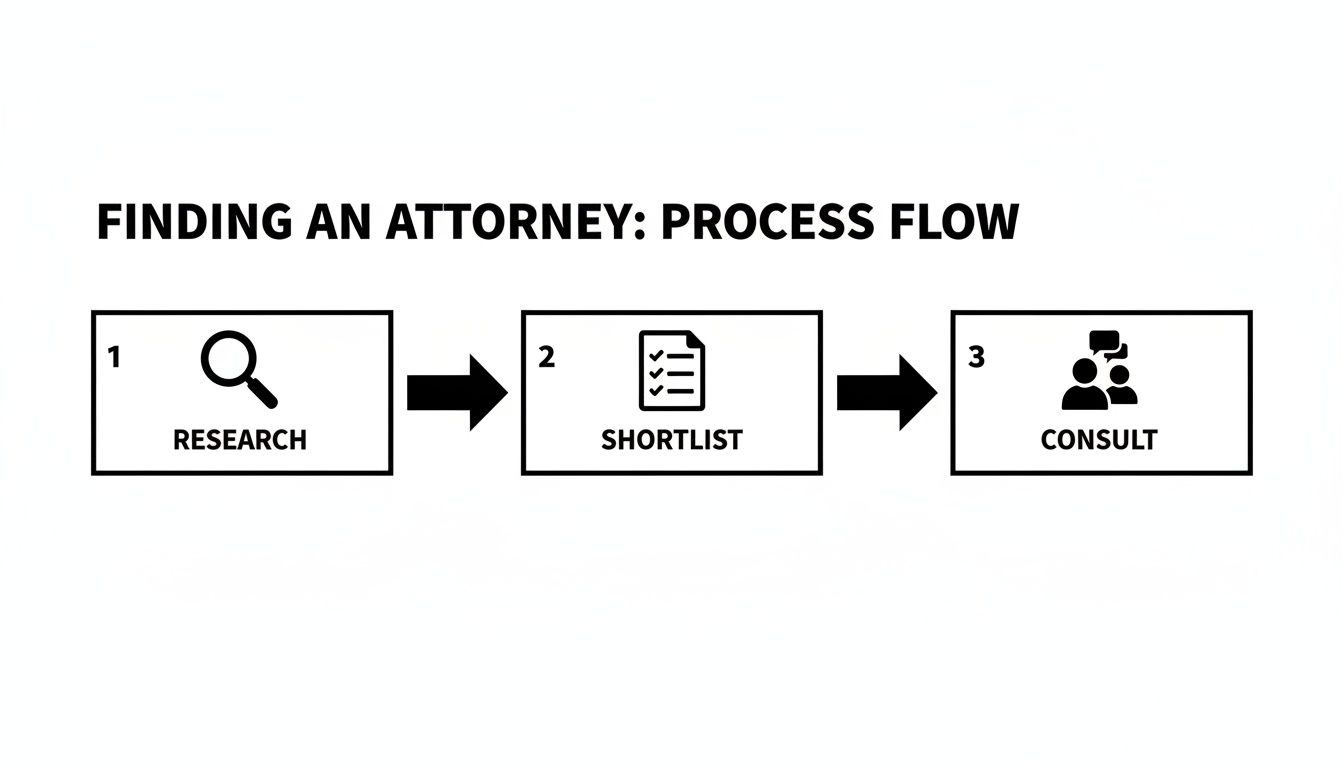
Think of it this way: research gives you names, shortlisting gives you options, but the consultation gives you answers.
Questions That Reveal True Experience
To really get a feel for an attorney’s skill, you need to ask questions that force them to give you a detailed, thoughtful answer. These aren’t “yes or no” questions. They’re designed to show you how they think and operate right here in Alpharetta, Roswell, or wherever your case is being heard.
Here are a few questions people often find helpful:
- “Can you describe your experience in the Forsyth County (or relevant county) courthouse specifically?” This is a test of their local knowledge. A great answer will include names of prosecutors, judges, and maybe even a few quirks about how that particular courthouse runs things.
- “Who will be my main point of contact throughout this case?” This is a huge one. In some bigger firms, the seasoned partner you meet with initially might hand your case off to a junior associate. You need to know exactly who you’ll be communicating with day-to-day.
- “What is your general philosophy or approach to cases like mine?” This gets to the heart of their strategy. Are they known for being aggressive right out of the gate, or do they focus more on negotiation? There’s no single right answer, but their style should align with your needs.
Their responses will tell you a lot more than their website ever could. You’re not just learning what they do, but how they do it.
Identifying Red Flags and Green Lights
Asking the right questions is only half the battle; you also have to know how to read the answers. Some responses should set off alarm bells, while others will give you the green light to move forward.
A reputable attorney will never promise a specific outcome. The legal system is full of variables, and guaranteeing a dismissal or a “win” isn’t just unethical—it’s a massive red flag. Their promise should be to build the strongest defense possible for you, period.
Be on the lookout for these warning signs:
- Vague or Evasive Answers: If they can’t clearly explain their strategy or past experience with similar cases, it might mean they lack the confidence or the right kind of expertise.
- High-Pressure Tactics: You should never feel like you’re being pushed to sign a retainer agreement on the spot. A professional will give you the time and space to make a decision you’re comfortable with.
- Poor Communication: Is the attorney distracted during your meeting? Do they talk over you or seem dismissive? If communication is a struggle now, just imagine what it will be like when things get stressful.
On the other hand, clear communication, a solid grasp of your specific charges, and a transparent conversation about fees are all great signs. Learning more about what to expect during a criminal lawyer free consultation can help you spot these things and feel more prepared to ask the tough questions.
Trusting Your Gut Instinct
At the end of the day, after you’ve checked their credentials and listened to their answers, this decision often comes down to your gut. Do you feel comfortable with this person? Do you trust them?
You’re going to be sharing very personal details of your life and depending on this person for guidance through a difficult time. Make sure you pick someone who not only has the right experience but who also makes you feel like you’ve been heard and respected. That personal connection is a critical piece of a strong attorney-client relationship.
Why Local Experience and Background Matter
When you’re looking to hire a criminal defense attorney, it’s easy to think all experience is created equal. The reality, especially in the tight-knit legal communities of Forsyth County and Cobb County, is far more complex. An attorney’s background—and more importantly, their deep-rooted local experience—can be one of the biggest factors in how a case turns out.
This isn’t just about having an office in Alpharetta or Roswell. It’s about having a real, working history inside the local justice system. A lawyer who is constantly in the same courthouse develops a unique understanding you just can’t get from a textbook. They learn the procedural quirks of certain judges and the negotiating habits of local prosecutors. This “insider knowledge” is a powerful tool.
The Advantage of a Former Prosecutor
One of the most valuable backgrounds a defense attorney can bring to the table is experience as a former prosecutor. This isn’t just about “knowing the other side’s playbook”—it’s about understanding the prosecution’s entire machine from the inside out. They know exactly how cases are built, where the weak spots usually are, and what kind of evidence prosecutors need to feel confident.
This perspective gives them a few key advantages:
- Anticipating the Strategy: A former prosecutor can often predict what the state will do next because they’ve made those same moves themselves hundreds of times.
- Spotting the Weaknesses: They are experts at finding flaws in police reports, procedural mistakes made during an arrest, and holes in the state’s evidence.
- Negotiating Effectively: Knowing what a prosecutor truly needs to close a case can lead to much more productive plea discussions, often resulting in reduced charges.
This unique insight shifts their approach from being reactive to being proactively strategic. They can build a defense specifically designed to take apart the case the prosecution is most likely to build.
Local Knowledge Is a Strategic Asset
Now, imagine combining that prosecutorial background with a deep familiarity of the courts in Cumming, Milton, or Marietta. This is where the real magic can happen. An attorney who knows the local legal landscape understands the unwritten rules and tendencies that dictate how things actually get done day-to-day.
Think about a first-time drug possession charge filed in Johns Creek. An attorney with strong local connections might know that a particular prosecutor is more willing to consider diversionary programs for first offenders. That knowledge could lead to a resolution that avoids a criminal conviction entirely—something an out-of-town lawyer might not even know is on the table.
An attorney’s relationships and reputation within a specific courthouse can open doors. When prosecutors and judges know a lawyer is prepared, professional, and credible, it can change the entire tone of the proceedings.
This local insight is both practical and powerful. It’s knowing which arguments work best with which judges and how to frame a plea offer for a specific assistant district attorney. This level of familiarity is earned through years of consistent practice in these specific communities, from East Cobb to Forsyth County.
How Hyper-Local Insight Plays Out
A complex white-collar case in Alpharetta requires a very different strategy than a misdemeanor theft charge in Roswell, but local experience is critical in both. For the white-collar case, knowing the economic crime detectives and the local DA’s priorities is invaluable. For the theft charge, understanding the standard plea deals and diversion options in that specific court can resolve the case quickly and favorably.
Ultimately, when you hire a criminal defense attorney, you aren’t just hiring their knowledge of the law. You’re investing in their experience, their relationships, and their reputation within the very system you’re facing. Choosing someone with a proven, local track record gives you a defender who knows not just the rules of the game, but also all the players.
Understanding Legal Fees and Retainer Agreements

Let’s be honest: the financial side of hiring a defense attorney can be intimidating. But an upfront, clear conversation about costs is one of the most important steps you’ll take. A good lawyer won’t shy away from this talk; they’ll be transparent about their fees so you know exactly what you’re paying for before signing anything.
This isn’t just about the total cost. It’s about knowing how you’ll be billed and what services are included. Getting this straight from the start prevents surprises later and lets you focus on your case, not on worrying about hidden fees.
Common Fee Structures in Criminal Defense
When you get down to the numbers, you’ll find that attorneys bill in a few different ways. The right structure often depends on how complex a case is, whether you’re in Alpharetta, Forsyth County, or somewhere else in North Georgia.
These are the most common setups you’ll run into:
- Flat Fee: This is a single, fixed price for the entire case or for specific stages, like pre-trial motions. It’s predictable and great for budgeting, which is why it’s so common for misdemeanors or less complicated felony cases.
- Hourly Rate: For more unpredictable or complex cases, an attorney might charge by the hour. You’ll get itemized invoices showing exactly what work was done. While less predictable, it ensures you only pay for the actual time your defense requires.
- Retainer Fee: Think of this as a down payment to secure the lawyer’s services. The attorney then bills their hourly work against this retainer. If the initial retainer runs out, you may need to add more funds to it.
Make sure to ask which structure they use and why it makes the most sense for your specific situation.
Never sign an agreement you don’t completely understand. A transparent, easy-to-read fee structure is the mark of a professional, trustworthy attorney. The goal is to leave no room for doubt about your financial obligations.
The Importance of the Engagement Agreement
Once you’ve decided to hire an attorney, all your verbal discussions will be put into a formal written document. This is your engagement agreement, and you should read it from top to bottom before you sign.
This isn’t just a piece of paper; it’s the official roadmap for your professional relationship. It protects both of you by setting crystal-clear expectations from day one. It should feel less like a dense contract and more like a straightforward plan of action.
Checklist for Reviewing Your Fee Agreement
Don’t just skim it. Read every single line and make sure you understand it. If anything is fuzzy, ask for an explanation right away. Any lawyer worth hiring will be happy to walk you through the details.
- Is the Scope of Representation Clearly Defined? The agreement must spell out exactly what the attorney will do. Does the fee cover pre-trial work only, or does it also include going to trial if necessary?
- Are All Costs and Fees Itemized? It should clearly state the fee structure (flat, hourly, retainer) and list other potential expenses, such as investigator fees, expert witness costs, or court filing fees.
- Is the Payment Schedule Outlined? You need to know when payments are due. Is the entire flat fee required upfront, or can you arrange a payment plan? For retainers, when will you need to replenish the funds?
- Is the Communication Plan Explained? The agreement might detail how and when you’ll receive updates on your case and who your main point of contact at the firm will be.
- What Happens if Representation Ends? It should explain what happens if you or the attorney decides to part ways, including how any unused retainer funds will be handled.
While BLS data shows the median pay for lawyers is around $151,160, with seasoned practitioners averaging $176,470, a great defense attorney’s value is measured in their commitment to a case, not just their income. In fact, first-year criminal defense salaries jumped by 21% between 2021 and 2023, showing a growing appreciation for this critical field. You can learn more about these trends in this Clio report about legal industry statistics. Your financial commitment is what secures a dedicated advocate in your corner.
Frequently Asked Questions About Hiring a Lawyer
When you’re searching for a criminal defense lawyer, a lot of questions come up. It’s completely normal. Getting straight answers is the first step toward feeling in control of your situation and making a confident choice.
Let’s walk through some of the most common questions people have, so you can move forward with a clear understanding of what’s ahead.
What’s the Real Difference Between a Public Defender and a Private Attorney?
This is one of the first things most people ask, and it really comes down to caseload and resources. A public defender is an attorney the government appoints for people who can’t afford to hire their own. Many are incredibly skilled and dedicated lawyers, but the reality is they are often juggling an enormous number of cases at once.
A private attorney, on the other hand, is hired directly by you. That relationship allows them to dedicate more focused time, energy, and resources to your specific case. Knowing this difference helps set realistic expectations for the kind of communication and personal attention you can expect.
Do I Really Need a Lawyer if I Know I’m Innocent?
Yes, absolutely. The justice system is a complex maze, and simply being innocent doesn’t guarantee the right outcome. An attorney does more than defend someone who is guilty; their job is to protect your rights, challenge the prosecution’s evidence, and make sure every single procedure is followed correctly.
Think about a mistaken identity case in Milton or an unfounded accusation in Johns Creek. Even if you’re 100% innocent, a sharp advocate can find evidence that clears you, file the right legal motions, and present your defense in a way the court will actually listen to. Their knowledge of the process is critical to clearing your name.
A dangerous myth is that the system automatically sorts out the innocent from the guilty. The truth is, a powerful defense is required to make sure the facts are presented effectively and your side of the story is heard and respected.
What Should I Bring to My First Meeting With an Attorney?
Preparation is everything. To get the most out of your initial consultation, you’ll want to gather all the relevant paperwork you have. This gives the attorney a much clearer picture of your situation right from the start.
Try to bring everything you have related to your arrest, including:
- The Police Report: If you have it, this is the single most important document.
- Citations or Tickets: Any official paperwork police gave you.
- Bail or Bond Paperwork: Any documents detailing the conditions of your release.
- Court Notices: Any mail or documents with court dates or official instructions.
It’s also a smart move to write down your own detailed version of what happened while it’s still fresh in your mind. If you have names and contact information for any potential witnesses, bring that too. The more information you can provide, the more productive that first meeting will be.
Can a Lawyer Guarantee a Specific Result in My Case?
Let’s be very clear on this one: no, and they shouldn’t. It is not just impossible for an attorney to guarantee a specific outcome—like a dismissal or a “not guilty” verdict—it’s also completely unethical. There are simply too many variables in the legal process, from the evidence that surfaces to the decisions a jury might make.
A reputable, honest lawyer will never promise a win. What they will promise is to use every bit of their experience, skill, and knowledge to build the strongest possible defense for you. If you ever meet an attorney who guarantees a result, see it as a major red flag and walk away. Their commitment should be to you and the process, not to an outcome they can’t control.
Facing criminal charges in Alpharetta, Cumming, or anywhere in North Georgia is a serious matter that requires an experienced advocate. At Brian Hansford Law, we know the stress and uncertainty you’re going through. With a background as a former prosecutor and over 25 years of experience, Brian Hansford is committed to protecting your rights and fighting for the best possible outcome for you. If you need dedicated and knowledgeable criminal defense representation, visit us at challengemycharge.com to see how we can help.
