
When a loved one lands in jail, the first thought is always, "How do we get them out?" This is where bail bonds come in. They act as a financial guarantee to the court, securing someone's release for just a fraction of the total bail amount. It’s a critical lifeline when paying the full bail in cash simply isn't feasible.
What Happens After an Arrest and How Bail is Set
The first few hours after an arrest can be a blur of confusion and stress. Knowing what to expect can make all the difference. Once a person is in custody and booked into the system, the process starts turning to decide the terms of their release while their case is pending.
The first stop is an initial court appearance, sometimes called an arraignment. Here, a judge will officially read the charges. But more importantly for the family waiting, this is where the judge decides whether to set bail and for how much.
Key Factors in Setting a Bail Amount
A Georgia judge doesn’t pull a bail amount out of thin air. It’s a calculated decision based on a specific set of factors tied to the defendant and the crime they’re accused of. The court’s goal is to balance a person's rights with the need to protect the public and ensure they show up for future court dates.
To help you understand what's going through a judge's mind, here's a breakdown of the main criteria they consider when setting bail in Georgia.
Key Factors That Influence Bail Amounts in Georgia
| Factor | How It Influences Bail | Example Scenario |
|---|---|---|
| Severity of the Alleged Crime | More serious charges, like felonies, almost always get higher bail than misdemeanors. The greater the potential penalty, the higher the financial incentive needed to ensure a return to court. | A simple shoplifting charge in Milton might get a $1,500 bond, while an aggravated assault charge in Marietta could easily be set at $25,000 or more. |
| Defendant's Criminal History | A lengthy record, especially with prior failures to appear in court, signals a higher risk. Judges will set a higher bail to account for that perceived risk. A clean record works in the defendant's favor. | Someone with no prior arrests facing a DUI charge may get a lower bond than someone with three prior DUIs facing the same charge. |
| Ties to the Community | Strong local connections—a steady job, owning a home, or family living in places like Roswell or Cumming—suggest a person is less likely to flee. This can lead to a more reasonable bail amount. | A lifelong resident of East Cobb with a stable job is seen as a lower flight risk than someone who just moved to the state and has no local ties. |
| Risk to Public Safety | If the judge believes the defendant is a danger to others or a specific person, bail will be set very high. In some cases, like violent felonies, bail may be denied altogether to keep them in custody. | In a domestic violence case, if there are credible threats against the victim, a judge in Forsyth County might set an extremely high bond or deny it completely. |
These factors are why bail can range from a few hundred dollars to tens of thousands.
Once a judge in Alpharetta, Johns Creek, or anywhere in Cobb County sets that amount, you have a choice. If the family can’t afford the full bail, they typically call a bail bondsman. The bondsman charges a non-refundable fee, usually 10% of the total bail, and posts a surety bond with the court, guaranteeing the full amount if the defendant disappears.
This flowchart gives you a quick visual of how those first few steps play out.
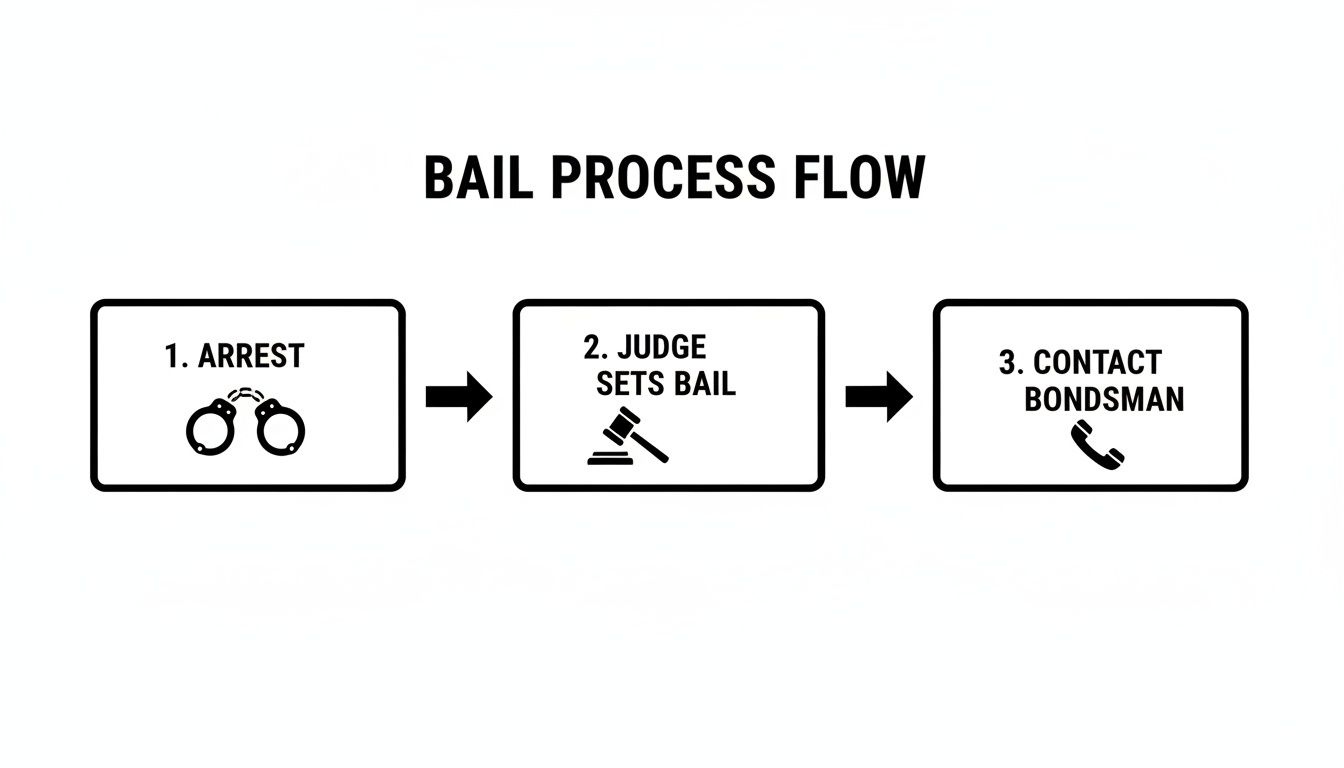
As you can see, the judge's decision is the trigger for everything that follows. It's the moment where knowing your options becomes absolutely critical. For a more detailed look at this initial phase, check out our guide on what happens when you get arrested.
How a Bail Bondsman Gets Someone Out of Jail
When coming up with the full bail amount in cash just isn't possible, a bail bondsman becomes an important call. It's helpful to think of them not as part of the court system, but as a private service that provides a financial guarantee—a promise—to the court on your behalf. Their entire job is to make getting out of jail affordable and fast.
This single step can turn a financial crisis into a manageable problem. Instead of scrambling to find thousands of dollars, you're working with a professional who handles the complex court paperwork and takes on almost all the financial risk for you. Knowing how they operate is the first real step toward bringing a loved one home from a jail in Forsyth County, Cobb County, or anywhere in North Georgia.

The Step-by-Step Process of Working with a Bondsman
Getting a bail bond is a straightforward process. It usually starts with one phone call and moves quickly to get the person released.
Make the First Call: The first thing you'll do is contact a licensed bail bondsman. Since arrests happen at all hours, they are available 24/7. You’ll need to give them some basic information about the person who has been arrested.
Provide the Key Details: To get the ball rolling, the bondsman needs a few specific pieces of information to find the person in the system and confirm the bail amount. You should be ready to provide:
- The defendant’s full name and date of birth.
- The jail where they are being held (for example, the Forsyth County Jail or the Cobb County Adult Detention Center).
- The booking number, if you have it.
- The total bail amount that the judge set.
Pay the Premium: With all the details confirmed, the next step is paying the bondsman's fee, which is called a premium. This fee is non-refundable. Here in Georgia, the premium is typically 10-15% of the total bail amount. So, for a $10,000 bond, the premium would be between $1,000 and $1,500. This is the bondsman's payment for their service and for taking on the risk of the entire $10,000.
Understanding the Bail Bond Agreement
After you pay the premium, you will sign a contract. This agreement is a legally binding document that spells out the responsibilities of everyone involved—it's much more than just a receipt for your payment.
The bail bond agreement is a contract that legally requires the defendant to show up for all their court dates. It also makes any co-signers financially liable for the full bail amount if the defendant doesn't appear in court.
This contract ensures that both the defendant and their family fully understand their obligations. Whether you're in Johns Creek or Milton, this agreement is what gives the bondsman the security they need to post the entire bond with the court.
The role of the co-signer—usually a family member or a close friend—is absolutely critical. By signing the agreement, the co-signer (also called an indemnitor) is promising to pay the entire bail amount if the defendant decides to skip court. This shared responsibility is the foundation of how the surety bond system works. For a closer look at the steps, our guide on how to bond out of jail offers more valuable details.
Once the paperwork is done and the premium is paid, the bondsman goes to the jail and "posts" the bond. From there, the jail begins its internal release process, which can take anywhere from a few hours to a whole day, depending on how busy they are. Once the person is released, the bondsman's job is done, and their premium is considered earned. At that point, the responsibility falls squarely on the defendant and the co-signer to make sure every single court date is attended without fail.
Understanding the Different Types of Bonds in Georgia
When someone gets arrested, the first question is always, "How do we get them out?" It’s easy to think there's just one way to post bail, but the Georgia judicial system actually offers several different paths. Each one comes with its own rules, costs, and responsibilities.
Knowing your options is crucial. The type of bond you choose can dramatically affect a family's finances and what’s expected down the road. For families in places like Cumming, Roswell, or Marietta, understanding these differences is the first step toward getting a loved one home and focusing on their situation.
Surety Bonds: The Most Common Choice
This is what most people picture when they hear the term "bail bond." A surety bond involves a third party—a licensed bail bondsman—who steps in to post the bond for you. Instead of handing over the full bail amount to the court, you pay the bondsman a non-refundable fee, or premium.
In Georgia, that premium is usually between 10% and 15% of the total bail. So, for a $20,000 bond, you’d pay the bondsman somewhere between $2,000 and $3,000. That fee is their payment for taking on the risk and guaranteeing the full $20,000 to the court if the defendant doesn't show up.
Surety bonds are the go-to option for a simple reason: they make release possible for almost everyone. Most families don't have thousands of dollars in cash just sitting around, and a bondsman fills that gap.
Cash Bonds: Paying the Full Amount
A cash bond is exactly what it sounds like. You pay the entire bail amount directly to the court, in cash. If bail is set at $10,000, you need to deliver $10,000 to the court clerk to secure the release.
The huge upside here is that the money is refundable. As long as the defendant makes it to every required court appearance, the court returns the full amount at the end of the case, minus any administrative fees or fines. The obvious downside, of course, is coming up with that much cash upfront, making it an impractical choice for many.
Property Bonds: Using Real Estate as Collateral
In some cases, Georgia courts allow a property bond. This means you can use the equity in a piece of real estate as collateral to get someone out of jail. The property has to be located in Georgia and typically needs to have a clear value of at least double the bail amount to qualify.
Be warned: this is by far the most complicated and time-consuming option. It requires a formal property appraisal, a title search, and filing a lien with the county. Because of all the hurdles involved, property bonds are not used very often.
This for-profit bail model generates over $2 billion in annual revenue in the United States, a system that thrives on the persistence of cash bail even when alternatives show similar success rates for court appearances. For families in places like East Cobb and Forsyth County, this highlights the urgency of posting bail quickly so you can focus on securing strong representation. You can review the full findings about the bail bond industry on bailproject.org.
Released on Own Recognizance (OR)
This is the best-case scenario. When a judge grants a release on Own Recognizance (OR), the defendant is let out of jail based on their written promise to show up for all future court dates. No money changes hands.
An OR release is usually reserved for people with minor charges, little to no criminal history, and strong community ties in areas like Alpharetta or Johns Creek. An experienced criminal defense attorney can be your biggest asset here, arguing for an OR bond at the very first hearing and potentially saving your family from any financial hardship at all.
Comparing Your Bond Options in Georgia
To help you see the differences at a glance, here’s a straightforward comparison of the paths available.
| Bond Type | What You Pay | Who It's For | Key Consideration |
|---|---|---|---|
| Surety Bond | A non-refundable 10-15% premium to a bondsman. | Most people who cannot afford the full cash bail. | The most common and accessible option for immediate release. |
| Cash Bond | The full bail amount paid directly to the court. | Individuals with enough liquid assets to cover the bail. | The money is refundable if all court dates are met. |
| Property Bond | No cash upfront; uses real estate equity as collateral. | Property owners with significant, clear equity in their home. | A complex and slow process that is rarely used. |
| Own Recognizance | Nothing. A signature is the only requirement. | Defendants with minor charges and strong community ties. | An ideal outcome, often argued for by a defense attorney. |
Understanding these different avenues is the first critical step. The choice you make has real financial and personal consequences, so it’s vital to know exactly what you’re getting into before moving forward.
The Financial Side: Costs, Premiums, and Collateral
Let's talk about the money side of things. For most families, this is the biggest source of stress when a loved one is in jail. When you use a bail bondsman, you're not paying the court directly—you're paying for a service. That service gets your family member out of jail without you having to come up with the entire bail amount in cash. But it comes with costs and responsibilities you need to understand before you sign anything.
The main cost is the premium. This is the non-refundable fee you pay the bail bond agent. It's how they stay in business and cover the risk they're taking. Once the defendant is released from a jail in Forsyth County or Cobb County, the bondsman has done their job, and that premium is considered earned.
Decoding the Non-Refundable Premium
Think of the premium like an insurance payment. You pay a fee, and in exchange, the bondsman posts a surety bond with the court that guarantees the full bail amount.
In Georgia, the premium is usually between 10% and 15% of the total bail.
So, if a judge in Roswell sets bail at $20,000, your non-refundable premium would be somewhere between $2,000 and $3,000. Paying that one-time fee is a lot more manageable for most people than finding the full $20,000. It allows the defendant to get out of jail and focus on their case.
It's critical to understand that this money is never coming back to you, no matter what happens in the case. Even if the charges are dropped the very next day, the premium was the bondsman's fee for providing the service and taking on the risk.
What Is Collateral and When Is It Required?
Sometimes, especially for large bonds or if the defendant is seen as a higher flight risk, the bondsman will need more than just the premium. This is where collateral comes in.
Collateral is simply a form of security. It's an asset of value that you pledge to the bondsman to cover the full bond amount if the defendant skips court.
Common types of collateral include:
- Real Estate: Placing a lien on a house or piece of land.
- Vehicles: Handing over the title to a car, truck, or boat.
- Valuables: Things like jewelry, high-end electronics, or other assets.
- Cash: In some cases, a portion of the bail amount can be held as a cash deposit.
Whether collateral is needed is decided on a case-by-case basis. Someone with strong ties to the community in Milton or Alpharetta and a lower bond amount might not need any. But for a very high bond, collateral gives the bondsman that extra layer of security. As long as the defendant makes it to every court date, your collateral is returned in full when the case is over.
By signing the bail bond agreement, you are entering a serious financial contract. It is crucial to read and understand every term, as you are accepting full financial responsibility for the entire bail amount if things go wrong.
The Role of the Co-signer or Indemnitor
Almost every bail bond contract will require a co-signer, who is also called an indemnitor. This is usually a family member, spouse, or a close friend who agrees to take on the financial risk. The co-signer is the one who signs the contract and typically pays the premium.
When you co-sign, you're making a legally binding promise to the bail bond company. You are guaranteeing that the defendant will show up to every single court hearing. If they don't, you are on the hook for the entire bail amount. The bondsman can legally pursue you and any collateral you pledged to get their money back. This is a huge responsibility and should never be taken lightly.
What Happens When a Court Date Is Missed
The entire bail bond system hinges on one simple promise: the defendant will show up for court. When that promise is broken, it sets off a fast and serious chain of events. A Failure to Appear (FTA) isn't a small slip-up; it has immediate and severe consequences for the defendant, the co-signer, and the bail bondsman.
This is not a problem you can ignore and hope it goes away. The second a defendant's name is called in a Forsyth County or Cobb County courtroom and they aren't there, the judge’s first move is to revoke the bond. That single action spirals a manageable situation into a financial nightmare for everyone involved in getting that person out of jail.

Bond Forfeiture and the Bench Warrant
Right after revoking the bond, the judge issues a bench warrant. This is an active, live warrant for the defendant's immediate arrest. Any encounter with law enforcement from that point on—even a simple traffic stop—will land the defendant right back in custody.
At the same time, the court begins bond forfeiture proceedings. Legally, this means the bail bond company is now ordered to pay the court the full bail amount. If the bond was for $25,000, the bondsman is on the hook for that $25,000, and you can be sure they will act quickly to cover that loss.
The Consequences for Co-Signers and Collateral
This is the moment the financial reality crashes down on the family. As the co-signer (or indemnitor), you are now legally responsible for paying the entire bail amount. The bondsman won't hesitate to start recovery actions against the person who signed the contract.
That recovery process often includes:
- Seizing Collateral: If you put up a car title, property deed, or other assets, the bondsman has the legal right to take them, sell them, and use the money to pay the court.
- Legal Action: The bonding company can sue the co-signer in civil court to get a judgment for the full bond amount.
- Financial Ruin: A judgment can destroy your finances. It can lead to having your wages garnished, your bank accounts levied, and your credit score torpedoed for years.
A missed court date immediately transfers the full financial liability of the bond directly to the co-signer. This is not just a risk; it is a contractual guarantee you made when you signed the bail agreement.
Bail bonds are a big business. Across the country, about 15,000 agents are responsible for releasing roughly 2 million people from jail each year, and the industry is only getting bigger. The sheer volume highlights the massive financial stakes when a defendant doesn't show up. You can find more details about the scale of the bail bond industry on bailproject.org.
The Role of Bounty Hunters
To avoid paying the forfeiture to the court, the bondsman has a limited time to find the defendant and get them back in custody. To do this, they often hire a fugitive recovery agent, better known as a bounty hunter.
These agents are legally empowered to track down, arrest, and surrender the defendant to the authorities in the right jurisdiction, whether it's Marietta, Alpharetta, or somewhere else in Georgia. Their involvement raises the stakes dramatically. This is a critical moment where having an experienced criminal defense attorney can be instrumental in trying to sort out the situation.
How a Criminal Defense Attorney Can Influence Your Bail
While a bail bondsman provides a critical financial service, a criminal defense attorney is an advocate from the moment you’re in custody. A lot of people believe the first call should be to a bondsman, but getting an attorney involved early on can completely change the bail process—and potentially save you a tremendous amount of money and stress.
An attorney's job isn't just to deal with the charges down the road; it's about being present from the very beginning. They can represent you in a system that can be overwhelming, and their experience becomes a powerful tool right after an arrest.
Arguing for Lower Bail or No Bail at All
One of the first places a seasoned attorney makes a difference is at the first appearance hearing. This is where a judge sets the initial bail amount. While judges have standard factors they consider, a sharp lawyer can build a compelling case on your behalf.
An attorney who regularly practices in Forsyth County and Cobb County knows what local judges need to hear. They can effectively highlight your strong community ties in places like Alpharetta or Roswell, point to your steady employment, and emphasize a clean criminal record. This kind of focused advocacy can persuade a judge to set a far more reasonable bail than they might have otherwise.
In some cases, your lawyer can even argue for you to be Released on Your Own Recognizance (OR). This is the absolute best-case scenario, as it means getting out of jail on a written promise to appear in court, with no money changing hands. Securing an OR bond eliminates the need for a bail bondsman entirely, saving you that non-refundable premium.
The first appearance hearing is your single best opportunity to shape the conditions of your release. A skilled attorney’s argument can be the difference between a manageable bond and one that is financially devastating.
Reviewing and Modifying Bond Conditions
Getting out of jail is the immediate goal, but the conditions that come with your release are just as important. Bail often includes strict rules like curfews, no-contact orders, or travel restrictions. These conditions can easily interfere with your ability to work, take care of your family, or just live a normal life while your case is pending.
Your attorney will review the entire bail agreement and its conditions to make sure they are fair and reasonable. If a condition is too restrictive, your lawyer can file a motion to have it modified. For instance, if a travel restriction keeps you from getting to your job in East Cobb, your attorney can petition the judge to make a necessary exception.
This proactive approach ensures your rights are protected every step of the way. While a bondsman handles the financial transaction, an attorney is focused on your freedom and long-term well-being. For more guidance, you can learn more about how to find a criminal lawyer in our detailed guide. Ultimately, an attorney’s involvement turns the bail process from a simple money problem into the first critical step of a strong defense strategy.
Frequently Asked Questions About Bail Bonds in Georgia
When you're dealing with an arrest, a million questions can race through your mind. It's a stressful time, and the last thing you need is confusing jargon. We've put together some straightforward answers to the questions we hear most often from families in Alpharetta, Cumming, and across North Georgia.
Getting clear information is the first step to making the right decisions. Here’s what you need to know.
Is the Premium Refundable if the Charges Are Dropped?
No, the premium you pay a bondsman is never refundable. Think of it as a service fee. You're paying the bondsman to take a significant financial risk by guaranteeing the full bail amount to the court.
That fee is considered fully earned the second your loved one walks out of jail. It doesn't matter what happens with the case later—whether charges are dismissed or changed, the bondsman's service has been rendered, and the fee is non-refundable.
How Long Does It Take to Get Released After a Bond Is Posted?
This is one of the most frustrating parts of the process because the answer varies so much. Once the bondsman files the paperwork with the jail, it's completely out of their hands. The timing now depends entirely on the jail staff.
Release could happen in just a few hours. However, in larger, busier facilities like those in Forsyth County or Cobb County, it could easily take 12 hours or more. The jail's internal procedures and how busy they are will dictate the timeline.
The core difference is simple: Bail is the full amount set by the court. A bond is the guarantee for that amount. You can either pay the full bail yourself (cash bond) or pay a bondsman a smaller fee to post a guarantee for you (surety bond).
What's the Real Difference Between Bail and a Bond?
People use these terms interchangeably all the time, but they aren't the same thing.
Bail is the total cash amount set by the court. A bond is a promise or guarantee that the full bail amount will be paid if the defendant doesn't show up for court.
Let's say bail is set at $10,000. You have two main options: pay the court the entire $10,000 in cash (a cash bond), or hire a bail bond company by paying them a smaller, non-refundable fee to post a $10,000 bond on your behalf (a surety bond).
Should I Call a Lawyer or a Bondsman First?
While you'll likely need both, calling an experienced criminal defense attorney first is almost always a smart move. A lawyer can get involved immediately and potentially change the entire situation for the better.
A good attorney can be there for the first appearance hearing to argue for a lower bail amount or even for a release on your own recognizance (an OR bond), which means no bail money is needed. Getting a lawyer involved early could save you from having to hire a bondsman at all, keeping that non-refundable premium in your pocket.
Facing a criminal charge can feel like you're lost in a maze, but you don't have to find your way out alone. Brian Hansford Law has the local experience to guide you through every step, starting with the critical bail process. If you or a loved one needs immediate help in Alpharetta, Roswell, or anywhere in North Georgia, contact us for a consultation.
