
If you're on probation, the end date on your sentence can feel like it's a lifetime away. But in Georgia, there's a path to potentially shorten that timeline. You can't just stop reporting—you have to formally petition the court for what's known as early termination.
It's not an automatic process. It's a privilege that may be earned by demonstrating to the judge that you've been rehabilitated and no longer need supervision.
Understanding Early Probation Termination In Georgia
While every sentence has a finish line, Georgia law—specifically O.C.G.A. § 42-8-37—gives the court the power to move it closer. But it's crucial to remember this isn't a right; it's a discretionary decision made by the judge.
At the heart of this process is the Motion for Early Termination of Probation. Think of this as more than just a request. It's a formal, legal argument being made to the court. The entire point is to show, with clear evidence, that keeping you on probation no longer serves a purpose for you or for the community.
The Purpose Behind Early Termination
Why does this option even exist? It serves a couple of important functions. First, it’s a powerful motivator. The possibility of getting off probation early encourages people to follow the rules, pay their fines, and genuinely turn things around.
Second, it’s practical. It allows the justice system to focus its limited resources—like the time and attention of probation officers and judges—on individuals who truly require close supervision.
This guide will walk you through the typical steps and key factors in this process. We'll look at how courts in Georgia, including those serving Alpharetta, Cumming, and Johns Creek, generally approach these motions. This information is for explanatory purposes only and is not legal guidance. It will help you understand:
- The basic requirements courts look for.
- The journey from filing the paperwork to getting a decision.
- What makes for a strong, persuasive motion.
The scale of probation is enormous. With over 3.5 million adults on probation in the United States as of 2018, the system is stretched thin. Research shows that shortening probation terms is a proven way to reduce these numbers without risking public safety. A Pew research report offers some great insights into how states have managed this successfully.
What To Expect In This Guide
We'll get into the specific benchmarks that people in places like Milton, Roswell, and Marietta need to hit. Everything from completing a certain amount of your sentence to paying off all fines and restitution plays a part.
Getting a handle on these criteria is the first real step. We will break down what judges and prosecutors in Forsyth County and Cobb County are often looking for when they review a motion, giving you a much clearer picture of what lies ahead.
Figuring Out if You're Eligible for Early Release
Before filing a motion, a person needs to be sure they qualify. Courts in Georgia don't just grant these requests because someone asks nicely; they're looking for a rock-solid history of compliance and genuine rehabilitation. Meeting these benchmarks is the absolute first step.
Think of it this way: these requirements are your ticket to the game. Without them, a judge in Forsyth County or Cobb County isn't likely to give your motion a second glance. These aren't just boxes to check—they prove you've taken your sentence seriously and don't need supervision anymore.
The One-Third Rule: A Key Timing Benchmark
One of the first things a court will look for is the "one-third rule." As a general guideline, a person needs to have successfully completed at least one-third of their original probation sentence before they can ask for it to end early. If someone were sentenced to three years, for example, they'd need to have at least one full year under their belt.
This isn't an arbitrary waiting period. It gives a person enough time to establish a real pattern of good behavior, showing the court and their probation officer that they're committed to staying on the right track for the long haul.
Clearing All Your Financial Obligations
This is a big one, and it can be a stumbling block. A person has to satisfy every single court-ordered financial responsibility. This means paying all fines, fees, and restitution in full. A judge in Marietta or Roswell is going to want to see a zero balance before they even consider a request.
Your financial duties can include a few different things:
- Court-imposed fines from the original offense.
- Monthly supervision fees you pay to the probation office.
- Restitution that's owed to any victims in your case.
It is absolutely crucial to keep meticulous records of every payment made. Having those receipts and statements ready gives the court concrete proof that you've held up your end of the bargain.
A common mistake people make is thinking that being current on a payment plan is the same as being paid in full. It's not. For early termination, the court almost always requires the entire amount to be settled. Even a small outstanding balance can get a motion denied right out of the gate.
Completing All Your Special Conditions
Beyond serving your time and paying your dues, a sentence almost certainly included what are called special conditions. These are specific tasks tailored to the offense, designed to address whatever got someone into trouble in the first place. A person has to finish every single one. No exceptions.
So, what do these conditions look like in practice? It really depends on the case.
- For a DUI case in Alpharetta: This usually means completing the Risk Reduction Program (DUI school), a MADD Victim Impact Panel, and any court-ordered substance abuse evaluations or treatment.
- For a theft case in Cumming: This might involve finishing a set number of community service hours and taking an anti-theft or impulse control class.
- Other common examples: Things like anger management courses, family violence intervention programs, or specific counseling sessions are also frequent requirements.
You'll need the official certificates or letters of completion to prove the work has been done. These documents are your evidence. You're essentially building a portfolio that shows the judge you're serious about making a change. The number and type of conditions can also depend on whether you are on misdemeanor or felony probation. You can learn more about the differences between felony and misdemeanor probation in Georgia to see how these might vary.
Maintaining a Clean Record on Probation
This last one should be obvious, but it’s the most important: you cannot have any new arrests or probation violations. A clean slate while on supervision is completely non-negotiable. Any misstep, no matter how minor, signals to the court that a person might still need that supervision to stay out of trouble.
Getting a new charge or having a technical violation—like a failed drug test or even just missing an appointment with your probation officer—can torpedo your chances for early termination. It sends a loud and clear message to the judge that you're not ready. A perfect record, on the other hand, is the strongest argument you can make that you've truly been rehabilitated.
Navigating the Motion to Terminate Probation Process
Once all the baseline requirements have been met, it's time to formally ask the court to end the sentence. This is done by filing a legal document called a Motion to Terminate Probation. This isn’t a simple form you just fill out; it's a carefully crafted legal argument explaining exactly why supervision should end now.
Think of this motion as a chance to tell the judge a story of rehabilitation. It needs to clearly show not only that all the boxes have been checked but, more importantly, that the person is no longer someone who needs supervision. This document is what kicks the whole process off.
The Initial Filing and Supporting Evidence
The motion itself is just the first step. To have any real persuasive power, it has to be backed up by solid proof. A person will need to gather and attach every piece of documentation that supports the claims being made. This evidence is what gives the motion credibility and weight.
Without these supporting documents, a request is just words on paper. The court needs to see real, tangible proof of compliance and progress.
Examples of the kind of proof needed include:
- Proof of Financial Fulfillment: Get receipts or official statements from the court clerk showing that all fines, fees, and restitution are paid in full.
- Certificates of Completion: Make copies of the official certificates from any court-ordered programs, like DUI school, anger management classes, or community service.
- Letters of Support: While not always mandatory, strong letters from employers, mentors, or community leaders in places like Johns Creek or Milton can add a powerful, personal touch to a case.
This complete packet of information paints a clear picture for the judge, proving everything that was asked has been done and then some.
This flowchart lays out the core milestones that must be hit before a motion can even be filed.
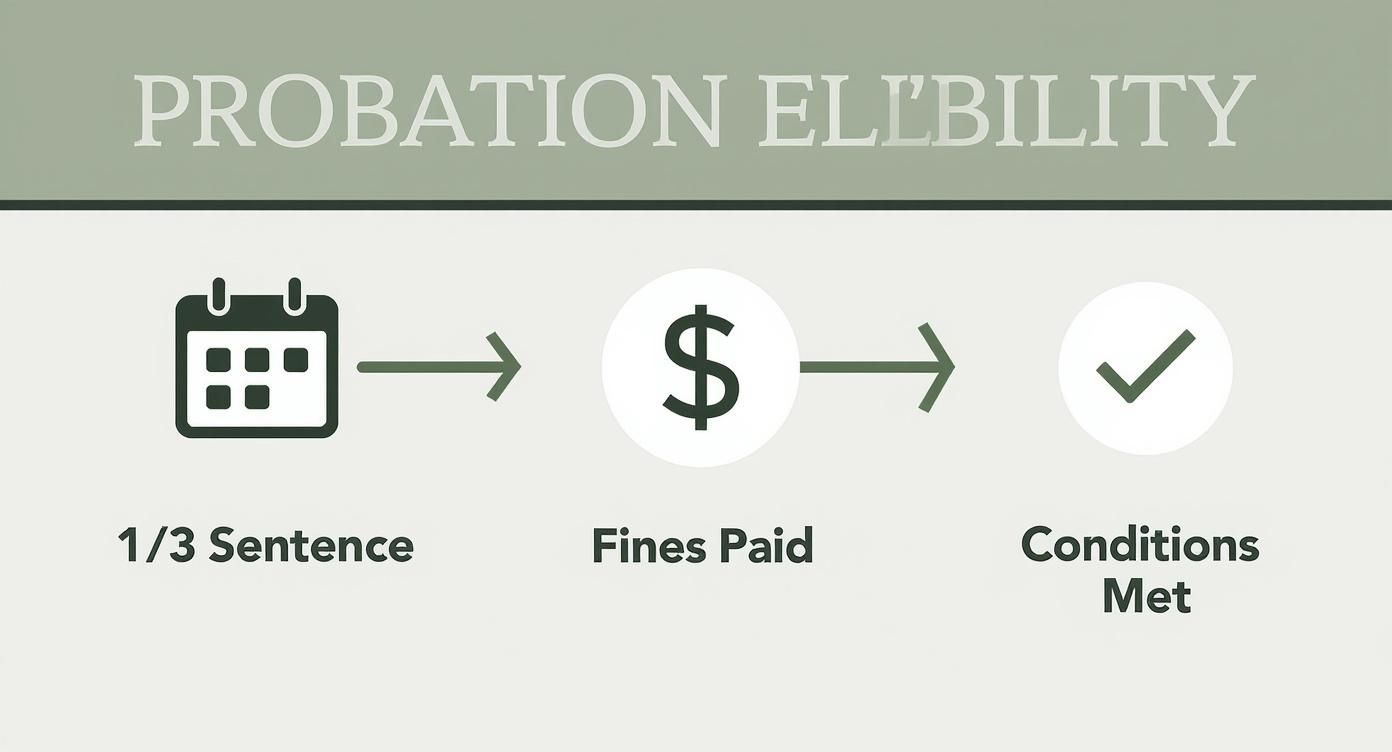
As you can see, successfully handling these three key areas—serving enough time, paying off debts, and finishing special conditions—is the foundation of any strong request for early termination.
What Happens After the Motion Is Filed
Filing the motion triggers a specific sequence of events. It’s definitely not an instant decision. The document gets sent to the key people involved in the case, and each of them gets to review it and give their input.
First, the motion goes to the prosecuting attorney's office. The prosecutor who handled the original case (or someone else in that office) will review the request and the entire record. They have two choices: either consent to the motion (agree with it) or object to it. An objection from the State can create a pretty big roadblock.
At the same time, the probation officer will be asked for their opinion. This is a huge piece of the puzzle. The probation officer's recommendation carries a lot of weight with the judge because they have firsthand knowledge of how someone has behaved on supervision. A positive, supportive recommendation can make all the difference.
When you're looking at how to get off probation early, it helps to see the bigger picture. In a recent fiscal year, about 18.1% of federal supervision cases were closed because of early termination. This trend shows a growing recognition that excessively long probation terms can sometimes do more harm than good for someone trying to get back on their feet. Research also suggests that recidivism rates don't go up after early termination, showing it can be a safe and smart policy. You can dig into these probationary trends and statistics to learn more.
The Possibility of a Court Hearing
In many cases, especially if the prosecutor objects, the judge will schedule a court hearing. This could happen in the main courthouse of the county where the sentence was imposed, whether that's in Marietta, Cumming, or elsewhere. A hearing is a formal chance to have arguments presented directly to the judge.
During the hearing, the judge will listen to both sides. They'll consider the arguments in the motion, look over all the supporting evidence, and hear whatever objections the prosecutor has. This is where the strength of the case really gets put to the test.
The judge’s final decision can go one of three ways:
- Granted: The judge agrees with the motion. The probation is officially over.
- Denied: The judge disagrees and denies the request. The sentence must continue to be served.
- Denied Without Prejudice: This is a middle ground. The motion is denied for now, but it may be possible to file it again later once whatever issues the judge had have been addressed.
Which way it goes depends entirely on the specific facts of the case and how well the argument is presented.
Building a Compelling Case for the Court
Meeting the basic requirements for early termination is just the first hurdle. Think of it as earning a ticket to the game—it gets you in the door, but it doesn't guarantee a win. A persuasive case goes far beyond just checking off boxes on a list. It needs to tell a compelling story of real rehabilitation and lasting change.
The entire goal is to show the judge that keeping someone on supervision is no longer necessary. The objective is to paint a complete picture of someone who hasn’t just followed the rules but has actively built a stable, productive, and law-abiding life.
Demonstrating Stability and Positive Change
Judges in Forsyth County and Cobb County want to see tangible proof that a person has truly turned a corner. This isn't about just saying you've changed; you need to show it with real-world evidence.
What does this look like? It means highlighting accomplishments that paint a clear picture of a responsible community member.
- Consistent Employment: Nothing shows stability like holding down a steady job. Pay stubs, an employment verification letter, or even proof of a recent promotion can be incredibly powerful evidence.
- Educational Pursuits: Are you taking classes at a local college, earning a trade certification, or working toward a degree? This shows initiative and a solid focus on self-improvement.
- Strong Community Ties: Evidence of positive relationships, involvement in a church or civic group, or consistent volunteer work helps build a case and shows you're a contributing member of society.
Think about someone in Milton who, on top of completing all court-ordered conditions, also earned a promotion at work and started volunteering on weekends. That’s the kind of narrative of positive change that can sway a judge's opinion.
The Critical Role of Your Probation Officer
One of the most influential voices in this entire process is the probation officer. A positive recommendation from them can make or break a motion. Their word carries a lot of weight with the court.
This is exactly why building a compliant and respectful relationship with an officer from day one is so important. When a person is consistently on time for appointments, responsive to calls, and proactive about obligations, it shows them the process has been taken seriously. Their endorsement tells the judge that the person supervising the case personally believes you’re ready to be on your own.
A crucial takeaway is that the court is assessing risk. The job is to present a complete picture of someone who is no longer a risk to the community and has fully embraced a law-abiding lifestyle. This is about showing, not just telling.
Presenting a Narrative of Rehabilitation
The story presented to the court should be cohesive and well-documented. It’s not about one single achievement but the sum of all efforts. Success rates often depend on the original offense; for example, roughly 70% of misdemeanor probationers complete their terms successfully, compared to about 50% for those on felony supervision. This difference highlights why building a strong case is especially vital. You can find more details about these probation statistics and what they mean.
The strength of the story depends entirely on the evidence provided. A person is essentially creating a portfolio of their progress from the day they were sentenced.
Gathering Your Evidence
To make a case truly compelling, documents that back up claims of stability and change need to be collected and organized. This might include:
- Letters of Support: A letter from an employer in Roswell or a community leader in East Cobb can speak directly to a person's character and work ethic.
- Proof of Accomplishments: Collect any certificates from courses taken or awards received.
- Character References: Get statements from family or mentors who can personally attest to the positive transformation.
Ultimately, you want to show the court a person who has moved far beyond their past offense. While gathering this information and presenting it effectively can feel overwhelming, understanding how to find a good criminal lawyer is a valuable step. An experienced attorney can ensure a case is presented in the most persuasive way possible, creating a clear and convincing argument that the privilege of an early discharge has been earned.
Common Roadblocks to Ending Probation Early
Even when everything has been done by the book, a motion for early termination can hit a snag. It's smart to go in with eyes open, knowing what potential hurdles might be faced. Understanding what can go wrong helps in building the strongest possible case before a judge ever sees it.
Without a doubt, the fastest way to get a motion denied is a new arrest. It doesn't matter how minor the charge is. Picking up a new case sends a loud and clear signal to the court that supervision is still needed. It completely torpedoes the argument that a person is rehabilitated and can be trusted on their own.
Issues That Can Stall Your Motion
Beyond getting arrested again, a few other common problems can kill the chances or, at best, cause a major delay. These are the details that seem small but can make or break a request.
- Outstanding Fines and Fees: The court expects a zero balance. Simply being current on a payment plan isn't enough. An unpaid fine is one of the easiest reasons for a judge to say "no."
- Incomplete Special Conditions: Was every last community service hour finished? Is there a certificate from that mandatory class? Failing to check every single box on the sentence requirements is a non-starter.
- Procedural Mistakes: The legal system runs on procedure. Filing a motion incorrectly, serving it to the wrong person, or missing a deadline can get a request tossed out before its merits are even considered.
These technicalities are critical. A court in Marietta or Cumming operates on strict rules, and a simple clerical error is all it takes to derail an otherwise solid case.
The Prosecutor’s Objection
One of the biggest hurdles can come straight from the prosecutor’s office. The prosecutor has every right to review a motion and formally object to it. If they do, you can bet the judge is going to take a much closer look at the entire file.
So why would a prosecutor object? Usually, their argument boils down to the seriousness of the original offense. They might feel the crime was severe enough that the full sentence needs to be served to satisfy the ends of justice. For instance, a prosecutor in a place like East Cobb might be more likely to object in cases they feel are particularly serious, arguing that public safety demands the whole term be completed.
An objection doesn't mean it's a loss, but it does mean a formal court hearing is likely, where both sides will argue their case to the judge.
It's absolutely crucial to understand that any violation, no matter how minor it seems, can be a major setback. Things like a missed check-in or a failed drug test can completely reset the clock on eligibility. To see just how serious the consequences are, you can learn more about what happens when you violate probation and how it impacts your chances.
The Probation Officer’s Report
Another huge piece of the puzzle is what the probation officer has to say. The judge will almost always ask for their opinion on a person's progress and whether they are ready to be off supervision. A negative, or even a neutral, recommendation can be incredibly damaging.
If there has been a rocky relationship with a P.O. or a history of non-compliance, they’re not likely to stick their neck out for you. This is exactly why building a positive, respectful relationship with them from day one is so important. Their report gives the judge a firsthand account of a person's behavior, and it carries a ton of weight. A supportive probation officer can be a great ally, while an unsupportive one can be a major obstacle.
Common Questions About Ending Probation Early in Georgia
When navigating the path off probation, a lot of questions come up. Let's tackle some of the most common ones people ask in Forsyth County, Cobb County, and across North Georgia.
Can I Get Early Termination for Any Crime?
While it’s possible for many misdemeanors and felonies, the nature of the original charge really matters. Courts and prosecutors in places like Marietta and Cumming will heavily scrutinize the original offense when they see a motion for early termination.
If the crime was particularly serious, the prosecutor will likely object, arguing that the full sentence is necessary for public safety. In the end, it's always the judge's call, and they weigh every case on its own unique facts.
Is My Motion a Sure Thing if I’ve Done Everything Right?
Absolutely not. Meeting the minimum requirements—like serving one-third of the time and paying off all fines—doesn't guarantee success. It just opens the door for a person to ask.
The judge has the final say and will look at everything: behavior while on supervision, the original charge, and what the probation officer and the prosecutor have to say. A strong motion has to do more than just check the boxes; it needs to tell a compelling story of genuine rehabilitation.
This is a critical point: the law says a judge "may" terminate probation, not "shall." That one word makes all the difference. It means the judge has the power to grant a request, but they are never required to, even with a model probation record.
What Happens if the Judge Says No?
If a motion is denied, the sentence simply continues under the original terms. But a "no" isn't always the end of the road.
Sometimes, a judge will deny the motion "without prejudice." This is actually good news. It means you can fix whatever the issue was and file again later. This often happens if there’s a small oversight, like a missed class or a lingering fee that needs to be paid.
Do I Really Need a Lawyer to File This?
A person is not legally required to hire an attorney, but this isn't just filling out a form. A person is filing a formal legal motion, backing it up with evidence, and potentially arguing it in court. One wrong step—an incorrectly filed document or a weak argument—can get a motion tossed out before it’s even seriously considered.
Navigating the specific procedures in Forsyth County or Cobb County courts takes experience. Knowing how to build and present a persuasive case is often what separates a successful motion from a denied one.
Can I Get Off Probation Early if I Still Owe Restitution?
In almost every case, no. The law is very clear on this. A person must have a zero balance on all court-ordered financial obligations, and that absolutely includes restitution paid to victims.
Courts from Alpharetta to Roswell will not even entertain a motion for early termination until every last cent is paid. Being on a payment plan and being current isn't enough—it has to be paid in full.
At Brian Hansford Law, we've seen firsthand how complex Georgia's criminal justice system can be. If you're trying to understand your legal options, our team is here to provide clear, straightforward guidance. For more information, please visit us at https://challengemycharge.com.
