
When you're hit with a criminal charge, everything can feel chaotic. Your first move is an important one, and it's all about finding the right advocate—someone who not only knows the law but also understands the local court systems in Alpharetta, Roswell, or Cumming. That single decision can set the course for everything that comes next.
Your First Move When Facing Criminal Charges

Being thrown into the criminal justice system can be disorienting. The process is a maze, and figuring out what happens after an arrest is a critical first step. But the most immediate and impactful decision is choosing who will stand beside you. This choice directly shapes the entire trajectory of your case.
This isn’t just about hiring someone with a law degree. It's about finding a strategic ally who can navigate the specific procedures and personalities of the local courts, whether you’re in Forsyth County or Cobb County. The right attorney knows the local prosecutors, judges, and administrative quirks that can play a role in a case.
A Snapshot of Legal Representation Options
When you're charged with a crime, the American justice system offers a couple of main paths for legal help. Before you can choose a criminal defense lawyer, it's helpful to know the fundamental differences between the options. They each come with their own realities when it comes to caseload, resources, and client interaction.
The table below gives you a quick look at how they stack up.
| Factor | Private Defense Attorney | Public Defender |
|---|---|---|
| How You Get One | You research, interview, and hire them directly. | The court appoints one if you can't afford a lawyer. |
| Caseload | Manages a smaller, more focused number of cases. | Handles a very high volume of cases simultaneously. |
| Client Interaction | More direct, one-on-one time is generally available. | Interaction may be limited due to overwhelming caseloads. |
| Resources | Can hire investigators, experts, and dedicate more resources. | Resources are often stretched thin across many cases. |
While both public defenders and private attorneys are committed to defending their clients, the structure of their work creates different experiences and, sometimes, different outcomes.
Why This Choice Matters So Much
The choice between a public defender and a private attorney isn't just a small detail; it can have a real impact on a case. Let’s look at the numbers.
According to the Bureau of Justice Statistics, only 30.8% of defendants in large state courts hired their own private attorneys. Yet, those cases often turned out differently. Defendants with private counsel tended to see higher rates of acquittals and dismissals compared to those with public defenders. This illustrates how a hand-picked, dedicated lawyer can influence the final outcome.
Your choice of representation is more than a formality; it's a strategic decision that provides you with a dedicated advocate whose focus is protecting your rights and interests throughout a complex process.
Ultimately, you need representation that fits your specific situation. Whether you're dealing with a DUI in Milton or a theft charge in Marietta, the right person will have the specialized knowledge and local connections to build a defense that works for you. This first choice is the foundation for everything else.
Aligning an Attorney's Experience with Your Charge
Not all criminal defense attorneys are the same. It's a bit like medicine—you wouldn't see a heart surgeon for a broken bone. The same logic applies here. Just because a lawyer is brilliant with complex white-collar fraud cases doesn't automatically make them the best fit for your DUI charge. When your future is on the line, specialization is everything.
The term "criminal defense" is a massive umbrella. It covers dozens of distinct areas, and each one has its own unique set of laws, procedures, and effective defense strategies. A lawyer's ability to protect you often comes down to their deep, focused experience with the specific type of charge you're facing. This is about looking past a generic "criminal lawyer" label and finding a true expert for your exact situation.
Why Specialization Matters
Think about it this way. A lawyer who handles DUI cases every single day in Roswell or Cumming develops an almost intuitive grasp of how local law enforcement operates. They know the common mistakes made during field sobriety tests and how to get the maintenance records for the specific breathalyzer machines used in Forsyth County. They know which arguments often work with local prosecutors.
This same principle holds true for every type of charge. An attorney specializing in drug offenses lives and breathes search and seizure laws and knows how to challenge the use of confidential informants, which are central to so many narcotics cases. Someone who focuses on theft charges in Marietta understands the fine points of proving intent and has experience negotiating with retailers to handle civil demands.
Finding an attorney whose practice is dedicated to cases just like yours isn't a luxury; it's a strategic necessity. Their focused knowledge means they've seen challenges like yours before and already know the most effective ways to handle them.
This kind of targeted experience translates into a much more efficient and powerful defense. They aren't learning the nuances of your case on your dime; they're applying years of hard-won knowledge from the moment you hire them.
Matching the Charge to the Right Skill Set
When figuring out how to choose a criminal defense lawyer, you have to start by identifying your specific charge and then find a professional with a proven history in that area. Different charges require completely different game plans and knowledge.
Here are a few common charges and the specific experience you might look for:
- DUI Defense: You might look for someone who routinely challenges BAC evidence, knows the field sobriety test protocols inside and out, and understands the administrative license suspension process. Deep familiarity with police departments in places like Johns Creek or Milton is a massive plus.
- Drug Offenses: The right attorney will be an expert in Fourth Amendment protections against illegal searches and seizures. They should have experience questioning the credibility of informants and poking holes in the prosecution's chain of custody for evidence.
- Theft and Property Crimes: An effective lawyer here will know how to dismantle the prosecution's arguments about intent and property value. They often have relationships that help in negotiating for reduced charges or entry into diversion programs.
- White-Collar Crimes: These cases can involve a mountain of paperwork. You might need an attorney with a sharp eye for financial records, experience working alongside forensic accountants, and the skill to navigate dense state and federal regulations.
- Juvenile Cases: The juvenile system works differently than adult court—the focus is on rehabilitation. A specialist will know how to protect a young person’s future and work toward outcomes that don't follow them for the rest of their life.
When you're meeting with a potential attorney, don't just ask if they handle "criminal cases." Get specific. Ask what percentage of their caseload is dedicated to charges exactly like yours. Ask about recent, similar cases they've handled right here in Cobb County or East Cobb. Their answers will tell you everything you need to know about whether they're a generalist or the specialist you need.
Why Local Courtroom Experience Is a Game Changer

When you’re looking for a lawyer, it’s easy to get hung up on their total years of practice. But here’s a key factor: where they got that experience is often just as critical as how long they’ve been in the game. Think of it as a home-court advantage. An attorney who is a familiar face in the specific courthouse your case will be heard in has a serious leg up.
This isn’t about backroom deals or secret handshakes. It’s about a deep, working knowledge of the local legal scene. A lawyer with deep roots in Cobb County or Forsyth County simply knows the terrain better than someone driving in from another jurisdiction.
This kind of familiarity seeps into every part of a case, from the way motions are argued to the dynamics of plea negotiations. Knowing the local players and procedures isn't just a minor perk—it's a core piece of an effective defense strategy.
The Unwritten Rules of the Courthouse
Every courthouse has its own personality, its own rhythm. A lawyer who spends their days in the courtrooms of Marietta, East Cobb, or Cumming learns the unwritten rules you’ll never find in a law book. They get a real feel for how certain judges tend to rule on specific motions or what arguments actually stick.
For instance, one judge might be a stickler for procedural deadlines, while another might be more receptive to creative sentencing alternatives in a DUI case. An attorney who knows this can shape their entire approach to fit that courtroom. It’s a subtle but powerful advantage that only comes from being there, day in and day out.
An attorney's familiarity with the local legal landscape is not just about knowing names and faces. It's about understanding the tendencies, precedents, and procedural nuances that define how justice is administered in that specific jurisdiction.
This insight extends to the other side of the aisle, too. A local attorney has likely built a long history of dealing with the district attorney's office. They learn the negotiating styles of individual prosecutors—who is likely to be aggressive versus who might be open to a reasonable compromise. This lets them anticipate the prosecution's moves and build a stronger counter-strategy from the very beginning.
Gauging True Local Expertise
As you figure out how to choose a criminal defense lawyer, you should cut through the noise and separate genuine local expertise from vague claims. Anyone can put Alpharetta or Roswell on their website, but you need to see the proof. The best way to do this is by asking pointed, specific questions that reveal the true depth of their courtroom experience in your area.
Vague answers are a major red flag. A truly local attorney should be able to speak confidently about the specific courts, judges, and prosecutors relevant to your situation.
To help you vet a potential lawyer’s local credentials, here are some targeted questions to consider asking to confirm they have the "home court advantage" you might be looking for.
Questions to Vet Local Court Experience
| Question Category | Specific Question to Ask |
|---|---|
| Courtroom Frequency | "Approximately what percentage of your cases are in the [Forsyth/Cobb] County courthouse?" |
| Judicial Familiarity | "Have you appeared before the judge who might be assigned to my case? Can you describe their courtroom demeanor?" |
| Prosecutor Experience | "Do you have experience negotiating with the prosecutors in the [Johns Creek/Milton] area? What is their general approach?" |
| Procedural Knowledge | "Are there any specific local court rules or filing preferences in [Marietta's] courthouse that one should be aware of?" |
How they answer these questions—directly and without hesitation—is a powerful indicator of their actual local experience. This insider knowledge is a huge asset that can make a real difference in the outcome of your case.
Getting the Most from Your Initial Consultation

You’ve done the research and have a shortlist of attorneys. Now comes the most important part: the initial consultation. This isn't just a sales pitch; it's an interview where you are the one doing the hiring. How you approach this meeting is a huge part of choosing a criminal defense lawyer who is genuinely the right fit for you.
You can walk in ready to ask direct, insightful questions that get past the surface-level stuff. This is your chance to really gauge their expertise, understand their approach, and see if you click on a personal level. The goal is to leave with total clarity, not more confusion.
Preparing for a Productive Meeting
To make this meeting count, you can show up with the right information. A good lawyer can give you a much more accurate read on your situation if they have the key documents right in front of them. It helps them move from talking in general terms to the specifics of what you're facing.
Before you go, it may be helpful to pull together every piece of paper you have related to your case. This could include:
- The Police Report: This is a critical document if you have it. It’s the official story of what happened.
- Bail or Bond Paperwork: These papers have your case number and court date, which are essential details.
- Any Citations or Tickets: Even small, related citations are part of the bigger picture.
- A Written Timeline: Jot down your memory of the events. Dates, times, locations, and who was there can be incredibly helpful.
Doing this homework shows the attorney you’re serious and allows them to get straight to the point. It also helps you organize your own thoughts before a conversation that can feel pretty stressful. To get a better feel for what to expect, learning more about a criminal lawyer free consultation can give you a solid framework.
Questions That Reveal True Expertise
Alright, this is the main event: the questions you ask. Your questions should be sharp enough to uncover how they think, how they manage their cases, and their professional ethics. Forget generic questions and focus on what reveals how they actually operate.
Think beyond just asking about fees. You’re trying to understand their process and figure out if they're the advocate you need in your corner during a tough time.
A great attorney will welcome detailed questions and provide thoughtful, direct answers. Evasiveness or impatience in response to your questions is a significant red flag that should not be ignored.
Here are a few essential questions to have ready:
- "Based on what I've shared, what are your initial thoughts on a defense strategy?" This question tests their ability to think on their feet and apply real experience to your facts. You’re looking for a thoughtful response, not a canned speech.
- "Who will be my primary point of contact, and who will actually be in court with me?" It's common for big firms to have you meet a senior partner, only to hand your case off to a junior associate. You'll want to know exactly who will be handling the day-to-day work and standing beside you in court.
- "How do you prefer to communicate updates, and what’s your typical response time?" This sets expectations from the very beginning. Will you get updates by email, phone calls, or a client portal? Knowing this now prevents a lot of frustration down the road.
- "What potential challenges or weaknesses do you see in my case right now?" A seasoned lawyer won't just tell you what you want to hear. They should be able to spot potential hurdles, which shows they're already thinking critically about your situation.
Spotting Critical Red Flags
Just as important as asking the right questions is listening for the wrong answers. Certain things said during a consultation should immediately make you pause. Be wary of any attorney who seems overconfident or starts making promises before they know all the facts.
A massive red flag is any kind of guarantee about the outcome. No ethical lawyer can promise a dismissal or a specific result. The system is just too unpredictable. A true professional will promise to fight for you, not guarantee a win.
Also, pay close attention to how they listen. Are they constantly interrupting you, or are they letting you tell your side of the story? An attorney who doesn't ask you detailed follow-up questions may not be thorough enough to build a strong defense.
Understanding Legal Fees and Communication
When you’re facing a criminal charge, the last thing you need is a surprise bill or radio silence from your lawyer. Figuring out the costs and how you'll communicate are two of the most critical parts of choosing the right attorney. Getting these details ironed out from the very beginning prevents a ton of stress and helps build a solid, trusting relationship with a legal team.
You should feel supported and in the loop, not left in the dark wondering what’s happening with your case or your money. Let's walk through the common ways lawyers bill for their time and how to make sure you stay informed every step of the way.
Demystifying Common Fee Structures
There's no single way attorneys charge for their services. In the criminal defense world, especially around here in Alpharetta and Cobb County, you'll typically run into one of a few billing models. Each one makes sense for different types of cases.
Knowing how they work is crucial. It helps you budget properly and gives you peace of mind so you can focus on your defense.
- Flat Fee: This is a single, all-in price for handling your case, or at least a specific part of it. It’s common for more straightforward situations, like a first-offense DUI. The biggest plus here is cost certainty—you know the exact number from day one, no matter how many hours your lawyer puts in.
- Hourly Rate: Here, you’re paying for the attorney's time at a set rate. Every phone call, email, court appearance, and moment spent on legal research gets billed. This is more common in really complex cases where it’s impossible to predict how much time it will take.
- Retainer Fee: Think of this as a down payment. You pay an upfront amount, and the firm bills its hourly time against that fund. When the retainer runs low, you'll either need to add more money or switch to paying monthly invoices.
When it comes to fees, don't settle for anything less than complete transparency. A good lawyer will give you a clear, written fee agreement that spells out exactly what's included and—just as importantly—what isn't.
If you want to dig deeper into what to expect, check out our guide on the average cost of a criminal defense lawyer. It’s essential to have this conversation upfront and get everything in writing before you hire anyone.
Establishing Clear Communication Protocols
One of the biggest sources of anxiety for clients is feeling disconnected from their own case. Knowing how and when you’ll get updates is just as important as the fee structure. Every law firm operates differently, so you have to find one that communicates in a way that works for you.
Will you be talking directly to the lawyer you hired? Or will a paralegal be your main point of contact? How fast should you expect a call back? These aren't small details—they shape your entire experience.
During your consultation, ask these direct questions to make sure you're on the same page:
- "What's your policy for returning calls or emails?" (A 24-hour turnaround during the business week is a reasonable expectation.)
- "How often will you proactively update me on my case?" (Will they call after every court date, or only when something big happens?)
- "Who should I contact with day-to-day questions?" (Knowing the right person to reach out to avoids a lot of frustration.)
Setting these ground rules from the start builds a strong foundation. It makes you an active, informed partner in your own defense, which is exactly what you need to face the road ahead with confidence.
Making a Confident Final Decision
You’ve done the research and sat through the consultations. Now comes the hard part: making the final call on who will represent you. This is where all the information you've gathered comes together, and it’s a decision that has to balance the hard facts with your own personal comfort level.
Don’t rush this. Taking the time now to methodically weigh each factor ensures you pick an advocate who isn't just qualified on paper but is truly the right fit for you. Remember, this is the person who will guide you through one of the most stressful experiences of your life.
Creating Your Decision Checklist
To keep things objective, it helps to get your thoughts organized. It's often recommended to create a simple checklist or a scorecard for your top two or three candidates. This simple step can transform a jumble of impressions into a clear, side-by-side comparison, stopping one strong positive from overshadowing other potential red flags.
Your list could hit the key points you've been evaluating all along:
- Specific Experience: Does their day-to-day practice directly match your specific charge (DUI, drug possession, etc.)?
- Local Knowledge: Did they speak with real confidence about the courts, judges, and prosecutors in Forsyth County, Cobb County, or wherever your case is being heard?
- Communication Style: Were they clear and direct during your meeting? Did their office's communication process seem like it would work for you?
- Fee Structure: Is the fee agreement totally transparent? More importantly, does it fit your financial situation?
This chart can help you make sense of one of the trickiest parts—the money.
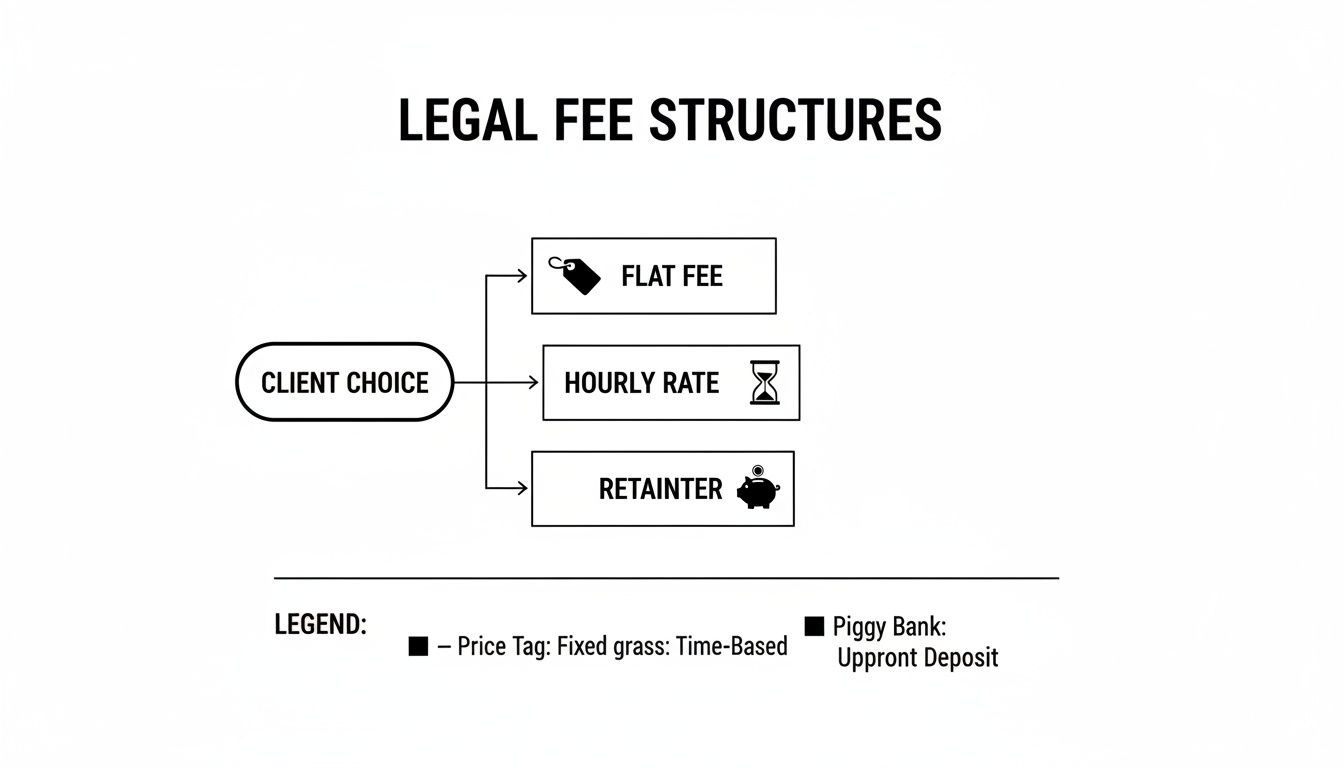
As you can see, the complexity of a case often points toward one billing method over another. By scoring each lawyer on these points, you move past a vague "feeling" and can see who the strongest candidate is on paper.
The Importance of Trusting Your Instincts
While your checklist gives you a logical framework, it doesn't tell the whole story. Once you've looked at the data, step back and just consider your gut feeling. The numbers are critical, but feeling comfortable with and truly confident in your lawyer is just as important.
An attorney can have a perfect resume, but if you don't feel a sense of trust or rapport, the professional relationship will be strained. You should feel that your lawyer genuinely listens to you and has your best interests at heart.
This is the person you’ll be sharing incredibly sensitive information with and leaning on for guidance. If something just felt "off" during your conversations, pay attention to that. Your own confidence in their ability to stand up for you is a huge factor in how the whole process will feel.
What Happens After You've Hired Your Attorney
Once you've made your choice and let the attorney know, things start moving. The first official step is signing a representation agreement, sometimes called an engagement letter. This is the contract that legally establishes them as your lawyer and spells out the scope of their work, the fee structure, and other important terms.
After you've signed, they will file a "notice of appearance" with the court. This is a formal document that tells the judge and the prosecutor that they are now representing you. From that moment on, all communication from the other side has to go through your lawyer. It's a critical step that officially marks the moment you go from searching for help to actively building your defense.
Questions We Hear All The Time
When you're facing a criminal charge, your mind is racing with questions. It's completely normal. We've compiled some of the most common ones we hear from people in your exact situation, offering straight answers to help you understand what comes next.
How Soon Should I Look For A Lawyer After An Arrest?
Immediately. The clock starts ticking the second you're in custody or find out you're under investigation. It's best not to wait.
The first few hours and days are absolutely crucial for building a strong defense. Getting an experienced lawyer involved right away means they can protect your rights from the very beginning, be present for questioning, and sometimes even influence the charges filed against you. Waiting can mean losing opportunities to defend yourself.
What’s The Difference Between State And Federal Defense?
It's like playing two entirely different sports with different rules, fields, and referees. A state criminal defense lawyer, like those who practice in Forsyth or Cobb County, handles cases that violate state and local laws. This covers the vast majority of charges you'll see, like DUI, theft, or simple assault.
A federal criminal defense lawyer, on the other hand, deals with cases prosecuted by the U.S. government. These are often complex charges like bank fraud, drug trafficking across state lines, or other major offenses. The laws, court procedures, and sentencing guidelines are completely different, so having an attorney with deep experience in the right system isn't just a good idea—it's essential.
Is It A Red Flag If A Lawyer Can't Guarantee An Outcome?
No, it's the opposite—it’s a green flag. A reputable, ethical lawyer will never promise a specific result, like a guaranteed dismissal.
Instead, a good lawyer will be honest about the process. They will explain their commitment to building the strongest possible defense for you and working tirelessly toward the best outcome based on the unique facts of your case.
A promise of a specific outcome is not only unethical, but it's also a major red flag. An honest attorney will guarantee their effort and expertise, not a verdict. The legal system is far too unpredictable for empty promises.
Facing a criminal charge in Alpharetta, Cumming, or anywhere in North Georgia is a serious fight, but you don't have to go through it alone. At Brian Hansford Law, we bring over 25 years of courtroom experience to the table, including critical insights gained as a former prosecutor. If you need a dedicated advocate ready to protect your rights, contact us for a consultation and let's start building your defense.
