
When you're facing a criminal charge, everything can feel overwhelming. The first, and arguably most important, decision to make is choosing the right lawyer. This choice alone can shape the entire direction and outcome of your case. The goal isn't just to find any attorney; it's about finding an advocate who knows the law inside and out and understands how to navigate your specific situation.
The process is a lot more than just a quick Google search. It’s about making a smart, informed decision based on the right criteria. A suitable professional can guide you through every single part of the judicial system with confidence. Knowing what to look for from day one will make all the difference.
This decision tree infographic breaks down the key things to consider—experience, local court knowledge, and communication—which are the bedrock of a solid choice.
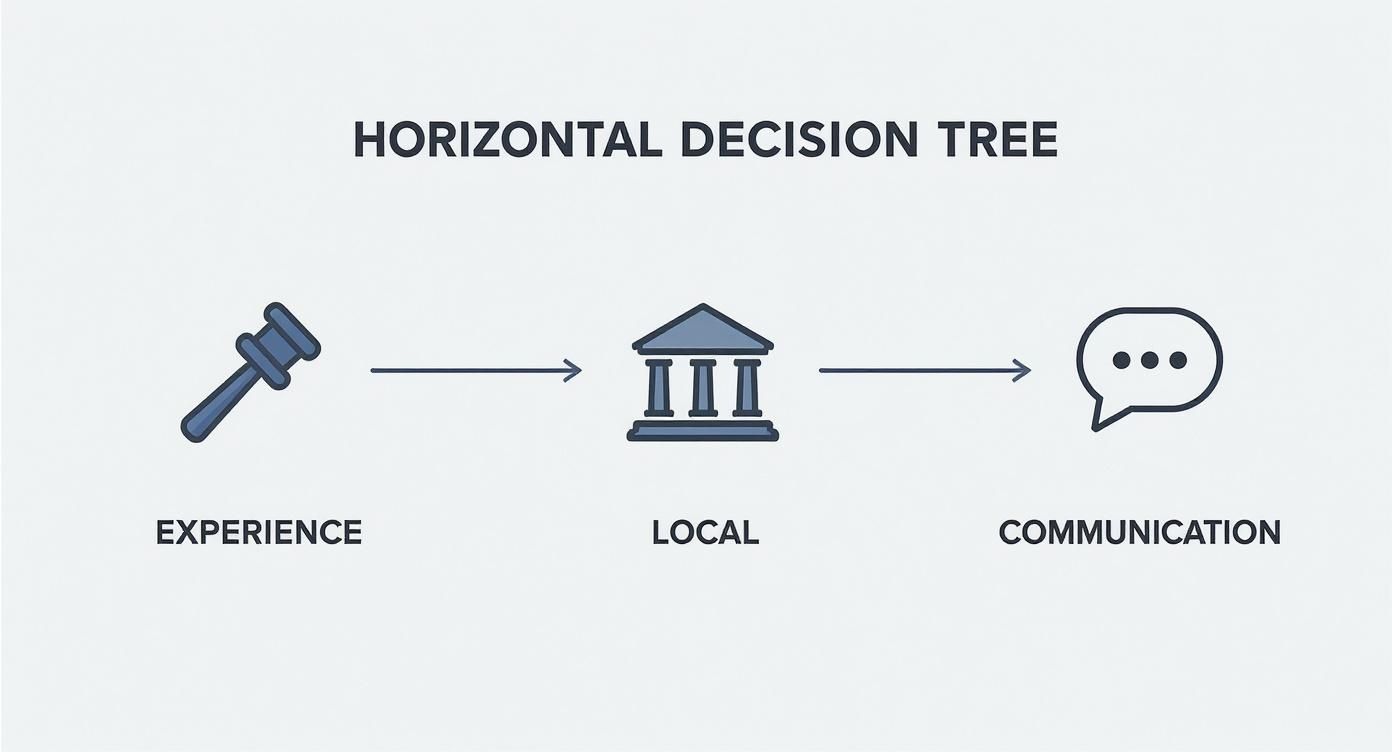
As you can see, a structured evaluation of these key areas helps ensure you don’t miss anything important when picking your legal counsel.
Why a Structured Approach Matters
Having a clear plan for evaluating lawyers helps you compare your options objectively. Instead of getting swayed by one single factor, it's beneficial to look at the whole picture of what each attorney brings to the table. This is a good way to avoid a rushed decision based on gut feelings or incomplete information.
Here are some things to look into:
- Direct Experience: Has the attorney handled cases just like yours before? There’s no substitute for experience with the specific charges you’re facing.
- Local Court Knowledge: A lawyer who is a regular in the courthouse where your case is, whether it's in Forsyth County or Cobb County, will know the local procedures, the prosecutors, and the judges. That can be a huge advantage.
- Communication Style: Finding a lawyer who will actually talk to you, keep you in the loop, and be there to answer your questions is important. Clear and consistent communication is key.
- Professional Reputation: It's possible to check their standing with the state bar and read reviews from past clients. A lawyer's reputation is built on results and client satisfaction.
This methodical process lets you cut through the noise and zero in on the professionals who are truly equipped to handle a defense.
To simplify your evaluation, this table breaks down the essential criteria for sizing up a potential attorney. Use it as a quick reference guide during your search.
Key Lawyer Evaluation Criteria at a Glance
| Evaluation Factor | Why It Matters | What to Look For |
|---|---|---|
| Case-Specific Experience | An attorney who has handled similar charges knows the common strategies, potential pitfalls, and effective defense tactics. | Ask for examples of past cases like yours. Look for a track record of success with your specific type of charge (DUI, drug offense, etc.). |
| Local Court Familiarity | Knowledge of local court rules, personnel (judges, prosecutors), and procedures provides a significant strategic advantage. | Inquire about their frequency of practice in the specific court your case is in. An attorney who is a "regular" is often more effective. |
| Communication & Access | Being kept informed and feeling comfortable asking questions is important. A responsive lawyer can reduce stress and help build a stronger case together. | A clear communication policy, prompt responses to calls/emails, and a willingness to explain complex legal terms in plain English. |
| Fee Structure | Understanding the costs upfront prevents surprises and ensures the financial arrangement is clear and manageable. | Ask for a detailed breakdown of fees (flat fee, hourly, retainer). Ensure you receive a written fee agreement. |
| Client Reviews & Reputation | Past client experiences offer genuine insight into an attorney's professionalism, effectiveness, and client service. | Check online reviews on multiple platforms and their standing with the Georgia Bar Association. Look for consistent positive feedback. |
Focusing on these core areas will give you a well-rounded view of each candidate, helping you identify the lawyer who not only has the right skills but is also the right fit for you personally.
Preparing for a Successful Partnership
Picking your guide is crucial, but so is understanding the road ahead. As you start looking for a lawyer, take some time to get familiar with the process you’re about to go through. Knowing what to expect can help you ask better, more targeted questions during your consultations.
To get a better handle on what’s coming, you can learn more about the steps in the criminal justice process and prepare yourself. This background knowledge may allow you to better judge how a potential lawyer’s skills and experience fit your specific needs, making that very first conversation much more productive.
Understanding Your Legal Representation Options
When you find yourself needing a lawyer, the first thing to wrap your head around is that not all legal help is the same. Knowing the landscape is the first step, and it really comes down to three main paths: public defenders, court-appointed attorneys, and private counsel you hire yourself.
How you get a lawyer and how they get paid are the biggest differences, and which one you work with often depends on the specifics of your case and where you are.
Public Defenders And Court-Appointed Attorneys
Public defenders are attorneys paid by the government to represent people who can't afford to hire their own lawyer. They are state or local employees, and the court assigns them to cases. Because they only handle criminal defense, public defenders are in the courtroom day in and day out, giving them a ton of hands-on experience.
Similarly, court-appointed attorneys are private lawyers who agree to take cases for defendants who can’t afford legal fees. They’re paid by the government, usually at a lower rate than they’d charge a private client. You often see this system in smaller areas without a dedicated public defender's office or when the public defender has a conflict of interest.
This system is the backbone of our justice system. The fact is, the vast majority of people facing serious charges rely on it. According to the Bureau of Justice Statistics, about 82% of felony defendants in large state courts were represented by public defenders or assigned counsel.
Privately Retained Counsel
The other route is hiring a private criminal defense attorney directly. When you or your family retain counsel, you’re in the driver's seat—you get to choose who represents you based on their experience, reputation, and how well you connect with them.
The biggest advantage of hiring a private lawyer is control. You can interview several attorneys and pick the one whose expertise and approach feel right for your specific situation.
Private attorneys generally have smaller caseloads than public defenders, which can mean more time dedicated to your case and more direct communication. Of course, a great lawyer is a great lawyer, public or private. To get a better sense of the pros and cons, you can check out our guide comparing a public defender vs a private attorney.
How Location Impacts Your Options
Where you are matters. A major metro area like Marietta will have a large, well-funded public defender’s office. A smaller, more rural county might rely almost entirely on a rotating panel of local private attorneys who take court-appointed cases.
Getting a handle on these local differences is crucial. While you're focused on criminal law, it helps to understand the bigger picture of legal representation, including differences in legal specialties, such as Will and Trust Lawyers, to appreciate the specialized knowledge your case requires. Knowing how the system works where your case is pending will help you figure out what you need as you start the search for the right lawyer.
How to Evaluate a Lawyer's Background
When you start looking for a lawyer, you're really digging into their professional history. An attorney's background is the foundation of their ability to handle your case, and knowing how to evaluate it is the most critical part of choosing the right person for the job. You're not just looking for someone with a law license; you're looking for the right experience for your specific situation.
Think of it this way: if you needed heart surgery, you wouldn't go to a general practitioner. The same logic applies here. Criminal law is a massive field, and a lawyer who is a master at defending complex white-collar fraud cases might not be the best fit for a DUI charge.
Pinpointing Relevant Case Experience
The first thing to look for is direct, hands-on experience with cases just like yours. A general criminal defense background is a good start, but specific experience is what truly counts. If you’re facing charges in Johns Creek or Roswell, you'll want an attorney who has actually handled those types of offenses in those specific courts.
It's helpful to get granular with the type of charge you're facing:
- DUI Defense: This isn't just about arguing in court. It demands a deep, technical understanding of field sobriety tests, the science behind breathalyzer and blood tests, and all the ways that evidence can be challenged.
- Drug Offenses: A lawyer who knows this area inside and out understands exactly how to scrutinize search warrants, challenge illegal searches, and negotiate for outcomes like diversion programs that can keep a conviction off your record.
- White-Collar Crimes: These cases are a different beast entirely. They often hinge on mountains of financial documents and digital evidence, requiring an attorney with a sharp eye for detail and a strong grasp of financial complexities.
- Juvenile Offenses: The juvenile justice system is built differently, with a focus on rehabilitation instead of pure punishment. A lawyer who specializes here knows its unique procedures and goals, which is a world away from the adult system.
Don't ever be shy about asking direct questions. "How many cases like mine have you handled in the last year?" "What were the outcomes?" This focused expertise is often what makes the difference between an adequate defense and a great one.
The Former Prosecutor Perspective
One of the most valuable assets a defense attorney can have is prior experience as a prosecutor. When a lawyer has worked on the other side of the courtroom, they bring an insider's knowledge to your defense. They've seen firsthand how the state builds its cases, what evidence they lean on, and what their negotiation tactics look like.
This background can provide a serious strategic advantage. A former prosecutor may anticipate the other side's moves, allowing them to build a proactive defense instead of a reactive one. They may also understand the internal pressures and priorities of the District Attorney's office, which can be a huge asset when it comes time to negotiate.
Having a lawyer who has "seen the other side's playbook" can be a game-changer. They know the system from the inside out and can spot weaknesses in the prosecution's case that other attorneys might miss.
Now, this doesn't mean only former prosecutors make good defense attorneys, but it’s definitely a significant factor to weigh when you're looking at who to trust with your case.
Verifying Credentials and Reputation
Once you've sized up their experience, the next step is simple but essential: verify their credentials and professional standing. Every state has a bar association that licenses lawyers, and you can usually check an attorney's status online. This lets you confirm they're in good standing and see if there's any public disciplinary history. It’s a basic background check that should not be skipped.
Beyond the official records, spend some time reading online reviews and client testimonials. You're looking for patterns. Do clients consistently say the lawyer was a good communicator? Do they feel the attorney was knowledgeable and gave their case the attention it deserved? A single bad review isn't a red flag, but a consistent pattern of complaints about being unresponsive or unprofessional absolutely is.
The quality of who you hire can dramatically impact your outcome. In fact, research from The Review of Economics and Statistics found that privately hired attorneys often secure better results than court-appointed counsel, pointing to factors directly within a lawyer's control. It’s a powerful reminder that your choice matters. You can learn more about these findings on attorney effectiveness and see just how much representation choices correlate with results.
Ultimately, evaluating a lawyer’s background is about putting together a complete picture. You’re combining their specific case experience, unique professional history, and public reputation to make a decision you can feel confident in.
Preparing for the Initial Consultation
That first meeting with a potential lawyer isn't just about them sizing up your case—it's your chance to figure out if they're the right person to have in your corner. Think of it as a two-way interview. You're assessing them just as much as they're learning about your situation.
Walking in prepared can make a world of difference. Your goal is to leave that meeting with a gut feeling about their experience, a general idea of how they'd approach your case, and a crystal-clear understanding of how they communicate. Of course, you'll also want to get straight answers on the costs, which is often one of the most stressful parts of this whole ordeal.

Key Questions to Guide Your Conversation
Don't just show up and wing it. If you walk into a consultation without a plan, you're bound to forget something important. Jot down your questions ahead of time so you can cover all your bases and compare your options fairly later on.
Your questions could hit three main areas: their actual, hands-on experience, how they think strategically, and the day-to-day logistics of working with them.
- Experience and Track Record: Get specific. Ask them about their background with cases just like yours in the courthouse you'll be in, whether it’s Forsyth County or Cobb County. A great question is, "How many cases with these exact charges have you handled right here in this courthouse?"
- Strategic Approach: No lawyer has a crystal ball, but you can get a sense of their thought process. Try asking, "Based on what I've told you so far, what are some of the immediate strengths and weaknesses you see in my case?"
- Communication Policy: This is a big one. You'll want to know how you'll get information. Ask directly, "If I hire you, who will be my main point of contact?" and "What’s your firm's typical turnaround time for returning a call or email?" Setting these expectations from the get-go can prevent a lot of frustration down the road.
The table below provides a quick checklist of questions to bring with you. This isn't just about getting answers—it's about seeing how a lawyer responds. Are they direct? Do they explain things clearly, or do they hide behind jargon? You want someone who is straightforward and treats you with respect.
| Essential Questions for Your Attorney Consultation |
|---|
| Category |
| Experience & Specialization |
| "How many years have you specifically practiced criminal defense?" |
| "What percentage of your practice is dedicated to cases like mine (DUI, drug charges, etc.)?" |
| "Have you handled cases in the specific court my case is in (e.g., Forsyth County, Alpharetta Municipal)?" |
| Case Strategy & Approach |
| "Based on what you've heard, what are the possible outcomes for my case?" |
| "What is your general philosophy when it comes to plea bargains versus going to trial?" |
| "Who else in your firm will be working on my case, and what are their roles?" |
| Communication & Logistics |
| "What is the best way to get in touch with you, and what is your policy on returning client communications?" |
| "How will you keep me updated on the progress of my case?" |
| Fees & Costs |
| "Can you explain your fee structure (flat fee, hourly, retainer) and provide a written fee agreement?" |
| "What does your fee include? Are there other costs I should expect, like expert witness fees or court costs?" |
| "What are your payment terms and options?" |
Using a list like this ensures you leave with the information needed to make an informed, confident choice about who will represent you.
Decoding Fee Structures
Let's talk money. This is where you'll want absolute clarity. If an attorney is vague or confusing about their fees, that could be a red flag. A reputable lawyer will be completely transparent about their costs and will always put it in writing for you. You can learn more about what to expect from a criminal lawyer free consultation to feel even more prepared.
You'll generally run into one of three payment models:
- Flat Fee: This is a single, set price to handle your entire case, or at least a specific stage of it. You see this a lot with more straightforward matters, like a first-offense DUI in Alpharetta or a basic misdemeanor. The huge advantage here is predictability—you know the exact cost from day one.
- Hourly Rate: For more complex cases where the time commitment is unpredictable, an attorney will charge by the hour. They'll keep a log of all time spent, from phone calls and legal research to court appearances. If this is the model, make sure you know their rate and the rates for any associates or paralegals who might touch your file.
- Retainer Fee: This isn't the final price but more of a down payment. You pay a lump sum upfront, which the lawyer places into a trust account. They then bill their hourly fees against that balance. If the retainer runs out, you'll likely have to add more funds. Always ask how the retainer is calculated and what happens to any leftover money when your case is over.
Whatever the fee structure, always ask what is included and, just as importantly, what isn't. Expenses for things like private investigators, expert witnesses, or court filing fees are often billed separately. Getting a detailed breakdown in a written agreement is not optional—it protects both you and your attorney.
Common Red Flags to Watch For
Knowing what to look for when choosing a criminal lawyer is one thing, but knowing what to avoid is just as critical. Many people end up with representation that isn't a good fit because they missed some early warning signs. Spotting these red flags can save you an incredible amount of stress and regret down the road.
When you're anxious and searching for an attorney, it's easy to overlook subtle issues. But that first conversation—the initial consultation—tells you almost everything you need to know about their professionalism and how they'll handle your case. Your gut feeling matters. If something feels off, it probably is.

Unrealistic Promises and High-Pressure Tactics
This is probably the biggest red flag out there: a lawyer who guarantees a specific outcome. No ethical, experienced attorney can promise you a dismissal or an acquittal. The justice system simply doesn't work that way; it's full of variables no one can control. Making those kinds of promises isn't just unprofessional, it's impossible.
A good lawyer will talk you through potential strategies and realistic outcomes, both good and bad. They'll ground their assessment in the facts of your case, not in wishful thinking. Be very wary of anyone who sounds more like a salesperson than a legal advocate. If they pressure you to sign a contract on the spot, that's another bad sign. You should always be given the time and space to make a clear-headed decision.
Poor Communication and Lack of Transparency
A solid attorney-client relationship is built on communication. If an attorney is hard to reach, brushes off your questions, or drowns you in jargon without explaining what it means, you should be concerned.
A person has a right to be a partner in their own defense. Keep an eye out for these communication breakdowns:
- Vague answers when you ask direct questions about their fees, experience, or case strategy.
- Not returning your calls or emails in a reasonable amount of time, especially during these early stages.
- A disorganized office where the staff seems confused or uninformed about your inquiry.
How they treat you before you've hired them is a preview of how they'll treat you once you have. If getting a clear answer is a struggle from day one, it’s not going to get better.
Gaps in Local Knowledge and Professional Network
An attorney’s familiarity with the local courts is a massive advantage. If a lawyer rarely steps foot in Forsyth County, Gwinnett County, or Hall County courthouses, they're starting at a disadvantage. They may not know the local court rules, the personalities of the judges, or the negotiating styles of the prosecutors—and that insider knowledge is invaluable.
During your consultation, ask them about their recent experience in the exact courthouse where your case will be heard. An attorney with deep roots and a strong reputation among local judges and prosecutors can navigate the system far more effectively. It’s a subtle factor, but it’s significant. Studies show that the choice of lawyer can influence a criminal sentence by as much as 10%, which could easily translate to months of jail time. You can explore more about lawyer statistics to see just how tangible the impact is.
A lawyer’s job is to explain the risks, not ignore them. Overconfidence can be just as dangerous as inexperience. A grounded, realistic approach is a sign of a true professional who respects the seriousness of your situation and is prepared to fight intelligently on your behalf.
Ultimately, picking an attorney is a personal decision. By watching for these red flags, you can steer clear of a bad fit and find an advocate who is skilled, professional, and genuinely committed to protecting your rights. Feeling confident in your lawyer is just as important as their resume.
Common Questions People Ask When Hiring a Lawyer
Even when you know you need a lawyer, figuring out the nuts and bolts of hiring the right one can feel like a job in itself. You’re likely dealing with a lot of stress, and the practical questions can be overwhelming. Here are some straightforward answers to the questions we hear most often.
How Much Does a Criminal Defense Lawyer Cost?
This is usually the first question on everyone's mind, and the honest answer is: it depends. There’s no flat rate. The cost is tied directly to the lawyer's years of experience, how complicated your case is, and even which courthouse your case will be heard in.
Most of the time, you'll run into one of these three fee structures:
- Hourly Rate: This is pretty straightforward. The attorney bills you for all the time they put into your case—every phone call, every bit of research, and every minute spent in court.
- Flat Fee: For more common or less complex cases, like a first-time DUI, many lawyers will charge a single, all-inclusive price. This gives you a clear, upfront cost to handle everything from start to finish.
- Retainer Fee: Think of this as a down payment. You pay a lump sum upfront, which the lawyer puts into a trust account. They then deduct their hourly fees from that balance as they work on your case.
No matter which route you go, get a written fee agreement. This isn't just a suggestion; it's essential. The agreement should spell out every potential cost, from expert witness fees and private investigator expenses to simple court filing charges. A good lawyer ensures there are no financial surprises waiting for you down the road.
What Is the Difference Between a Public Defender and a Private Attorney?
The biggest difference comes down to how they're paid and how they get your case. Public defenders are government-paid attorneys appointed by the court if you can't afford to hire one yourself. A private attorney, on the other hand, is hired and paid directly by you.
Public defenders are in court every single day, handling a massive number of cases. That volume gives them an incredible amount of practical courtroom experience. The downside? Their heavy caseloads can mean they have very little time to dedicate to any one person. A private attorney typically manages a smaller, more focused caseload, which often translates to more one-on-one attention and better communication.
Ultimately, skill and dedication can vary widely on both sides. You can find fantastic public defenders and mediocre private attorneys, and vice versa.
Should I Find a Lawyer Who Specializes in a Specific Crime?
This can make a huge difference. Think about it: criminal law isn't a "one-size-fits-all" field. The legal strategy for defending a DUI in Roswell is worlds apart from what’s needed for a complex white-collar crime case in Marietta.
A specialist lives and breathes a specific area of law. They’re constantly keeping up with the latest statutes, recent court decisions, and defense tactics that actually work for your type of case. When they've handled hundreds of similar situations, they know what to expect.
This specialized knowledge also means they know the local players. An attorney who handles drug charges in Forsyth County every week knows the prosecutors and judges who will be making decisions about your future. While a general practitioner can certainly be effective, a specialist’s focused experience can lead to a much more strategic, informed defense tailored to the exact challenges you’re facing. That kind of background can be a real advantage.
When your rights are on the line, experience is what counts. At Brian Hansford Law, we bring over 25 years of experience to the table, including critical insights gained from my time as a prosecutor. That background allows us to build the strongest possible defense for you. If you’re facing charges in Alpharetta, Cumming, or anywhere in the surrounding area, contact us for a consultation to talk about your case.
