
When you're facing a criminal charge in places like Cumming, Alpharetta, or Forsyth County, the first move you make is one of the most important: finding the right lawyer. It can be a daunting task. A quick Google search will throw thousands of names at you, but you need a targeted, reliable way to build a solid list of potential attorneys.
This isn't about just finding a lawyer; it's about finding your lawyer. Your goal is to move from that overwhelming sea of search results to a focused shortlist of qualified professionals you can consider.
Let's break down where to start.
Where to Begin Your Lawyer Search
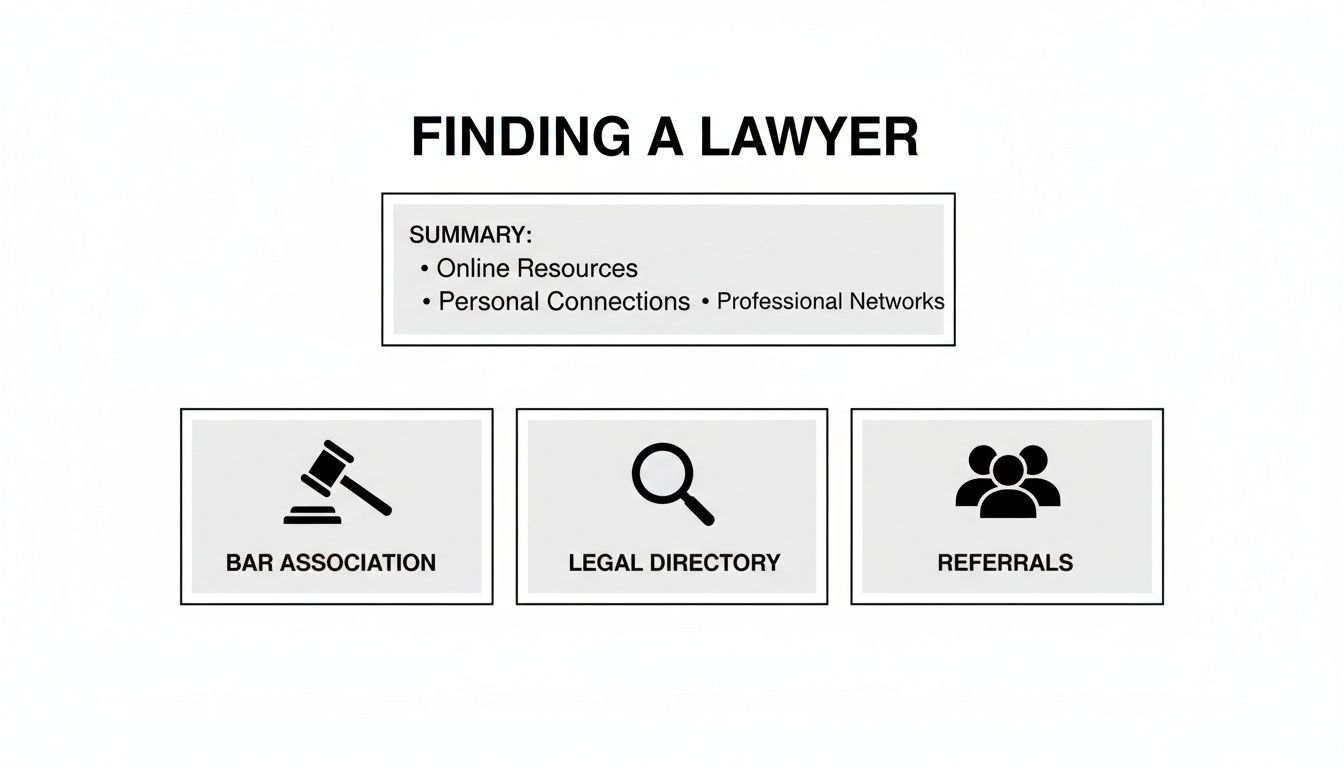
To sift through the noise, it helps to start with credible, vetted resources. The table below outlines some of the most effective places to begin your search, giving you a clear picture of the pros and cons of each method.
| Search Method | What It Is | Key Benefit | Potential Drawback |
|---|---|---|---|
| State/Local Bar Associations | Official governing bodies that license and regulate all lawyers in the state. | Guaranteed Credentials: Every lawyer listed is licensed and in good standing. | Information can be basic, often lacking detailed client reviews. |
| Online Legal Directories | Platforms like Avvo that compile lawyer profiles, client reviews, and peer ratings. | Peer & Client Reviews: Offers a snapshot of an attorney's reputation and client experiences. | Ratings can be subjective and may not reflect actual courtroom skill. |
| Personal Referrals | Recommendations from trusted friends, family, or other professionals. | High Level of Trust: A firsthand account provides invaluable, honest insight. | The referrer's case may be very different from yours. |
Using a combination of these methods is a common approach for creating a well-rounded list of candidates who are not just qualified on paper, but also have a strong reputation in the community.
Official Bar Association Directories
A good first stop can be the official bar associations. These aren't just business listings; they are verified databases managed by the organizations that license and regulate every attorney in the state.
Think of it as a background check right from the start.
- Verified Credentials: You can be 100% certain that any lawyer you find here is licensed and in good standing with the state.
- Specialty Searches: Their directories let you filter by practice area, so you’re only looking at attorneys who actually focus on criminal defense.
- Disciplinary History: Crucially, bar association websites often give you access to a lawyer's public disciplinary record. This transparency is priceless.
For example, a quick search on the State Bar of Georgia's Member Directory can instantly confirm if a lawyer you're considering is licensed and has a clean public record. It's a non-negotiable first step for many.
Trusted Online Legal Directories
After checking the official sources, online legal directories like Avvo and Martindale-Hubbell can add another layer to your research. These platforms gather attorney profiles, client reviews, and endorsements from other lawyers.
These sites often use a rating system, which can give you a quick glimpse of a lawyer’s reputation. Just remember to take these ratings with a grain of salt. They are usually based on things like peer endorsements and professional achievements, not necessarily a lawyer's win-loss record in the courtroom.
Use these directories to get a feel for an attorney's online presence and what past clients have to say, but don't let a high rating be the only reason you pick up the phone.
The Power of Personal Referrals
Sometimes the best leads don't come from a website. They come from people you know and trust. If you're comfortable doing so, ask friends, family, or colleagues if they’ve ever worked with a criminal defense attorney they'd recommend. A personal story gives you insight you'll never find in a bio.
A referral from someone you trust is powerful. It means that lawyer didn't just do their job—they communicated well, showed genuine expertise, and got a positive result for someone who was in a situation similar to yours.
Don't overlook other professionals in your network. If you have a family lawyer or a business attorney, ask them for a referral. Lawyers in the local community know who has a solid reputation for fighting for their clients in the Forsyth County, Cobb County, or Alpharetta courts. It’s also important to understand the role of a public defender vs a private attorney to decide which path is right for you.
With over 252,000 criminal defense attorneys practicing in the U.S. as of 2025, a strategy to narrow the field is helpful. By focusing on these structured search methods, you can confidently build a shortlist of qualified, reputable lawyers and take the first critical step toward your defense.
Once you’ve got a short list of potential lawyers, the real work begins. It’s time to move past the website slogans and glossy headshots and start digging into what really matters: their actual credentials and, just as importantly, their experience right here in our local courts.
A fancy office in Buckhead doesn't mean much if your case is in Forsyth County Superior Court and the lawyer has never set foot in that building. You're looking for specific, relevant experience that matches your situation.
This process really boils down to two things: their professional background and their day-in, day-out familiarity with the courthouses where your case will be decided. Getting these two things right can completely change the game for your defense.
The Advantage of a Former Prosecutor
If you see "Former Prosecutor" on an attorney's bio, pay close attention. That's not just a fancy title; it can be a massive strategic advantage.
Think about it. An attorney who has worked for the District Attorney's office has seen how the other side operates from the inside. They know the prosecution's playbook because they used to run the same plays. They understand how evidence is handled, how cases are built, and what pressure points can be used during negotiations.
This kind of insider knowledge is invaluable. A former prosecutor can often anticipate the other side’s next move, spot weaknesses in the state’s case that others might miss, and build a defense designed to dismantle the prosecution's arguments piece by piece.
They know what a prosecutor needs to hear to consider reducing charges or agreeing to a favorable plea. They speak the same language, which can make all the difference when it's time to negotiate.
Why Local Court Familiarity Matters
Legal experience isn't one-size-fits-all. A lawyer who knows the ins and outs of the Fulton County courthouse might be totally lost in Cobb County. That’s why hiring an attorney with deep, local roots in the specific courts of Forsyth County, Cobb County, or the municipal courts in Alpharetta, Roswell, and Johns Creek can be so critical. It’s a true home-field advantage.
This isn't about secret handshakes. It's about practical, on-the-ground knowledge.
- They know the people: A local lawyer has working relationships with the prosecutors, the judges, and even the court clerks. This familiarity helps everything run more smoothly.
- They know the procedures: Every court has its own quirks and unwritten rules. A local attorney won't get tripped up by a weird filing deadline or a particular judge's preference for how motions should be presented.
- They know the tendencies: An experienced local lawyer has a good feel for how certain judges might rule on specific issues or what kind of sentences they typically hand down.
This insight allows them to build a strategy tailored not just to the law, but to the specific courtroom and judge you'll be in front of. If you want to learn more about the benefits of local expertise, check out our guide on finding a skilled defense attorney near me.
Assessing a Lawyer's Trial Record
Here's a crucial point many people miss: not all criminal defense attorneys are trial lawyers. Some are excellent negotiators who specialize in getting cases resolved before they ever see a courtroom. Others are proven litigators who thrive in front of a jury.
It can be helpful to know what you're getting.
A prosecutor who knows your lawyer isn't afraid to go to trial—and has a track record of winning—is far more likely to come to the table with a reasonable offer. That willingness to fight is one of the most powerful tools in a lawyer’s arsenal.
Ask them about their trial experience. Look for case results on their website. A real trial lawyer will have stories to tell (while protecting client confidentiality, of course). While it's true that over 90% of criminal cases end in a plea bargain, you absolutely want a lawyer who is ready, willing, and able to go the distance if that's what your case demands.
It's also helpful to know that most law firms are small, focused practices. In fact, 78% of U.S. law firms have just 2-9 attorneys, and 40% are solo practitioners. This means you can often find a true specialist in a smaller firm, not a giant, impersonal one. As you weigh your options, remember that the best credentials often come from these dedicated, experienced attorneys.
Making the Most of the Initial Consultation
Once you've narrowed down your list of potential attorneys, the initial consultation is your time to interview them. This meeting is much more than a chance to tell your side of the story; it’s your best opportunity to see if a lawyer is the right fit for you, your family, and your specific case.
Going in prepared can be the difference between hiring a true advocate and just hiring the first person who called you back.

The goal here isn't to get promises—it's to get clarity. You want to walk out of that meeting with a solid grasp of their experience, their communication style, and their initial take on your situation. A productive consultation empowers you to make a confident, informed decision when the stakes are this high.
Key Questions About Experience and Strategy
Your questions should be direct. Vague questions get vague answers, so it's useful to drill down into the details that actually matter for your case.
Start by asking about their specific experience with charges just like yours, especially within local courts like those in Forsyth County or Cobb County. For example, if you were arrested for a drug offense in Marietta, don't just ask if they handle drug cases. Ask:
- "How many drug cases have you specifically handled in the Cobb County court system in the last year?"
- "What are some of the defense strategies you’ve found effective in situations like mine?"
- "Based on what I’ve shared so far, what is your initial assessment of my case?"
This line of questioning pushes past their general resume and gets right to the heart of their practical, on-the-ground experience where it counts.
The most revealing question is often the simplest: "If you were in my shoes, would you feel confident hiring yourself for this case? And why?" An honest, thoughtful answer can tell you everything you need to know about their confidence and their approach.
It's also critical to understand how they see the path forward. No ethical lawyer will ever guarantee an outcome, but they absolutely should be able to outline a potential roadmap. Ask about their initial thoughts on investigation, what motions might be filed, and the likelihood of negotiating a plea versus taking the case to trial.
To help you stay organized, we've put together a table of essential questions to guide you during the consultation.
Key Questions for Your Lawyer Consultation
This table categorizes key questions to ensure you cover all the bases—from experience and strategy to communication and fees.
| Category | Essential Question to Ask |
|---|---|
| Local Experience | How many cases like mine have you handled in [Your County] court? |
| Case Strategy | What are the potential strengths and weaknesses of my case as you see them now? |
| Communication | Who will be my primary point of contact, and what's your policy for returning calls? |
| Caseload | Will you personally be handling my case, or will it be passed to a junior associate? |
| Fees & Billing | Can you explain your fee structure and what it covers? Are there additional costs? |
| Next Steps | What are the immediate next steps if I decide to hire you? |
Using a structured list like this ensures you leave the meeting with the answers you need to make a smart decision.
Gauging Their Communication and Caseload
Pay close attention to how the attorney communicates during this first meeting. It's almost always a preview of what you can expect for the entire duration of your case. Are they dismissive, rushed, or talking down to you? That isn’t likely to change.
You want an advocate who can explain complicated legal matters in a way you can actually understand. A good lawyer will listen intently, ask clarifying questions, and show they’re genuinely engaged.
To get a sense of their availability, you have to ask about their caseload.
- Who will be my main point of contact? It's vital to know if you'll be working directly with the lawyer you're meeting or if your case will be handed off.
- What is your policy on returning calls and emails? Setting a clear expectation for communication turnaround (e.g., within 24 business hours) is crucial.
- How will you keep me updated on my case? This sets the stage for proactive updates, so you aren't left chasing them for information.
Knowing these things upfront prevents a world of frustration later. For a more exhaustive checklist, our guide on questions to ask a criminal lawyer offers even more valuable insights.
Observing the Professional Environment
Beyond the direct questions, just look around. Take note of your surroundings and the overall vibe of the interaction. Is the office organized and professional? Did the attorney seem prepared for your meeting, or are they distracted and rifling through papers?
These are small but important clues about their attention to detail and how they run their practice. You're entrusting them with something deeply personal; you want to see that they treat every aspect of their work with care.
Trust is everything. Research even shows that when clients feel a demographic connection with their lawyer, trust can increase by up to 40%. With the average criminal lawyer being 46 years old, many have decades of practice navigating the very system you're facing. This experience is essential, especially when you consider there were 61,758 federal sentencings in 2024 alone. Your consultation is the time to gauge that experience and see if you've found the right advocate for you.
Let's talk about the money side of things. I know it's a huge source of stress. Before one can even begin to think about building a defense, it is important to get a handle on what this is going to cost. Getting clear on the fee structures right away is non-negotiable—it helps you plan and, more importantly, prevents any nasty surprises down the road.
Most criminal defense lawyers use a few common ways to handle payment. Once you understand the differences, you'll be able to look at any proposal and know exactly what you're getting into.
Common Fee Structures in Criminal Defense
How a lawyer bills for their time isn't one-size-fits-all. In criminal cases, you're almost always going to see one of three models: a flat fee, an hourly rate, or a retainer that acts like a down payment. Each one has its place and is generally used for different kinds of cases.
-
Flat Fee: This is exactly what it sounds like: a single, all-in price to handle an entire case. Lawyers often use this for more straightforward situations, like a first-offense misdemeanor DUI in Milton or a traffic case in Roswell Municipal Court. The huge benefit here is cost predictability. You know the exact number from day one, no matter how many hours it takes.
-
Hourly Rate: For more complex cases—maybe a serious felony in Forsyth County Superior Court that looks like it's headed for a trial—lawyers will often bill by the hour. They track every bit of time spent on your case, from phone calls with the DA to filing motions and appearing in court. The final cost isn't as certain, but it reflects the actual work required for a complicated defense.
-
Retainer Fee: Think of a retainer as a down payment to get a lawyer started and secure their services. You pay an upfront amount, and that money goes into a special trust account. As they work on your case, they bill their hourly rate against those funds. If the case goes on for a while and the retainer is used up, you might need to add more funds to the account.
I can't stress this enough: get every single detail about the fees in writing. A clear, signed fee agreement is your best friend. It should spell out the fee structure, exactly what services are covered, and what expenses are not included. No gray areas.
What Your Fee Agreement Should Cover
A good fee agreement is much more than a price tag. It’s the contract that defines the entire financial relationship. Before you sign anything, it is important to be 100% clear on what you're paying for.
For instance, your agreement should specify what that main fee actually covers. Does a flat fee take you all the way through a jury trial? Or does it only cover work up to the point of a trial? That’s a critical distinction that can make a massive difference in your total legal costs.
Looking Out for Additional Costs
Beyond what you pay your lawyer, there are almost always other expenses that pop up during a criminal case. These are costs that are paid to third parties, and they typically aren't wrapped into the primary attorney's fee.
Make sure you ask about these potential extra costs. They might include things like:
- Court Filing Fees: The various fees required just to file documents with the court.
- Expert Witness Fees: This is a big one. It may be necessary to hire specialists, like a private investigator or a forensic analyst, to pick apart the prosecution's evidence.
- Transcript Costs: Fees for getting the official written records of court hearings.
Asking about these possibilities from the very beginning helps you build a realistic budget. A transparent attorney will be upfront about these things so you have the complete financial picture right from the start.
Spotting the Red Flags When Choosing a Lawyer
Knowing what to look for in a lawyer is one thing, but knowing what to avoid is just as critical. When your freedom is on the line, it's important to be able to spot the warning signs from a mile away. Some behaviors aren't just unprofessional—they're giant red flags that should make you walk out the door.
The biggest one? Any attorney who guarantees a specific outcome. No ethical, experienced lawyer will ever promise you a dismissal, an acquittal, or a certain sentence. The justice system has too many variables—judges, prosecutors, evidence you haven't even seen yet. A "guarantee" isn't confidence; it's a sales pitch, plain and simple.
A real pro will give you an honest, realistic assessment of your case. They'll lay out the strengths, the weaknesses, and the possible paths forward. They're selling their expertise and a promise to fight for you, not an impossible result.
That kind of over-the-top promise usually comes from someone who either lacks experience or is just willing to say whatever it takes to get you to sign the retainer agreement.
Poor Communication and Disorganization
From your very first phone call, pay close attention to how the lawyer and their office operate. If it takes days for them to return your call or your emails go into a black hole, that’s a huge problem. If they can't communicate effectively before you've even hired them, imagine how it will be once they have your money.
Take a look around during your consultation, too. Is the office a chaotic mess? Piles of files everywhere, stressed-out staff, a general sense of disorganization? That's not a good sign. An office that can't keep its paperwork straight probably can't manage a complex legal case either. It can be a recipe for missed deadlines and critical mistakes.
A professional practice should deliver:
- Prompt Responses: They should get back to you in a timely manner, even if it’s just their assistant calling to schedule a proper conversation.
- Clear Next Steps: You should never leave a meeting or end a call wondering what happens next. They should tell you the plan.
- Organized Operations: An efficient, well-run office shows they respect you and the seriousness of your situation.
High-Pressure Tactics and Murky Fees
You should never, ever feel pressured to hire an attorney on the spot. If a lawyer is pushing you to sign a contract and pay a retainer right now, often by creating a fake sense of urgency, they're not looking out for you. That's a classic tactic to keep you from talking to other lawyers and shopping around.
Another major red flag is a lack of transparency, especially when it comes to money. If an attorney gets vague about their fee structure, dodges questions about potential extra costs, or won't give you a detailed fee agreement in writing, head for the exit.
You have an absolute right to know exactly what you're paying for, what's included, and what other expenses might pop up down the road. Any hesitation to be crystal clear about fees is a strong hint that you'll be getting hit with surprise bills later. Your relationship with your lawyer has to be built on trust, and that starts with being upfront about everything—especially the cost.
Common Questions People Ask When Hiring a Lawyer
When you're trying to find a criminal defense lawyer, a lot of questions pop up. It's a stressful time, and getting clear, straightforward answers can help you feel like you have some control over the situation. Let's tackle some of the most common things people ask when they start their search.
Getting a handle on these key points will make your search more effective and help you find the right advocate for your case.
How Quickly Do I Need to Find a Lawyer After an Arrest?
Immediately. The clock starts ticking the second you're arrested or find out you're under investigation. Those first few hours and days are absolutely critical.
Getting an attorney on board right away can fundamentally alter the path your case takes. They can protect you during any questioning by law enforcement, provide critical information on what to say (and what not to say), and start mapping out a defense strategy from day one.
Early intervention isn't just a good idea; it's a strategic necessity. A lawyer can make a difference at bail hearings, preserve crucial evidence before it's lost, and open a line of communication with the prosecutor on your behalf.
The longer you wait, the more of an advantage you might be giving up. Moving fast is one of the most important things you can do to protect yourself.
What's the Real Difference Between a Public Defender and a Private Attorney?
The main difference comes down to their caseload and how you hire them. A public defender is an attorney the court appoints to represent someone who can't afford to hire their own lawyer, based on strict financial rules.
A private attorney is someone you hire directly. While many public defenders are incredibly skilled and dedicated lawyers, the reality is that they often juggle an enormous number of cases at once. That can seriously limit the time and personal attention they can give to any one person's defense.
On the other hand, a private attorney typically manages a much smaller, more focused caseload. This usually means more personalized attention, a deeper dive into the specific facts of your case, and more time to answer your questions. This isn't a knock on skill—it's just a structural difference in how the two systems work.
Does My Lawyer Need to Be Based in the Same City as My Courthouse?
While it’s not an absolute rule, it is a huge advantage to hire a lawyer who is deeply familiar with the local court system where your case will be heard.
Think about it this way: if your case is in Forsyth County Superior Court or the municipal court in Milton, a lawyer who is there on a regular basis has a home-field advantage.
- Local Knowledge: They know the specific procedures, the clerks, and even the unwritten rules of that courthouse.
- Professional Relationships: A local lawyer has likely built working relationships with the prosecutors and judges over the years, which can help negotiations run more smoothly.
- Strategic Insight: They often have a good gut feeling for how certain judges might rule on motions or what arguments tend to work best with that specific District Attorney's office.
That kind of local insight is a real strategic asset that can make a major difference in the outcome of your case.
What Should I Bring to My First Meeting With a Lawyer?
To get the most out of your initial consultation, you need to come prepared. Bringing all the paperwork you have gives the attorney a clear picture of your situation right from the start.
Being organized helps the lawyer assess the facts quickly and lets you walk away with more valuable information.
Here’s a quick checklist of what to pull together:
- All Legal Paperwork: This means anything you got from the police or the court. Grab your police reports, bail or bond papers, charging documents, and any tickets or citations.
- A Written Summary: While it’s still fresh, write down a detailed timeline of what happened. Include dates, times, locations, and the names of anyone else involved or who saw what happened.
- A List of Questions: Before you head to the meeting, jot down a list of questions you want to ask. This guarantees you won’t forget anything important and makes it easier to compare answers if you're talking to more than one attorney.
Showing up organized proves you're serious about your defense and helps the attorney give you a much more thorough initial evaluation.
At Brian Hansford Law, we know that finding the right lawyer is the most important first step you can take. With over 25 years of experience, including time as a former prosecutor, Brian Hansford is ready to protect your rights and fight for the best possible outcome for you. If you are facing criminal charges in Alpharetta, Cumming, or anywhere in North Georgia, contact us for a consultation.
