
When facing a criminal charge, the first instinct might be to scramble and find any lawyer, and fast. But taking a moment to get organized is often a useful first step. How one starts this search can have a significant impact on the outcome.
The process of finding a suitable criminal lawyer isn't about speed—it's about clarity.
Before picking up the phone or typing a name into a search bar, taking some time to lay out the facts of the situation can be beneficial. This prep work can make the entire process of finding the right advocate much more efficient.
Laying the Groundwork for Your Search
Getting organized means more than just running the events through your head. It can be helpful to structure the information so that a potential lawyer can immediately understand the basics. What are the specific charges? Where did the incident happen? What are the key dates?
Having clear answers helps zero in on professionals who have handled similar cases before. After all, a lawyer who specializes in complex fraud cases may not be the most common choice for a DUI charge. The goal is to move from a feeling of uncertainty to a position of informed action.
Here's a quick checklist to get your initial research started on the right foot.
Your Initial Research Checklist
| Action Step | Why It's Important | Where to Look |
|---|---|---|
| Document Case Details | Gives potential attorneys a clear picture of your situation from the very first conversation. | Your own records, police reports (if available), and court documents. |
| Identify Your Specific Need | Helps narrow your search to attorneys who specialize in your type of charge (e.g., drug offenses, assault). | Online legal directories, state bar association websites. |
| Build a Preliminary List | Creates a focused group of qualified candidates to vet, saving time and energy. | State/local bar association directories, trusted referrals from friends or colleagues. |
This isn't about creating a random list of names. It's about building a curated group of attorneys whose expertise appears to match your needs. This provides a solid foundation for the next steps.
This infographic breaks down that initial process.
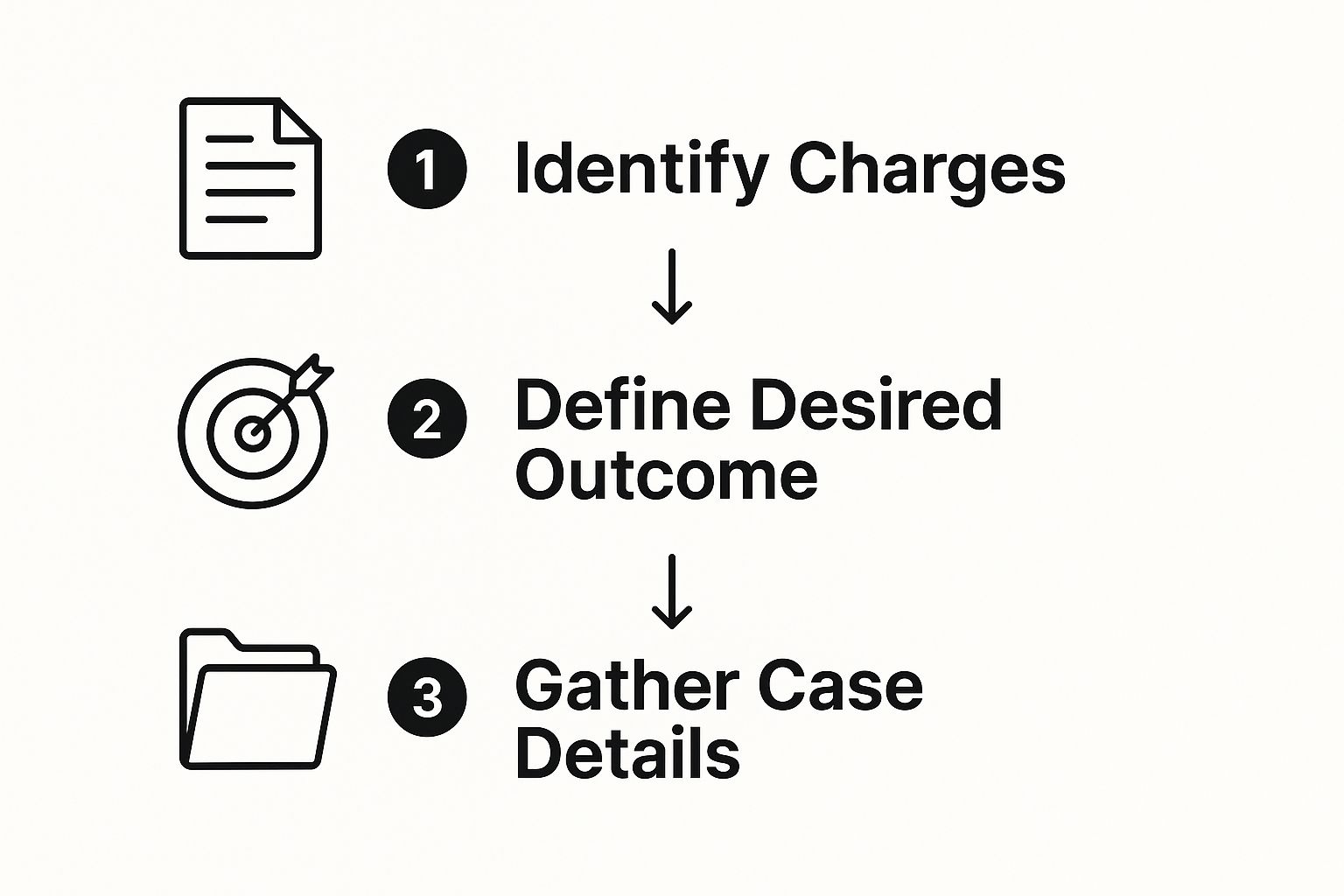
Taking the time for this internal prep before starting to reach out is critical. When you understand your own situation, you're better equipped to navigate the system and find a professional to assist you. To get a better feel for this world, you can learn more about the different facets of criminal defense work.
Understanding Your Representation Options

When facing criminal charges, one of the first and most critical considerations is who will stand beside you in court. The choice usually boils down to two main paths: hiring a private attorney or working with a public defender. Each has its own set of realities, and understanding them is key to making an informed choice for your situation.
A private attorney is a lawyer you hire and pay for yourself. Because their clients are paying for their time, they typically handle fewer cases at once. This often translates into more one-on-one attention, deeper investigation into the specifics of a case, and more frequent communication.
A public defender, on the other hand, is an attorney appointed by the court if an individual cannot afford to hire one. These are government employees who manage a very high volume of cases. Volume should not be mistaken for a lack of skill; their daily grind in the courthouse gives them an incredible amount of practical experience and a deep familiarity with the local judges and prosecutors.
Comparing Your Main Options
It's a common misconception that private representation is automatically better simply because it costs money. The truth is far more complex, and the "best" option really hinges on individual circumstances.
Let's break down the practical differences:
- Caseload: This is a big one. Public defenders often juggle a massive number of cases. Private attorneys can be more selective, which means a smaller, more manageable workload and more time dedicated to a client.
- Resources: Private law firms often have more funds available for things like hiring investigators, bringing in expert witnesses, or conducting forensic testing. Public defender offices work within the constraints of a government budget, which can sometimes limit access to these extras.
- Cost: The most obvious difference. A private attorney is paid directly by the client, with fees ranging from flat rates to hourly billing. Public defenders are provided at no charge to those who qualify.
The idea that more expensive representation always leads to a better outcome isn't necessarily backed by evidence. Public defenders frequently achieve outstanding results, leaning on their extensive courtroom experience to navigate the system effectively.
Think about it this way: a 2011 study of murder cases in Philadelphia found some surprising results. Defendants represented by public defenders were actually 19% less likely to be convicted of murder compared to those with court-appointed private lawyers.
Even more telling, they had a 62% lower probability of receiving a life sentence and, on average, their sentences were 24% shorter. You can read the full Yale Law Journal study on representation and case outcomes to see the data for yourself.
Making the Most of an Initial Consultation

Once a list of attorneys is narrowed down, the next part is often the initial consultation. This meeting is much more than just a free chat about a case. Think of it as an interview—where you're the one gathering information. It’s a chance to see if an attorney’s style, experience, and personality are a good fit.
To get the most out of it, it helps to walk in prepared. Bringing every document you have related to the case and having a list of questions ready can be beneficial. A sharp defense attorney won't just sit back and listen; they'll ask tough, insightful questions to really get to the heart of what happened. This early back-and-forth is a fantastic preview of how they might approach the situation.
Key Areas to Focus On
During this first meeting, paying attention to everything can be helpful. It’s not just what the lawyer says, but how they say it. You might be looking for someone who can break down complicated concepts into plain English without sugarcoating things. An honest, direct assessment—even if it's tough to hear—is often more valuable than a lawyer who just says what they think you want to hear.
Making questions count can be useful. Be specific.
- Real-World Experience: Don't just ask if they've handled cases like yours. Ask, "How many cases involving these specific charges have you taken to trial in this courthouse?" The details matter.
- Courtroom Connections: A great question is, "How well do you know the prosecutors and judges here?" An attorney who has built relationships and a reputation in that specific courtroom may bring an advantage to the table.
- Communication Vibe: Do they cut you off when you're talking, or do they listen intently? A lawyer who makes you feel heard and respected from the very beginning can be crucial. This is going to be a stressful journey, and being on the same team is important.
Remember, this is a two-way street. If a lawyer makes you feel rushed, confused, or dismissed, they may not be the right fit. You are looking for a trusted guide for what could be one of the most difficult times in life.
Understanding the Bigger Picture
A productive consultation should leave a person with a clearer roadmap. The attorney should be able to sketch out a few potential strategies and explain what the next steps are. They also need to be upfront and transparent about their fees and what those costs cover. No surprises.
For many people, this is their first time dealing with the justice system. It helps to have some context, so understanding what happens when someone is arrested can make this conversation much more productive.
Ask the attorney to walk you through a typical timeline for a case similar to yours. Their ability to explain the process and manage expectations from day one is a hallmark of a professional you can depend on.
How to Evaluate a Lawyer's Experience

When trying to find a good criminal lawyer, you'll see the word "experience" on many websites. But years in practice alone don't tell the whole story. What really matters is relevant experience that matches your exact situation.
Think about it this way: a lawyer with 20 years of experience practicing in another state won't have the local relationships and knowledge that can be so important. It is often preferable to find someone who has handled cases just like yours, in the same courthouse where your case will be heard. That familiarity with local procedures, prosecutors, and judges can be a massive advantage.
It's Not All About the Trial Record
Most people think a great trial record is the ultimate sign of a top lawyer. While courtroom skills are certainly important, they're only one piece of the puzzle. The hard truth is that the vast majority of criminal cases never actually go to trial.
Instead, they get resolved through negotiations and plea agreements. This is where a lawyer's real skill as a negotiator comes into play.
A lawyer's ability to negotiate effectively behind the scenes is often more critical than their performance in a courtroom. Their capacity to communicate with prosecutors, find weaknesses in the state's case, and argue for reduced charges can define the outcome of a case.
The data backs this up. Only about 2.4% of criminal defense cases in the U.S. ever make it to trial. That means roughly 97% are settled through plea deals, where an attorney's ability to minimize charges or penalties is everything.
Questions That Reveal Real Experience
To get past the generic claims during a consultation, asking questions that uncover this practical, behind-the-scenes expertise is key.
Here’s what you could ask:
- How often do you handle cases involving these specific charges?
- What percentage of your cases are resolved through plea agreements versus trials?
- Can you describe your approach to negotiating with the local prosecutor's office?
For anyone facing serious accusations, understanding how an attorney handles high-stakes negotiations is critical. You can get more context by reading about what it means when you are charged with a felony and the complexities involved. The answers to these questions will paint a much clearer picture of a lawyer’s true effectiveness than any website bio ever could.
Making a Final Decision
You’ve done the research, sat through the consultations, and now it’s time to decide. This is where you put everything together—from online reviews to your gut feeling during the meeting—and pick the attorney that seems right. It can help to lay everything out side-by-side for your top two or three candidates.
Take a hard look at what each one brings to the table. Think about the strategy they proposed, how they communicate, and what their fee structure looks like. One lawyer might have a stellar trial record but communicates in a way you don't prefer, while another makes you feel heard and lays out a clear, reassuring plan.
Comparing Your Final Candidates
When under stress, it's easy to get overwhelmed. A simple comparison chart can cut through the noise and help with logical thinking.
- Proposed Strategy: Did they give you a clear game plan? Does it sound realistic, or like they were just saying what you wanted to hear? Look for a strategy grounded in experience with cases just like yours.
- Communication Style: Do you feel like you can ask them a "dumb" question without being judged? Are they straight with you, or do they hide behind legal jargon? This relationship is crucial, so comfort matters.
- Fee Structure: Is it crystal clear what you're paying for? It's important to know exactly what the retainer covers and what gets billed hourly. Clarity on costs is key.
At the end of the day, this decision often boils down to trust. Forget the fancy degrees and long case histories for a second. It is important to feel confident in the person standing beside you in court.
Before signing an agreement, running through one last mental checklist is a good idea. Did they answer all your questions? Do you know what happens next? Are you comfortable with how often you'll hear from them?
Taking the time to answer these final questions helps ensure you’re not just picking a lawyer, but picking the right lawyer for your specific situation. Having done the homework, you can move forward knowing you made a well-informed choice.
Common Questions When Choosing a Lawyer
When looking for the right criminal defense lawyer, a few questions almost always come up. Getting straight answers is key to feeling confident in a decision, and any reputable attorney will be happy to clear things up.
One of the big ones is whether local experience really makes a difference. Does it matter if your lawyer is in the same courthouse day in and day out? The short answer: Yes, it absolutely can.
Why Local Courtroom Experience Matters
Think of it this way: a lawyer who constantly appears before the same judges and works with the same prosecutors knows the lay of the land. They understand the personalities, the unwritten rules, and the local customs that can influence a case.
This isn't to say a great lawyer from another county can't do a fantastic job. But someone with deep local roots often has a better gut feeling for how a certain argument will land or what a prosecutor might be willing to agree to. It's an inside baseball advantage that many people understandably prioritize.
Another area that trips people up is the money side of things. Let's break down how lawyers often get paid so there are no surprises later.
Understanding Fees: Retainer vs. Hourly
It’s crucial to get a handle on the difference between a retainer and an hourly rate right from the start.
- A retainer is an up-front payment to secure the lawyer’s services. That money goes into a special trust account, and the attorney bills against it as they put in the work.
- An hourly rate is the specific price for each hour of work. This rate can vary for the main attorney, a paralegal, or other staff members helping with your case.
It is always a good practice to ask for a written fee agreement. It should spell out the retainer amount, the hourly rates for everyone on the team, and how billing works. Total transparency here is a sign of a professional you can trust.
The most important thing is to find representation that gives an honest assessment of your situation. It might be more concerning if a lawyer does guarantee a specific outcome than if they don't.
It's a major ethical violation for a lawyer to promise a specific result. The legal system is just too unpredictable. A trustworthy attorney will give a candid look at the case—the good, the bad, and the range of possibilities. Their job is to build the strongest defense possible, not to sell a guarantee they can't keep. Confidence is one thing; a promise is a red flag.
If you are facing criminal charges and need guidance from an experienced professional, the team at Brian Hansford Law is here to help. With a deep understanding of the criminal justice system, we are committed to protecting your rights and fighting for the best possible outcome. For a confidential consultation to discuss your case, visit us at https://challengemycharge.com.
