
When facing criminal charges, a primary concern is often: "How can I get probation instead of jail?" This question can be a source of significant stress. The approach isn't just about hoping for the best—it’s about understanding the factors and actively showing the court why community supervision may be a more suitable outcome than incarceration.
This involves presenting a solid, compelling case that paints a clear picture of an individual's stability, remorse, and potential to be a productive member of the community.
Understanding Probation as an Alternative to Jail
The idea of going to jail is a concern for anyone facing criminal charges in Georgia. Fortunately, the system has a common alternative: probation. This allows a person to serve their sentence in the community, not in a correctional facility. It’s a structured path to accountability that can allow someone to keep their job, take care of their family, and maintain their daily life.
Think of probation as a contract with the court. A person is given a set of rules to follow for a specific period. As long as they stick to that agreement, they avoid jail time. The point is to encourage rehabilitation and ensure they stay on the right track.
This is a route that judges often consider in courts across North Georgia—from Alpharetta and Cumming to Roswell and Cobb County—especially for non-violent offenses or for people with little to no criminal history.
The Core Conditions of Probation
While a judge can tailor the conditions to a specific case, most probation sentences in Georgia come with a standard set of ground rules. Becoming familiar with these is a key step in understanding this outcome.
- Regular Reporting: A person will have to check in with a probation officer on a set schedule.
- No New Offenses: This is non-negotiable. Getting arrested for anything else is a fast track to having probation revoked.
- Stay Employed: The courts want to see that an individual is stable and contributing to society.
- Substance Abuse Restrictions: Random drug and alcohol tests are common. For many, this means complete abstinence.
It’s also important to know that the rules for felony and misdemeanor probation can be very different. The length of supervision and the intensity of the conditions often vary. A deeper understanding can be gained by reading about the differences between felony and misdemeanor probation in Georgia.
To get a clearer picture, let's break down how fundamentally different these two paths are.
Probation vs. Jail Time: A Daily Life Comparison
This table shows the stark contrast between serving a sentence on probation versus being incarcerated. It highlights just how much personal freedom is at stake.
| Aspect of Life | Impact of Probation | Impact of Jail Time |
|---|---|---|
| Living Situation | Live at home with your family. | Confined to a correctional facility. |
| Employment | Maintain or seek employment. | Unable to work; potential job loss. |
| Daily Freedom | Go to work, school, and appointments. | All movements are controlled and restricted. |
| Family Contact | See your family and friends daily. | Contact limited to scheduled, monitored visits/calls. |
| Rehabilitation | Attend treatment/counseling in the community. | Limited access to programs within the facility. |
| Personal Privacy | Retain personal privacy at home. | Little to no personal privacy. |
As you can see, the ability to continue with your life—even with restrictions—is the single biggest advantage of probation. It's a second chance, but one that comes with serious responsibility.
Probation is not a "get out of jail free" card. It is a real sentence served outside of a cell, and it demands 100% compliance. One slip-up, one missed appointment, or one failed drug test can land a person right back in front of the judge, who can revoke their probation and send them to jail to serve out the original sentence.
Securing probation isn't as simple as just asking for it. It requires a strategic approach. From day one, the goal is to show prosecutors and judges in places like Forsyth County, East Cobb, and Marietta why a person is a good candidate. That means putting together a strong mitigation package, skillfully handling plea negotiations, and showing a genuine readiness to make a positive change.
A Realistic Look at Probation Eligibility
Not every criminal charge is going to end in probation. When trying to figure out how to avoid jail time, the first step is a frank, honest assessment of the situation. Courts here in Forsyth County, Johns Creek, and Marietta don't just hand out probation; they look at several key factors before even considering community supervision.
Understanding these criteria is a critical starting point. This isn't a random decision—it's a calculated one based on the facts of a case and a person's history.
Core Factors Influencing Eligibility
The prosecutor and the judge will weigh a few primary elements right off the bat. Think of these as the foundation they build their decision on.
- Severity of the Charge: Is this a misdemeanor or a felony? A first-time shoplifting charge in Roswell is a world away from an aggravated assault in Cobb County. Misdemeanors are far more likely to get a probation sentence, while some serious felonies come with mandatory minimum jail sentences that tie a judge's hands.
- Prior Criminal History: A clean record is a significant asset. If a person has prior convictions, especially for similar offenses, the court starts to see a pattern. That makes them hesitant to grant probation. For instance, a repeat theft charge in Milton faces a much steeper climb than a first offense.
- Presence of Violence: Was anyone hurt or even threatened? Any crime involving violence or a weapon dramatically lowers the odds of getting probation. The court's primary duty is to protect the public, and violent offenses raise immediate red flags.
These aren't just items on a checklist; they create a narrative. A smart defense strategy is all about shaping that narrative to present a person in the most favorable light possible.
This flowchart gives you a simplified look at how courts might weigh these factors to arrive at a sentence.
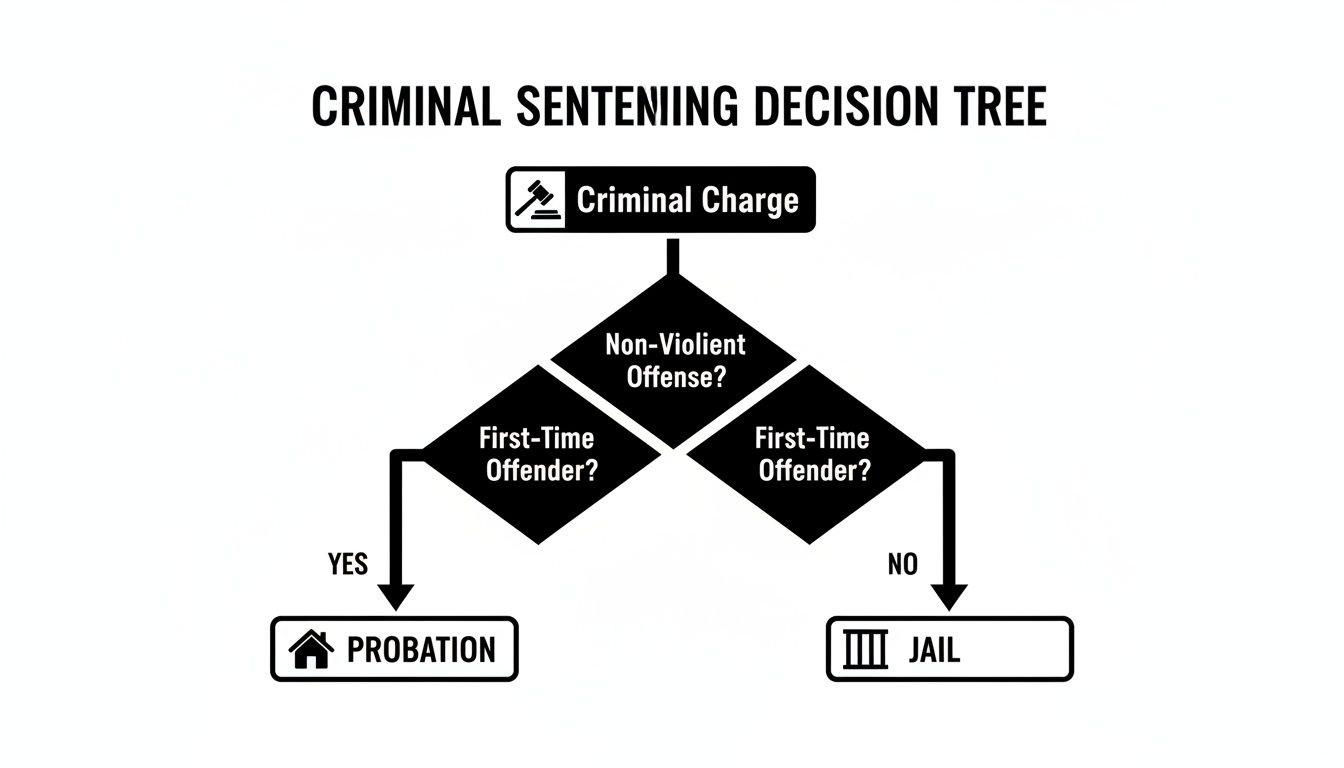
As you can see, the charge itself is just the starting point. It’s the combination of an individual's criminal history and any mitigating factors that really steers the outcome toward either community supervision or time behind bars.
Why Probation Is a Common Outcome
Even with these strict criteria, you might be surprised to learn that probation has become the most common sentence in criminal cases across the country. That makes it a realistic goal for people hoping to avoid jail in places like Alpharetta, Cumming, and across the metro Atlanta area.
In 2019, about 1 in 73 U.S. adults—that's roughly 3.5 million people—were on probation. There were almost 1.5 million more people on probation than in jails and prisons combined. In fact, probation accounted for over 55% of everyone under correctional control.
There’s a practical reason for this: it costs about nine times more to incarcerate someone than to supervise them on probation. This is a powerful incentive for judges to consider community-based sentences when public safety isn't at risk. For someone facing a first non-violent offense in Georgia, these numbers show why a defense focused on getting probation is often a very viable path. You can find more insights on probation effectiveness over at myiacfp.org.
Even with serious charges, one should not assume probation is off the table. Compelling mitigating factors—like proactively enrolling in treatment, holding a stable job, or having strong community ties—can open the door to probation when it otherwise seemed shut.
The goal isn't just to check the eligibility boxes; it's to build a persuasive argument. It is important to show the court the complete person, not just a name on a case file. By framing the circumstances to highlight suitability for community supervision, it is possible to actively work toward a much better outcome. It’s about showing remorse, taking responsibility, and proving a person has the structure in their life to succeed on probation without posing a risk to anyone.
Building a Persuasive Mitigation Case
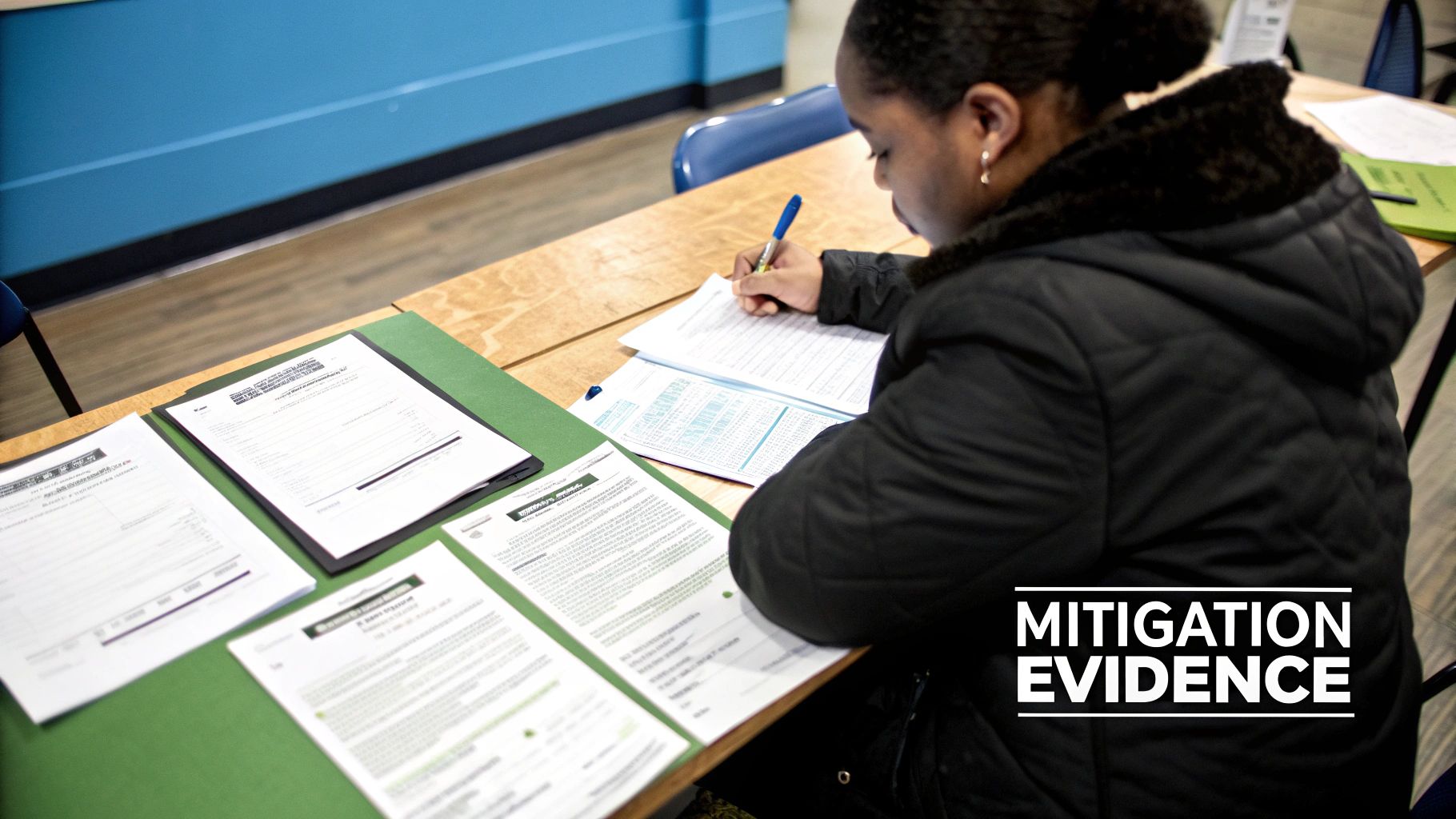
This is where a defendant stops being a passenger and starts taking an active role. Building a mitigation case is about showing the court who a person is beyond the four corners of a police report. It's one of the best proactive strategies if the hope is to get probation instead of jail.
The goal here is simple: assemble a compelling story for the prosecutor and, ultimately, the judge. This is done by gathering hard evidence that demonstrates an individual's stability, remorse, and commitment to making things right. It’s all about showing that a person is a solid candidate for community supervision, not a threat who needs to be locked up.
This process provides the tools to positively influence decisions in courtrooms across North Georgia, from Cobb County to Forsyth County.
Taking Proactive Steps Toward Rehabilitation
One of the most powerful moves a person can make is to take action before a judge orders them to. Waiting to be told what to do looks like mere compliance. Taking the initiative shows genuine remorse and a real desire to change.
For instance, if a case involves substance abuse, enrolling in a treatment program or counseling on one's own speaks volumes. It shows the court that the person recognizes there’s an issue and is already working on it.
This proactive approach can include several key actions:
- Voluntary Counseling: Attending therapy or anger management shows self-awareness and a real commitment to personal growth.
- Substance Abuse Programs: Enrolling in an AA/NA program or a formal treatment center proves a person is serious about getting help.
- Community Service: Completing volunteer hours before they’re mandated can highlight good character and a desire to give back to the community.
Documentation is everything. It is essential to get certificates of completion, attendance logs, or letters from counselors to present to the prosecutor. It’s not about just saying something was done; it’s about proving it with official records.
Documenting Your Stability and Community Ties
Prosecutors and judges want to know that a person has a stable life to return to. In their eyes, someone with strong roots in the community is a much lower risk to reoffend. A mitigation case needs to paint a crystal-clear picture of this stability.
This means gathering documents that prove a person is a responsible, contributing member of society.
Think about it from their perspective: they need to feel confident that granting probation is a sound decision. Concrete evidence of responsibilities and connections makes that case for them.
Here’s what to focus on gathering:
| Type of Evidence | What It Shows the Court | Example Documents |
|---|---|---|
| Employment | You are responsible and financially stable. | Pay stubs, a letter from your employer, performance reviews. |
| Family Support | You have a strong support system. | Letters from family, proof of shared residence, custody documents. |
| Community Involvement | You are invested in your local community. | Letters from a church or volunteer organization, proof of membership. |
These documents help build the narrative of an individual as a whole person—an employee, a family member, a neighbor—not just a defendant in a criminal case.
Gathering Impactful Character Reference Letters
Character letters are a cornerstone of any strong mitigation package. These aren't just casual notes from friends; they are formal, persuasive statements from credible people who can vouch for an individual.
A truly powerful letter comes from someone who knows the person well and holds a respected position—think an employer, a pastor, a mentor, or a local community leader. The goal is to have others speak to an individual's good character and potential for rehabilitation.
A strong character letter does more than just say someone is a 'good person.' It provides specific, real-world examples of their positive qualities—like their work ethic, their dedication to their family, or a time they helped someone in need. Vague praise is far less persuasive than a concrete story.
To be effective, these letters must:
- Explain how the person knows the defendant and for how long.
- Describe positive traits with specific anecdotes or examples.
- Acknowledge the situation without making excuses for the actions.
- Confirm their belief that the individual is an excellent candidate for probation.
A collection of thoughtful, well-written letters from a diverse group of people can significantly change how the court views a defendant. It humanizes them and provides a much broader context for their life, which is a critical part of any strategy for getting probation instead of jail.
Navigating Plea Bargains and Diversion Programs

Often, the most direct path to getting probation instead of jail time is through skillful negotiation with the prosecutor. This is where plea bargaining comes into play. It’s a strategic conversation where a defense attorney presents all the mitigating evidence that has been gathered to argue for a better outcome—like a probationary sentence—in exchange for a guilty or no-contest plea.
This isn't about giving up. It's a calculated move to secure a predictable result and sidestep the risks of a trial. That strong mitigation package, filled with character letters, proof of employment, and evidence of proactive treatment, becomes powerful leverage. It gives the prosecutor a solid reason to agree to a resolution that doesn't involve incarceration.
The Role of Plea Bargaining in Securing Probation
In a plea negotiation, a defense attorney will typically chase one of two goals. The first is to get the original charge reduced to a lesser offense—one that is far more likely to receive a probated sentence. For instance, a serious drug charge might be negotiated down to a simple possession charge that qualifies for probation.
The second, and more common, goal is to convince the prosecutor to recommend a probated sentence for the charge already being faced. With court dockets in places like Cobb and Forsyth Counties completely overwhelmed, prosecutors are often open to deals that ensure accountability without the cost and time of a full-blown trial. This is where an understanding of prosecutorial discretion is critical, as it allows prosecutors to make these kinds of judgment calls.
A plea bargain is a practical negotiation. An attorney isn’t just asking for mercy; they are using mitigation evidence to show why probation is a more constructive and resource-efficient outcome for the state.
Exploring Alternatives Beyond Traditional Pleas
Beyond a standard plea deal, many North Georgia jurisdictions offer specialized programs that can lead to even better results. These are not a "get out of jail free" card. They are rigorous, demanding full compliance, but successfully completing one can sometimes lead to the charges being dismissed entirely.
These programs are excellent options for first-time offenders or those whose charges stem from underlying issues like addiction or mental health challenges.
- Pretrial Diversion Programs: Often available for non-violent, first-time offenders. A person agrees to complete certain conditions—like counseling, community service, and staying out of trouble—and if they succeed, the prosecutor dismisses the charges.
- Conditional Discharge: Similar to diversion, this is a sentencing option mainly for certain first-time drug offenses. After the probation terms are successfully completed, the case is discharged without a conviction ever hitting the person's record.
- Accountability Courts: Many counties, including those in the North Fulton and Cobb areas, have specialized courts like Drug Court, Veterans Court, or Mental Health Court. These courts focus on rehabilitation rather than punishment and are a key part of the strategy for staying out of jail.
Why Systemic Pressures Create Opportunities
It's also important to understand the bigger picture. Globally, prison populations have swelled to over 11 million people. Here in North America, our incarceration rate remains the highest in the world, with about 489 prisoners per 100,000 residents in 2022.
This constant pressure on jails has pushed many local courts to look more favorably on community supervision for non-violent offenders. From 1999 to 2016, the number of people on probation per crime reported rose 24%, showing that sentencing policy—not just crime rates—has driven this shift.
For a defendant in Alpharetta or Marietta, these trends mean that judges and prosecutors are already working within a system that is leaning toward community-based sentences. An experienced attorney uses this context, along with a client's personal mitigation evidence, to frame the case as part of a larger, systemic solution—one that courts are actively seeking.
How to Prepare for Your Sentencing Hearing

The sentencing hearing is the final step, the moment when all the hard work and preparation come together. This isn't just a formality; it's the last, best chance to directly influence the judge's decision.
A defendant's conduct, appearance, and words can either reinforce the positive image they've built or completely undermine it. Knowing what to do and say is just as important as the evidence an attorney presents. The goal is to show the court the matter is taken seriously, the process is respected, and the individual is a good candidate for probation, not jail time.
Your Conduct and Appearance in the Courtroom
First impressions are powerful, especially in a courtroom. The way a person presents themselves sends a message to the judge long before they ever say a word. It’s absolutely essential to demonstrate respect for the court and the seriousness of the situation.
Think of it like dressing for the most important job interview of your life. Attire should be conservative and professional.
- For men: A suit is ideal, but slacks and a button-down shirt with a tie are also appropriate.
- For women: A conservative dress, skirt, or pantsuit works best.
- Avoid: Definitely do not wear jeans, shorts, graphic t-shirts, hats, or flashy jewelry.
Demeanor in the courtroom is just as critical. Sit attentively, listen to everything, and speak only when the judge or attorney addresses you. Any disruptive behavior—sighing, eye-rolling, talking out of turn—will be noticed and will not help the case. Every action contributes to the judge's overall impression.
A respectful and composed demeanor shows the judge that a defendant is not just a name on a file, but a responsible individual who understands the seriousness of the situation. It’s a non-verbal way of arguing that they can be trusted to comply with the rules of probation.
The Opportunity to Address the Court
In some cases, a defendant may get the chance to speak directly to the judge. This is called an allocution—a brief statement where remorse can be expressed and a specific sentence, like probation, can be requested. This is a high-stakes moment that must be handled with care.
If a person chooses to speak, their entire focus should be on accountability, not excuses. Blaming others, minimizing what happened, or complaining about the situation will absolutely backfire.
A statement should be:
- Sincere: Express genuine remorse for the actions and the impact they had.
- Brief: Keep remarks concise and to the point.
- Accountable: Take full responsibility without making excuses.
An attorney plays a huge role here. They will weave together the employment history, character letters, and proactive rehabilitation efforts into a persuasive narrative for the judge. For more practical information, check out general guides on how to prepare for any court hearing.
Understanding Potential Probation Conditions
Successfully arguing for probation is only half the battle. A person has to be prepared to follow through on whatever conditions the judge imposes. Judges worry about whether a defendant can actually comply with strict rules, and for good reason.
In a single year, nearly 250,000 people were sent to jail or prison for failing probation. More recent analysis shows that over 110,000 people were admitted to state prisons for technical violations alone, like just missing an appointment.
These numbers show why an experienced local attorney who knows the courts in Cumming, Johns Creek, and East Cobb is so important. They can advocate for realistic conditions, making it more likely for someone to succeed and stay out of jail for good.
Common Questions About Probation in Georgia
When trying to figure out how to get probation instead of jail time, many questions arise. It's a stressful time, and clear, direct information is needed. Here are some straightforward explanations to some of the most common questions from people facing charges in Georgia.
Remember, this is general information. Every single case is different, and the best path forward always depends on the specific facts of a situation.
Is It Possible to Get Probation for a Felony Charge?
Yes, absolutely. Getting probation is a potential outcome for many felony charges here in Georgia, especially for first-time offenders or for crimes that didn't involve violence. But it's never automatic. The final decision really depends on a few key things.
The analysis always starts by looking at the specific law a person is charged under. Some serious felonies, like murder or armed robbery, come with mandatory minimum prison sentences that a judge simply cannot go below. For a huge range of other felonies, though, probation is definitely on the table.
Whether it’s a realistic goal comes down to:
- The specific details of the case.
- The individual's criminal history (or lack of one).
- The quality and strength of the mitigation evidence that can be presented.
A skilled lawyer will analyze the charge and explain honestly if a probated sentence is something that can realistically be sought in negotiations or at a sentencing hearing.
What Happens if You Violate Probation?
A probation violation is an incredibly serious event. It can quickly erase all the hard work that went into avoiding jail in the first place. If a probation officer thinks the rules have been broken—by failing a drug screen, missing an appointment, or picking up a new charge—the system moves fast.
An arrest warrant is usually issued right away. The individual will be brought before a judge for a probation revocation hearing, where the judge's only job is to decide if they failed to follow their conditions.
If the judge finds a violation did occur, they have the power to revoke it. This means they can order the person to serve part or all of the original jail or prison sentence that was suspended. This is why 100% compliance with every single rule is critical to staying free.
Having a lawyer at a revocation hearing is vital. An attorney can challenge the allegations, and if a violation did happen, they can argue for a less severe outcome than full revocation, like a few days in jail or adding new conditions.
How Is First Offender Treatment Different From Probation?
Georgia’s First Offender Act is a powerful tool and a completely different animal from standard probation. It's specifically for people who have never been convicted of a felony before, and the big difference is how the case ends.
With a standard probation sentence, the person is convicted of the crime. That conviction goes on their record the day they are sentenced and stays there.
Under the First Offender Act, the judge doesn't enter a judgment of guilt. The person is placed on a sentence that looks and feels like probation. If they complete all the terms without a single violation, the court discharges the case without a conviction ever appearing on their official criminal record.
This is a massive advantage for a person's future. It protects them when applying for jobs, housing, or professional licenses, essentially giving them a clean slate.
Why Does Having a Local Attorney Matter?
Every courthouse has its own personality—its own unwritten rules and tendencies. An attorney who is in the courts of Forsyth County, North Fulton (serving Alpharetta and Roswell), and Cobb County every day has invaluable local knowledge that can't be found in a book.
A local attorney knows:
- The prosecutors and what arguments they are receptive to.
- The judges' sentencing philosophies and how they tend to view certain crimes.
- The specific diversion and accountability court programs available in that courthouse.
This on-the-ground experience allows an attorney to build a strategy designed for the specific people who will be deciding a case. It's not just about knowing the law; it's about knowing the players and the field.
When fighting to stay out of jail, it is important to have an advocate who knows the local courts and has a proven track record. At Brian Hansford Law, our deep experience in North Georgia courtrooms is used to build strong, effective cases for clients. If you are facing criminal charges in Alpharetta, Cumming, Marietta, or the surrounding areas, contact us for a consultation at https://challengemycharge.com.
