
When you get that official notice in the mail, it’s easy to feel overwhelmed. But this is the moment to take a deep breath and get organized. Taking immediate, methodical action can be a beneficial step toward feeling more in control of the situation.
Think of that court notice not just as a summons, but as a roadmap. It contains the essential details that will guide every step you take from here on out.
Your First Steps After Receiving a Court Notice
The second you open that envelope, your preparation begins. Don't set it aside for later. Read the entire document, top to bottom, and pull out the critical information.
- Date and Time: This is a key piece of information. It's common for people to put it in their phone's calendar, write it on a physical calendar, and set multiple reminders. Missing a court date can create a whole new set of problems.
- The Location: Pinpoint the exact courthouse. Is it in Alpharetta, Cumming, Johns Creek, or Milton? North Fulton has several different court jurisdictions, so it's important to double-check the address and, if it’s listed, the courtroom number.
- Reason for the Hearing: The notice will specify the type of proceeding. Knowing if you're walking into an arraignment versus a motion hearing can help inform how one might prepare for what's about to happen.
- The Parties Involved: Just make sure all the names and information listed are correct.
This simple process—read, organize, and plan—is the foundation for everything that follows. It turns a piece of paper that feels intimidating into an actionable plan.
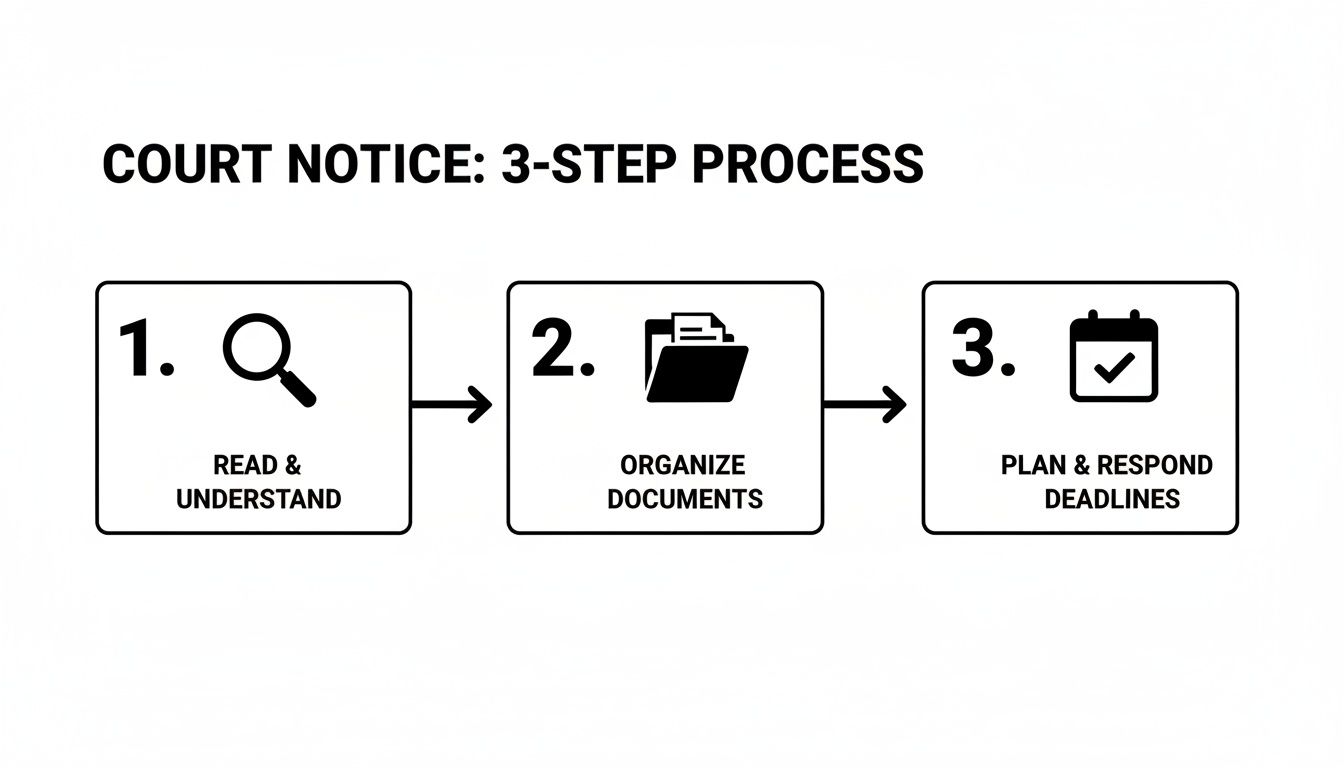
Here's a quick checklist to make sure you've covered these initial bases.
Initial Preparation Checklist
| Action Item | Why It's Important | Suggested Timeline |
|---|---|---|
| Confirm Date & Time | Missing a hearing can lead to a warrant for arrest. | Immediately |
| Verify Location | Showing up at the wrong courthouse wastes time and adds unnecessary stress. | Within 24 hours |
| Identify Hearing Type | This determines the purpose of the hearing and how you and your attorney might prepare. | Immediately |
| Gather All Documents | A complete file prevents last-minute scrambling for evidence. | Within the first 3 days |
| Contact an Attorney | Professional guidance from the start can be crucial for building a defense strategy. | Immediately |
Getting these simple things done right away makes a huge difference down the line.
Organizing Your Documents
After you've digested the notice, it's time to gather every single piece of paper, email, or text message related to your case. At this stage, it can be helpful not to decide what's important and what isn't. Just collect everything. This might include police reports, receipts, photos, financial statements—anything and everything.
Create a system that works for you. Some people prefer a physical binder with dividers, while others use a secure digital folder on their computer. The key is to organize all of it chronologically. This timeline can become an incredibly powerful tool for building a case and telling a clear story.
Walking into court prepared shows you respect the court's time and take the matter seriously. It’s a small thing, but it sets a positive tone from the very beginning.
A Thomson Reuters survey found that judges handle an average of 58 hearings per week, and 77% of them said that just one delay can throw off the entire docket. This just goes to show how much judges value punctuality and organization.
When you're prepared, you’re not just helping yourself—you're making the entire process smoother for everyone involved. This initial effort is the bedrock of a solid case.
Getting Your Paperwork in Order
Once you know the when and why of your court hearing, it’s time to start gathering your evidence. This isn't just about collecting a stack of papers; it's about building the story of your case. Experience shows that a well-organized case file is one of the most powerful tools a person can walk into court with. It helps them—and their attorney—present a clear, logical narrative of what happened.
Some people prefer a classic three-ring binder, while others use a secure folder on their laptop. The medium doesn't matter. What matters is creating a single, comprehensive place for every piece of information relevant to your case. This is where you turn a mess of documents and data into a real asset.
Building Your Case File from the Ground Up
Start by pulling together every single piece of information that has anything to do with your situation. It's often better to have too much than too little. An attorney can help decide what's important later on.
So, what are you looking for? The specifics will depend on your case, but here’s a good starting point:
- Communications: This means everything. Emails, text message logs, direct messages from social media, and even voicemails. If you can, preserve them exactly as they are, timestamps and all.
- Official Documents: Get copies of any police reports, the actual citation you received, prior court notices, or any letters from the solicitor's office or other authorities.
- Photos and Videos: Visuals can be incredibly powerful in a courtroom. If you have photos or videos that support your side of the story, make sure they are part of your file.
- Financial Records: Things like bank statements, receipts, invoices, or contracts can be critical, especially if money is involved in the case.
- Witness Information: Make a straightforward list of anyone who might be a potential witness. Jot down their full name, phone number, and a quick note about what they saw or know.
The goal here is to be exhaustive. A tiny detail that seems insignificant now could become a key piece of a defense down the road. You're trying to create a complete picture of the situation from your point of view.
Laying Out a Clear Timeline of Events
With all your documents in hand, the next step is to put them in chronological order. A timeline is an absolute necessity because it organizes the story and makes even a complicated series of events easy for a judge or prosecutor to follow. Start from the very beginning and map out each event as it happened.
For instance, if you're dealing with a dispute that led to charges, a timeline might start with the first conversation that was had, then the event itself, followed by any police interaction, and finally any communication that happened afterward.
Laying things out chronologically does more than just organize paperwork; it builds a logical flow that's easy to explain. When someone can walk through the events step-by-step, with dated evidence to back them up at each point, their position becomes much stronger and far more believable.
In many cases, a clear, organized timeline lets a person instantly find what they need. Instead of shuffling through a pile of papers looking for that one text message, they can flip right to the "June 5th" section of their binder. It saves critical time and helps maintain composure when it matters most.
This level of preparation sends a clear signal that a person is taking this matter seriously and is ready to discuss the facts.
Labeling and Indexing for Fast Access
The final touch is to create a system that lets you find any document in seconds. An index or a table of contents at the front of your binder (or as a separate document in your digital folder) is a game-changer.
Here's a simple way to do it:
- Number or Letter Everything: Give each document a unique identifier, like Exhibit A, Exhibit B, or Document 1, Document 2.
- Create an Index Page: On a separate sheet, list each identifier next to a short, clear description of what it is.
- A: Email from John Smith, May 10, 2024
- B: Photo of damaged property, May 12, 2024
- C: Text message log with Jane Doe, May 15, 2024
- Use Tabs or Dividers: If you're using a physical binder, use tabs for each exhibit. For digital files, just create subfolders with clear names.
This system means that if a specific piece of evidence comes up in court, you or your attorney can pull it out instantly without fumbling around. This isn't just about being organized for one's own sake; it makes it much easier to communicate the facts of the case to everyone involved. You’ve just turned a simple pile of papers into a powerful, accessible resource.
Working With Your Attorney is a Partnership
Your attorney is your single most important ally. Building a solid relationship with them isn't just a nice-to-have; it's the foundation of the entire defense strategy. Think of it less like hiring someone and more like forming a partnership where open communication and trust are non-negotiable.
That partnership starts with being completely honest. It's human nature to want to downplay the bad parts, but holding back details—even stuff that seems embarrassing or looks bad—can be one of the worst mistakes a person can make. A lawyer needs the whole, unfiltered story to anticipate what the prosecutor is going to throw at them.
Why Full Disclosure is Non-Negotiable
A lawyer can't defend against a surprise they never saw coming. The last place anyone wants an unexpected fact to pop up is in the middle of a courtroom hearing. When a person provides every single detail, they give their attorney the ammunition needed to build a strategy that plays to strengths and neutralizes weaknesses.
This has to be a two-way street. A person should also expect that same level of honesty from their attorney about potential outcomes, the tough realities of the case, and the logic behind every move they make.
A strong attorney-client relationship is a true team effort. The client's job is to give them the facts. Their job is to take those facts, apply their knowledge of the law, and protect the client's rights at every turn.
This dynamic keeps you in the loop and makes you an active participant in your own defense, not just a bystander. The more they know, the better they can fight for you.
Getting the Most Out of Every Meeting
An attorney’s time is valuable, which means meetings need to be productive. Showing up prepared with organized thoughts and documents makes a world of difference and keeps the focus on moving the case forward.
Before you meet, try to get these things in order:
- Bring Your File: Have all your documents organized in a binder or a digital folder. A clear timeline and indexed paperwork will save a massive amount of time.
- Write Down Questions: Keep a running list of questions on your phone or in a notebook as they come to you. This way, you won’t leave the meeting and immediately remember what you forgot to ask.
- Jot Down Updates: Make a few notes on anything new that's happened since you last spoke—any new communications, thoughts about the case, or potential witnesses you've remembered.
Being prepared shows you're serious about your defense. If you need help figuring out what to ask, check out our guide on the best questions to ask a criminal defense attorney. It can give you a great framework for these critical conversations.
What Your Attorney Needs From You
To build the strongest case, a lawyer needs specific information beyond just your side of the story. They’ll need things like a list of potential witnesses, a detailed account of what happened, and any evidence you've managed to gather. Full cooperation is absolutely essential.
The court system is a massive, often impersonal machine. The latest ICC's 2024 report on dispute resolution statistics shows a huge volume of new cases flooding the courts, making it clear just how overloaded these systems are. This is exactly why being prepared and working as a team with legal counsel is so critical to cut through the noise.
Ultimately, the relationship a person has with their attorney is the engine that drives the entire defense. When a person shows up as an engaged, honest, and prepared partner, they give their legal team the power to achieve the best possible outcome.
How to Handle Yourself in the Courtroom
Walking into a courthouse can feel intimidating. It’s a formal place with its own set of rules, and understanding them is about more than just making a good impression—it’s about showing the judge and the prosecutor that you respect the seriousness of the situation. From the moment you pass through security, you’re being observed. Every interaction matters.
Knowing what to expect and how to act can give you a real sense of confidence when your name is finally called.
Dress the Part
What you wear to court sends a powerful message. You don’t need to buy a brand-new suit, but your clothes absolutely must be clean, conservative, and respectful. Think of it like you're heading to an important job interview.
- For Men: Business casual is a solid choice. A pair of slacks and a collared shirt work well. If you have a tie and a jacket, wear them. It shows you’re taking this seriously.
- For Women: A simple dress, a skirt, or slacks paired with a blouse are all appropriate. Avoid anything that's overly flashy, casual, or revealing.
- What Not to Wear: Stay away from shorts, T-shirts with logos or graphics, ripped jeans, hats, and flip-flops. Clothing like that can signal a lack of respect for the court’s authority, and that's the last impression you want to make.
This one detail—clothing—is a simple but critical part of preparing for a court hearing.
Navigating Basic Courtroom Etiquette
Once you're inside the courtroom itself, there are specific protocols to follow. These aren't just for show; they help the proceedings run smoothly and demonstrate deference to the judge and the legal process.
The judge has complete authority in their courtroom, and showing them respect is non-negotiable.
The most fundamental rule is to always address the judge as "Your Honor." This applies every single time you speak to them or even when you refer to them while talking to an attorney. Simple phrases like, "Yes, Your Honor," or "No, Your Honor," are essential.
Also, it’s tradition to stand up anytime the judge enters or leaves the courtroom. You should also stand whenever you are speaking directly to the judge. It’s a universal sign of respect you'll see in every court in the country.
Your Demeanor During the Hearing
Your body language can say just as much as your words. Try to sit up straight, make eye contact when it feels appropriate, and most importantly, stay calm. It shows you are paying attention and are engaged in the process.
One of the most important things a person can do in a courtroom is simply listen. Pay close attention to what the judge, the prosecutor, and your own lawyer are saying. It is important to never interrupt someone when they are speaking, even if you strongly disagree with them. An attorney can make sure there is a chance to speak when the time is right.
Having an emotional outburst or losing one's temper can seriously hurt a case. Court systems are already overburdened, and disruptions only make things worse. Data from the Court of Justice of the European Union's 2024 report highlights a structural increase in annual caseloads, showing just how strained these systems are.
If you are asked to speak or testify, being prepared is everything. For more practical information on how to present a side of the story clearly and calmly, take a look at our guide on how to testify in court. By following these fundamental rules, you help ensure the focus stays where it belongs: on the facts of your case.
Making Your Way Through North Fulton Courthouses
A huge part of preparing for a court date has nothing to do with the case itself—it's about the simple, practical details of getting there. A lot of the anxiety people feel comes from not knowing where to go, where to park, or what to expect when they walk through the door.
Getting a handle on the logistics for the specific courthouse you’re heading to, whether it’s in Alpharetta, Cumming, Johns Creek, or Milton, can make the day run ten times smoother. It lets you focus on what really matters instead of sweating the small stuff.
Don't Get Lost: Nailing Down the Location and Timing
First things first: double-check the exact address for your hearing. It's an easy mistake to assume a case is at the main county courthouse when it's actually in a smaller municipal court. This happens all the time.
Once you have the right location, map it out. Then, give yourself a massive time buffer. A general guideline is to plan on being at the courthouse at least 45 minutes before the scheduled hearing. That cushion is for you. It’s for hitting unexpected traffic, hunting for a parking spot, getting through the security line, and finding the courtroom without breaking a sweat.
- Parking: Most courthouses have public parking, but it fills up fast. Scope out a backup public lot or garage nearby just in case.
- Public Transit: If you're taking MARTA or a bus, check the schedules and stop locations well ahead of time. Make sure they line up with that 45-minute-early arrival goal.
Honestly, a helpful step can be to do a dry run. Drive the route the day before, around the same time as your hearing. You'll get a real feel for the traffic patterns and parking situation, which takes all the guesswork out of the equation on the actual day.
Here’s a quick-glance table to help with the basic logistics for the major courts in the area.
Courthouse Logistics for North Fulton Jurisdictions
This table offers a quick reference for the key logistical details at the courthouses serving the Alpharetta, Cumming, Johns Creek, and Milton communities.
| Jurisdiction | Courthouse Location | Parking Notes | Key Contact Info |
|---|---|---|---|
| Alpharetta Municipal Court | 12624 Broadwell Rd, Alpharetta, GA 30004 | Free on-site parking is available, but the lot can get crowded during busy dockets. Arrive early. | Link to Alpharetta Municipal Court Page |
| Forsyth County (Cumming) | 101 E. Courthouse Square, Cumming, GA 30040 | Multiple public parking decks are available around the square. The Mason Street deck is a popular choice. | Link to Forsyth County Clerk of Courts |
| Johns Creek Municipal Court | 11360 Lakefield Dr, Johns Creek, GA 30097 | Ample free surface parking is available directly in front of the courthouse. | Link to Johns Creek Municipal Court Page |
| Milton Municipal Court | 2006 Heritage Walk, Milton, GA 30004 | Free parking is located at City Hall. The courthouse entrance is well-marked. | Link to Milton Municipal Court Page |
Always confirm details on the official court website before you go, as hours and procedures can change.
Getting Through Courthouse Security Like a Pro
Think of courthouse security as being just like the airport TSA line. You’ll have to walk through a metal detector, and your belongings will go through an x-ray scanner. The key is to be prepared to make it painless.
You'll need to leave certain things at home or in your car. Prohibited items almost always include:
- Weapons of any kind (that includes a pocket knife)
- Lighters and matches
- Tools or any sharp objects
- Food and drinks (sometimes bottled water is okay, but don't count on it)
The goal is to breeze through security without any drama. Before you even get to the front of the line, empty your pockets—keys, phone, coins, everything. Put it all in your jacket or a bag that can go right onto the conveyor belt. This one small step keeps the line moving and saves a lot of hassle.
Finding Your Courtroom and Checking In
Once you're inside, you need to find out which room you're in. Look for a docket sheet or a digital monitor in the main lobby. It will list all the cases for the day. Find your name and case number, which will tell you the courtroom you've been assigned to.
Head to that courtroom. The very next thing a person should do is check in with the clerk or the bailiff. Just walk up, state your name, and let them know you're there for your hearing. This is critical—it tells the court you've shown up and are ready. It's a sign of respect for their time and helps everything run the way it's supposed to.
So, Your Hearing is Over. What Happens Now?
When the judge bangs the gavel and says a hearing is finished, it’s easy to think the whole ordeal is over. But it’s not. The moments, days, and weeks that follow are every bit as critical as the hearing itself. What happens next can make all the difference.
Sometimes, a judge will deliver a decision right then and there from the bench. Other times, particularly in more complex cases, they might take the matter "under advisement." This is just legal-speak for, "I need more time to think this through." They'll review the evidence and arguments, and a final ruling will be issued later.
Deciphering the Court's Order
Whether the decision is heard in the courtroom or received in the mail, the first job is to understand exactly what the court's order says. This isn't just a summary—it's a legally binding set of instructions, and individuals are expected to follow it to the letter.
These orders can be dense, but they'll spell out exactly what's required. For example, an order might dictate:
- A payment schedule for fines and court fees.
- Mandatory attendance at specific classes, like DUI school or an anger management program.
- Deadlines for turning in more documents or information.
- Strict limits on travel or who can be contacted (a no-contact order, for instance).
Sit down with an attorney and go through this document line by line. There’s no such thing as a dumb question here. Misinterpreting responsibilities can land a person right back in court with a probation violation or contempt charge, so getting it right the first time is crucial.
Keep Your Paperwork in Order
Even after the judge makes a ruling, hold onto that case file you so carefully put together. Don't toss anything. Add a copy of the final order and any other new paperwork right into the folder.
It's a smart habit to keep everything organized chronologically, even after a case is "closed." You never know when you might need it for a follow-up action, an appeal, or another legal issue down the road. Having a complete, accessible record is just good sense.
Knowing what comes after the hearing is the final piece of the puzzle. It ensures all your hard work preparing for court pays off and helps you move forward successfully.
Answering Your Questions About Your Court Hearing
Even with the best preparation, questions are going to pop up. It's completely normal to feel some uncertainty as a court date gets closer. Getting solid, straight-up answers can go a long way in calming nerves and making sure a person feels ready to walk into that courthouse.
Here are a few of the most common questions people have when getting ready for their hearing.
What Should I Bring with Me to Court?
A good rule of thumb is to keep it simple and professional. All that is really needed is a government-issued photo ID (like a driver's license) and a single, neatly organized folder with all case documents. It is also helpful to bring a notepad and pen to jot down notes as things happen.
It's best to leave big bags, backpacks, food, and drinks in the car. Most courthouses around here—from Alpharetta to Cumming—have strict rules against bringing those items in. The goal is to carry only what is absolutely essential.
Can I Bring Someone for Support?
Most of the time, yes. Court hearings are public, which means a friend or family member can come along for moral support. Honestly, having a familiar face in the room can make a huge difference during such a stressful experience.
Just make sure they know the rules. Anyone you bring has to sit in the public gallery and stay completely quiet. Any kind of outburst or disruption, even a whisper at the wrong time, will reflect poorly on you. It's always a good idea to check with an attorney first, too, especially if the case involves anything sensitive, like matters with minors, where there might be restrictions.
A supportive presence can be grounding, but their role is strictly observational. Ensure they understand the importance of respecting courtroom decorum, as their behavior can indirectly impact the environment of your hearing.
How Early Should I Arrive for My Hearing?
Punctuality is everything in court; it shows respect. A general guideline for many is to plan on arriving at the courthouse at least 30 to 45 minutes before their scheduled time. That buffer is critical.
This extra window gives you time to:
- Find parking without panicking.
- Get through the security line, which can get surprisingly long.
- Figure out which courtroom you need to be in.
- Meet up with your legal representative for a quick, final chat before going in.
Getting there early lets a person walk in with a calm, collected mindset instead of a rushed one. That’s a real advantage.
What Happens If I Am Running Late?
Life happens. Traffic, a flat tire—sometimes being late is unavoidable. But if a person realizes they're not going to make it on time, the worst thing they can do is just not show up or say nothing.
Communication is key. The second you know you're delayed, it's important to contact your attorney's office. Then, if possible, call the court clerk's office directly. Be honest and explain what's going on. Courts run on an incredibly tight schedule, but letting them know about a delay is a thousand times better than being a no-show. In some cases, if a heads-up is given, the judge might be willing to hear the case a little later in the day.
Facing a court hearing in Alpharetta, Cumming, or anywhere in North Fulton County can be daunting, but you don't have to do it alone. At Brian Hansford Law, we bring over 25 years of experience, including time as a prosecutor, to build a strong defense for you. If you need dedicated legal representation, contact us to protect your rights and your future. Visit us at https://challengemycharge.com to learn more.
