
One of the most damaging myths is that a juvenile record just disappears when a person turns 18. That’s simply not true in Georgia, and believing it can cause serious problems down the road. You have to be proactive.
What Sealing A Juvenile Record Really Means In Georgia
The official term used in Georgia is record restriction, not expungement. While some states might use those terms interchangeably, they mean different things here. Sealing, or restricting, a record means it’s locked away from public view—not physically destroyed.

This is a critical distinction. It means that while potential employers, landlords, and college admissions officers in places like Alpharetta or Marietta won’t see the record on a standard background check, it still exists. Certain government and law enforcement agencies can still access it under specific circumstances, like for sensitive jobs or in future criminal investigations.
If you want a deeper dive into the specifics, you can learn more about the difference between expunged and sealed records in our related article.
Common Myths vs. Georgia Reality
There's a lot of misinformation out there about juvenile records. Let's clear up some of the most common myths and set the record straight on how things actually work here in Georgia.
| Common Myth | The Georgia Reality |
|---|---|
| "My record disappears automatically when I turn 18." | False. You must file a formal petition with the juvenile court to have your record sealed. It does not happen on its own. |
| "Sealing a record is the same as expunging it." | False. In Georgia, sealing (restriction) hides the record from the public. Expungement, which is rare, means destroying it. Your sealed record still exists. |
| "Once it's sealed, no one can ever see it again." | False. While hidden from the public, law enforcement, prosecutors, and some government agencies can still access sealed records under certain conditions. |
| "A juvenile offense won't affect my future job applications." | False. An unsealed record can show up on background checks, potentially costing you job offers, housing opportunities, or even college admission. |
| "I don't need a lawyer to seal my record." | Risky. The process involves specific forms, deadlines, and a court hearing. An error can lead to a denial, forcing you to start over. |
Understanding these realities is the first step toward successfully navigating the process and truly moving on from a past mistake.
The Real-World Impact Of An Unsealed Record
Let me paint a picture for you—one that can play out far too many times. A sharp young adult from Cumming graduates from college and lands an interview for their dream job. They nail it and get a conditional offer, but it’s suddenly put on hold. Why? A background check flagged a juvenile adjudication for shoplifting from when they were 15. It was a mistake they thought was long behind them.
This happens because the responsibility to seal the record falls on the individual. In Georgia, sealing requires filing a petition and proving to the court that you've been rehabilitated. It doesn’t just happen because you've aged out of the system.
The entire purpose of Georgia's record restriction laws for juveniles is to support rehabilitation. The system acknowledges that kids make mistakes and shouldn't be held back by them forever, as long as they show they’ve learned and grown from the experience.
Taking the initiative to seal your record is a powerful statement. It shows you’re taking responsibility for your future and are ready to put the past where it belongs.
This guide will walk you through the types of information needed—from eligibility to the required paperwork and what to expect in court. Understanding these steps is your key to reclaiming your future, whether you're in Forsyth County, East Cobb, or Roswell.
Determining Your Eligibility for Record Sealing
So, you're looking to seal a juvenile record in Georgia. The first thing to understand is that it's not some automatic process. Just because you've turned 18 doesn't mean the slate is wiped clean. Georgia law sets out some very specific conditions you have to meet before you can even think about filing the paperwork.
Figuring out if you qualify is the critical first step. Think of it less like a maze and more like following a clear checklist. The state provides this path for a reason—to give young adults who have turned their lives around a fair shot at a future without a past mistake holding them back. Let's break down what the court will be looking for.
The Mandatory Waiting Period
The biggest hurdle for most people is the waiting period. In Georgia, you must wait at least two years from the date your juvenile case was officially closed before you can petition the court. Pay close attention to that "closed" date—it's not the day of the arrest or the incident. It’s the date you officially finished everything the court ordered, whether that was probation, community service, or paying off fines.
Why the two-year wait? It's designed as a cooling-off period. The court wants to see that you can stay out of trouble and that the offense was a one-time thing, not the start of a pattern. It’s your chance to prove you’ve matured.
Maintaining a Clean Slate Is Non-Negotiable
That two-year window isn't just about waiting; it's about your conduct. To be eligible to seal your record, you absolutely cannot have been convicted of any adult crimes or have new charges pending against you. This is a hard-and-fast rule.
Even a minor adult charge can completely derail your petition. If you pick up a misdemeanor conviction, for example, it tells the court that the issues that led to the juvenile case might not be resolved. Staying completely out of trouble is non-negotiable. If you're facing a situation with a minor adult charge, it's worth understanding your options, and you can learn more about how to expunge a misdemeanor in Georgia.
The court’s primary goal is to assess rehabilitation. A clean record after the juvenile adjudication is the strongest piece of evidence you can present to show that you've matured and are now a law-abiding citizen.
Understanding Delinquent Acts vs. Designated Felonies
Not all juvenile offenses are created equal in the eyes of the law, and how your charge was classified matters. A lot. Most juvenile offenses in Georgia are called delinquent acts. This is basically the juvenile court’s term for an offense that would have been a misdemeanor or a lower-level felony if committed by an adult.
Then there are designated felonies. These are the more serious offenses—things like aggravated assault or robbery. The path to sealing a record for a designated felony is much tougher.
Here’s the practical difference:
- Delinquent Acts: These typically follow the standard two-year waiting period and rules.
- Designated Felonies: Sealing these records often comes with longer waiting periods and much more intense scrutiny from the judge.
Knowing exactly how your original offense was classified is a key piece of the eligibility puzzle right from the start.
Exceptions and Special Circumstances to Consider
While the two-year rule is the standard, there are a few exceptions. What if your case was dismissed, or you were not adjudicated delinquent (the juvenile equivalent of being found "not guilty")? In those situations, you likely won't have to wait the full two years. You might be able to petition for sealing much, much sooner.
On the other hand, some very serious offenses are barred by law from ever being sealed. Georgia law simply doesn't provide a path for sealing the most severe crimes. Understanding these nuances from day one helps you set realistic expectations for what’s ahead.
Taking the Next Steps: The Georgia Record Sealing Process
Once you've determined you're eligible, it's time to take action. This is where theory becomes practice. Petitioning a Georgia court to seal a juvenile record, whether in Forsyth County or Cobb County, requires careful preparation and an eye for detail. This isn’t just about filling out a form; it's about making a solid case for a fresh start.
This part of the journey is about gathering the right documents, telling your story clearly, and formally asking the court for relief. Every piece of information helps the judge see who you are today, not just the mistake you made back then.
First, Gather Your Essential Documents
Before you even touch the petition, you need to collect all the necessary paperwork. Think of it as putting together a puzzle of your own past. The goal is to have every official record related to your juvenile case ready and organized.
Here are the key documents you’ll need to track down:
- Court Disposition: This is the official paper from the Juvenile Court that spells out the final outcome of your case. It will list the charges, whether you were adjudicated delinquent, and the terms of your sentence.
- Criminal History Report: You'll need an up-to-date copy of your Georgia criminal history from the Georgia Crime Information Center (GCIC). This report shows your complete record, including the juvenile matter and any later interactions with law enforcement as an adult.
- Proof of Completed Sentence: This is crucial. It includes certificates showing you finished probation, receipts for paid fines and restitution, or logs of completed community service hours. This is your proof that you held up your end of the bargain.
Be aware that getting these documents can sometimes be tricky, especially for older cases where records might be deep in an archive. It's smart to start this process as early as possible.
Completing the Petition to Seal Juvenile Records
With your documents in hand, the next step is to fill out the official Petition to Seal Juvenile Records. This form is your formal request to the court, and accuracy is everything. Any mistake or missing piece of information can cause delays or, even worse, get your request denied.
This flowchart breaks down the three core eligibility checks that form the foundation of your petition: waiting the required time, keeping a clean record, and satisfying all the original terms of your sentence.
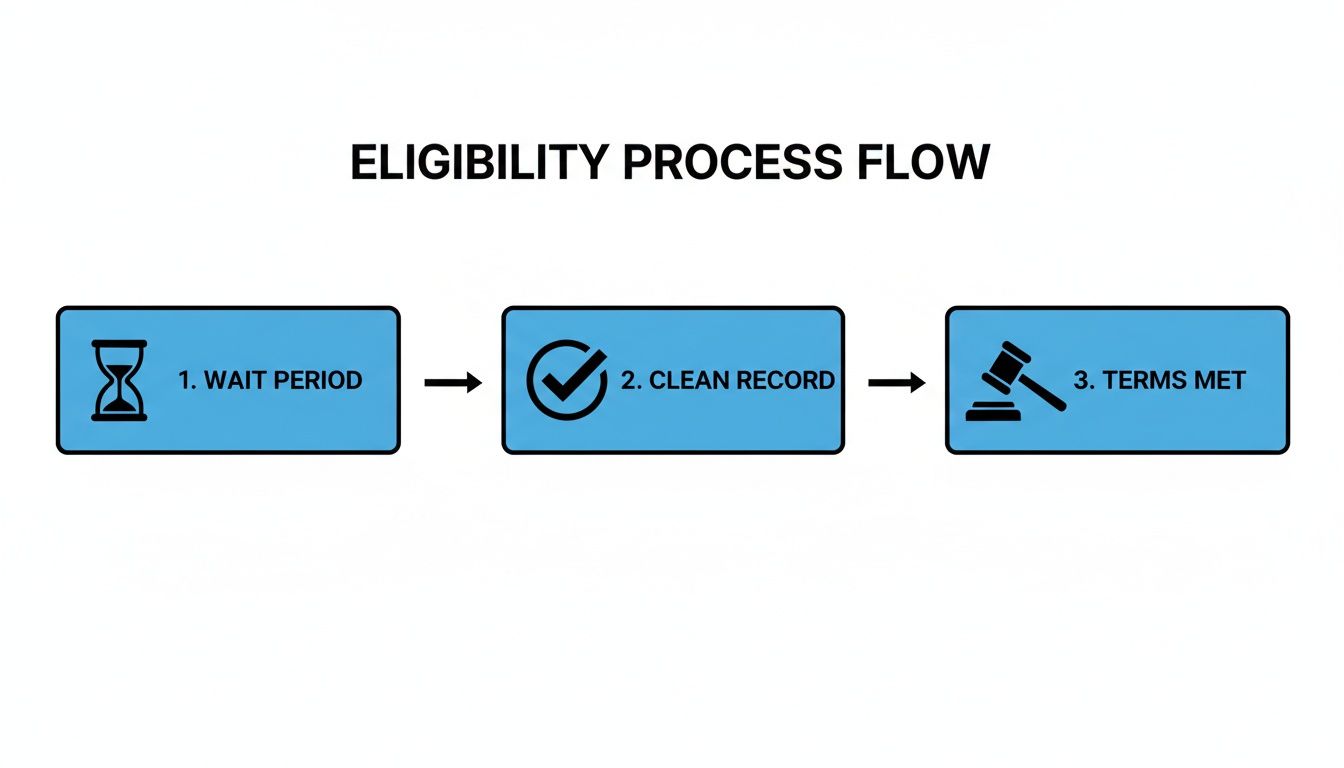
These three elements are the bedrock of a strong petition. They signal to the court that you've successfully moved on from the offense.
On the form, you’ll provide personal information, details about the original offense, and a straightforward statement explaining why your record should be sealed. Be honest and direct. This isn't the place for vague language; it's for facts backed up by the documents you’ve collected. It's also helpful to understand how sealing differs from other record-clearing options. For a wider view, you might find our guide on how to seal criminal records in Georgia useful.
Filing Your Petition and Preparing for a Hearing
Once the petition is complete, you must file it with the Clerk of the Juvenile Court in the county where the case was originally handled—whether that's Cumming, Marietta, or another jurisdiction. Expect to pay a filing fee at this point.
After filing, the District Attorney's office gets a copy and a chance to review your request. They can either agree to the sealing or object to it. If the DA objects, or if the judge just wants to hear from you directly, a court hearing will be scheduled.
This hearing is your chance to speak to the judge. The judge will be looking at several factors:
- The seriousness of the original offense.
- How much time has passed since the case closed.
- Your behavior and accomplishments since that time.
- Any objections from the District Attorney.
Ultimately, a judge's decision often hinges on one question: Has this person been rehabilitated? Your job is to provide clear and convincing evidence that the answer is a firm "yes."
Strengthening Your Case with Supporting Evidence
To give your petition the best possible chance of success, consider adding supplemental materials that paint a complete picture of who you are now. This is your opportunity to demonstrate your character, growth, and positive contributions to the community.
Consider including:
- A Personal Statement: A well-written letter explaining your remorse for the past, what you learned, and how you’ve turned your life around can be incredibly powerful.
- Letters of Recommendation: Gather letters from employers, teachers, mentors, or community leaders who can vouch for your good character, work ethic, and personal development.
- Proof of Accomplishments: Include copies of diplomas, degrees, professional certifications, or awards you've earned. This shows your commitment to a productive future.
These extra documents aren't always mandatory, but they can make a huge difference, especially in borderline cases. They help turn a stack of legal papers into a compelling human story of rehabilitation.
Common Roadblocks That Can Trip You Up
Even when you check all the boxes and meet every requirement, sealing a juvenile record in Georgia isn't always straightforward. Unexpected problems can pop up, turning what should be a simple process into a frustrating mess. Knowing what these potential challenges are ahead of time is the key to building a stronger, more resilient case.
Whether you're dealing with a court in Roswell or East Cobb, you need to be prepared. Missing paperwork, objections from the District Attorney—these are the kinds of roadblocks that can derail everything. Let’s walk through the most common ones.
The Challenge of Incomplete or Lost Records
One of the biggest snags people run into is just tracking down old court documents. You might find out the clerk’s office has incomplete files, or that records from a decade ago are archived somewhere off-site and are a nightmare to retrieve. This happens more often than you'd think, especially with older cases.
This one issue can stop your petition dead in its tracks. Without a complete court disposition or proof that you satisfied your sentence, you simply can't meet the court's requirements. It takes persistence to hunt these documents down, and frankly, it can be a discouraging start to the process.
Facing an Objection from the District Attorney
Once you file your petition, it goes to the District Attorney’s (DA) office in the relevant county, whether that's Forsyth or Cobb. The DA has the right to review it and, if they choose, object to sealing your record.
Objections can happen for a few common reasons:
- The Seriousness of the Original Offense: If the original charge was a particularly serious delinquent act, the prosecutor might argue that sealing it isn't in the public's best interest.
- Doubts About Rehabilitation: The DA may question whether you've truly been rehabilitated. Any gray area in your history since the juvenile case closed can be used against you.
- Public Safety Arguments: In some situations, the DA will argue that keeping the record accessible is necessary for public safety.
If the DA objects, you’re almost guaranteed a court hearing. At that point, you'll have to stand before a judge and make a compelling argument for why your record deserves to be sealed.
A judge’s decision is discretionary. This means even if you meet all the requirements on paper, the judge still has the final say. They will weigh the facts, listen to any objections, and decide if sealing your record is the right thing to do.
How a Judge's Discretion Shapes the Outcome
This idea of judicial discretion is critical. The law gives the judge a framework, but they make the final call based on the unique facts of your case. They are looking beyond the paperwork to get a sense of your character, your maturity, and the progress you've made since you were a kid.
This is exactly why presenting strong evidence of your rehabilitation is so crucial. Things like holding down a steady job, getting an education, or getting involved in your community can make a huge difference in how a judge sees you. Your goal is to paint a complete picture of who you are today, not just who you were as a teenager.
How Subsequent Offenses Complicate Things
Even minor scrapes with the law after your juvenile case can create serious problems. An adult conviction makes you ineligible, of course, but even a dismissed charge or a pattern of traffic tickets can raise red flags for a judge or the DA. They might try to use it to argue a pattern of behavior exists, which directly undermines your claim that you’ve been rehabilitated.
It's important to remember that the confidentiality of juvenile records isn't a given nationwide. A report from the Juvenile Law Center pointed out this very issue, noting that while 10 states keep juvenile records completely confidential, 33 states and D.C. allow some public access, and 7 states make almost all of them public.
While some states have moved toward automatic relief, Georgia still requires a judge to find clear proof of rehabilitation. This makes your conduct after the juvenile offense a central issue. You can read the full analysis on the stigma of juvenile records on juvjustice.org. This is especially true for young adults in places like Roswell or Alpharetta, where a past charge can follow you forever unless it's sealed. The key is to anticipate how these issues will look to a judge and be ready to address them head-on.
The Benefits of a Sealed Record for Your Future
Successfully sealing a juvenile record is more than just closing an old chapter—it's one of the most powerful investments you can make in your future. It's about taking back control of your own story and making sure a mistake made as a kid doesn't cast a long shadow over your adult life. The benefits are real, immediate, and can fundamentally change how you move forward.

Once a Georgia judge signs the order to restrict your record, it’s gone from public view. For all intents and purposes, it’s like it never happened. This opens doors that may have been locked shut, allowing your skills, character, and potential to be the first things people see.
Unlocking Employment and Career Opportunities
Let's be blunt: the biggest impact of a sealed record is on your career. The vast majority of employers, whether it's a small business in Milton or a major corporation, run background checks. An unsealed juvenile record is an immediate red flag that can get your application tossed, no matter how qualified you are.
But with a sealed record, you can confidently and legally answer "no" when asked about a criminal history on most job applications. This puts you back on a level playing field where your experience and interview are what truly matter.
A sealed record effectively removes a major barrier to employment. It means that a mistake made as a teenager will not prevent you from pursuing fulfilling careers in fields like healthcare, finance, or education as an adult.
Securing Housing and Financial Stability
It's not just about jobs. Landlords and property managers in places like East Cobb and Marietta almost always run background checks on potential tenants. A juvenile offense that pops up can lead to an automatic denial of your rental application, making it incredibly difficult to find a safe place to live.
By sealing your record, that obstacle disappears. Suddenly, your application is judged on its merits—your income, your rental history, your credit—not on a past event that says nothing about whether you'll be a good tenant. This kind of stability is the foundation for building a successful life.
Pursuing Higher Education and Professional Licenses
Getting into college can be competitive enough. Many applications for universities and trade schools ask about an applicant’s criminal background. While a juvenile offense isn't always an automatic "no," it adds a complication that can put you at a serious disadvantage.
Sealing your record cleans the slate. It removes the need to explain a past mistake to an admissions committee. On top of that, many professional licenses—for careers ranging from nursing and real estate to teaching—require a thorough background check. A sealed record is often essential for getting the credentials you need to enter these respected fields.
Ultimately, sealing a juvenile record is about empowerment. It gives you the psychological freedom to move forward without being defined by the past. The process takes effort, but the lifelong benefits of a true fresh start are immeasurable.
Questions That Come Up When Sealing a Juvenile Record
Once you get the basics down, the specific questions start popping up. It's natural to wonder about the timeline, what it will cost, and how your specific situation fits into the process. Let's tackle some of the most common questions.
How Long Does This Whole Process Actually Take?
One of the first things everyone wants to know is how long they'll be waiting. There's no single answer, as the timeline can swing quite a bit depending on the court's schedule, the details of your case, and whether the District Attorney's office decides to object.
Realistically, you should plan for the process to take several months from the day you file the petition to the moment a judge signs the final order. It’s almost never a quick fix, so it’s best to set your expectations for a bit of a journey and get started as soon as you're eligible.
Can I Seal a Record if My Case Was Dismissed?
Absolutely, and in these situations, the path is often much smoother. If you were charged but the case was ultimately dismissed—or you were found "not adjudicated delinquent" (the juvenile court's version of a "not guilty" verdict)—sealing your record can be a faster process.
The required waiting periods are usually shorter and sometimes don't apply at all. This makes sense; the court recognizes that if you weren't found to have committed the offense, you shouldn't have to wait years to clear your name.
When a case gets dismissed, the goal is to erase the public record of the charge itself, not just the outcome. This is crucial for making sure a simple accusation doesn't haunt you into adulthood.
What's the Difference Between "Sealing" and "Expungement"?
This is a really important distinction, and the terms get mixed up all the time. Here in Georgia, the law uses the words "restriction" or "sealing." This means public access to the record is cut off. It becomes invisible to most employers, landlords, and anyone doing a standard background check.
However, the record isn't physically destroyed, which is what "expungement" often means in other states. Certain government and law enforcement agencies can still access sealed juvenile records under specific circumstances, like for a criminal investigation or a background check for a high-security government job.
What Costs Are Involved in Sealing a Juvenile Record?
The costs to seal a juvenile record generally fall into a few key areas. You should probably budget for:
- Court Filing Fees: These fees aren't standardized across Georgia. The cost to file in Forsyth County might be different from what you'd pay in Cobb County or in the municipal courts of Alpharetta or Roswell.
- Record Retrieval Costs: You may run into small fees for getting certified copies of your court paperwork or your official criminal history report.
- Professional Help: While you can try to do this on your own, hiring professional help is an investment in getting it done right the first time. Experienced professionals know how to navigate the system efficiently and handle any objections that might come up.
Figuring out all the nuances of sealing a juvenile record is the first step toward a clean slate. If you're running into roadblocks or just aren't sure where to start, the team at Brian Hansford Law can help you move forward with confidence. For a clear-eyed look at your case, visit us at https://challengemycharge.com.
