
When you’re called to testify in court, the general expectation is to truthfully share what you know, listen carefully to every question, and answer as clearly as you can. The core of the role is often to provide factual information based on your own memory, all while staying calm and respectful.
Understanding Your Role as a Witness

Stepping into a courtroom for the first time can feel like walking into another world, complete with its own language and unwritten rules. But a witness’s function is generally straightforward: you are there to tell the truth and help the judge or jury understand the facts of the case.
The main duty is to answer questions based on what you have personally seen, heard, or experienced. No one expects you to be a legal expert or to know everything. The justice system is built on getting honest, straightforward accounts from people.
The Different Types of Witnesses
Not all witnesses have the same job. Knowing the difference can make it much clearer what might be expected of you when you’re on the stand. Witnesses generally fall into two main categories.
- Fact Witness: This is the most common kind of witness. A fact witness, sometimes called a lay witness, testifies about their direct, firsthand knowledge of things that are relevant to the case. If you saw a car accident happen or were there when a contract was signed, your testimony would be based entirely on those personal experiences.
- Expert Witness: An expert witness is someone brought in because they have specialized knowledge, skill, or education in a specific field. They give their professional opinion to help explain complicated subjects to the court. For instance, a forensic accountant might be asked to explain financial records, or a doctor might give an opinion on a medical injury.
Your Fundamental Objective
Whether you’re a fact witness or an expert, the core objective typically remains the same: be truthful and clear. The credibility of the testimony often hangs on the ability to share information honestly, without guessing or exaggerating.
It’s also helpful to remember that the entire court process is about establishing facts. Different people in the courtroom have different responsibilities for presenting evidence. It is possible to get a better feel for how a case is built by understanding the burden of proof in legal proceedings and how that standard shapes the questions you’ll be asked.
A witness’s job isn’t to win the case for one side or the other. It is to provide the pieces of the puzzle that only they hold, allowing the court to see a more complete picture. The focus is simply on what you know and communicating it as clearly as possible.
Think of every question as a chance to provide one more fact. Your role is not to interpret the law, offer personal opinions (unless you’re an expert), or guess what someone else was thinking. Sticking to that simple guideline can help you navigate the process with confidence.
Preparing for Your Day in Court
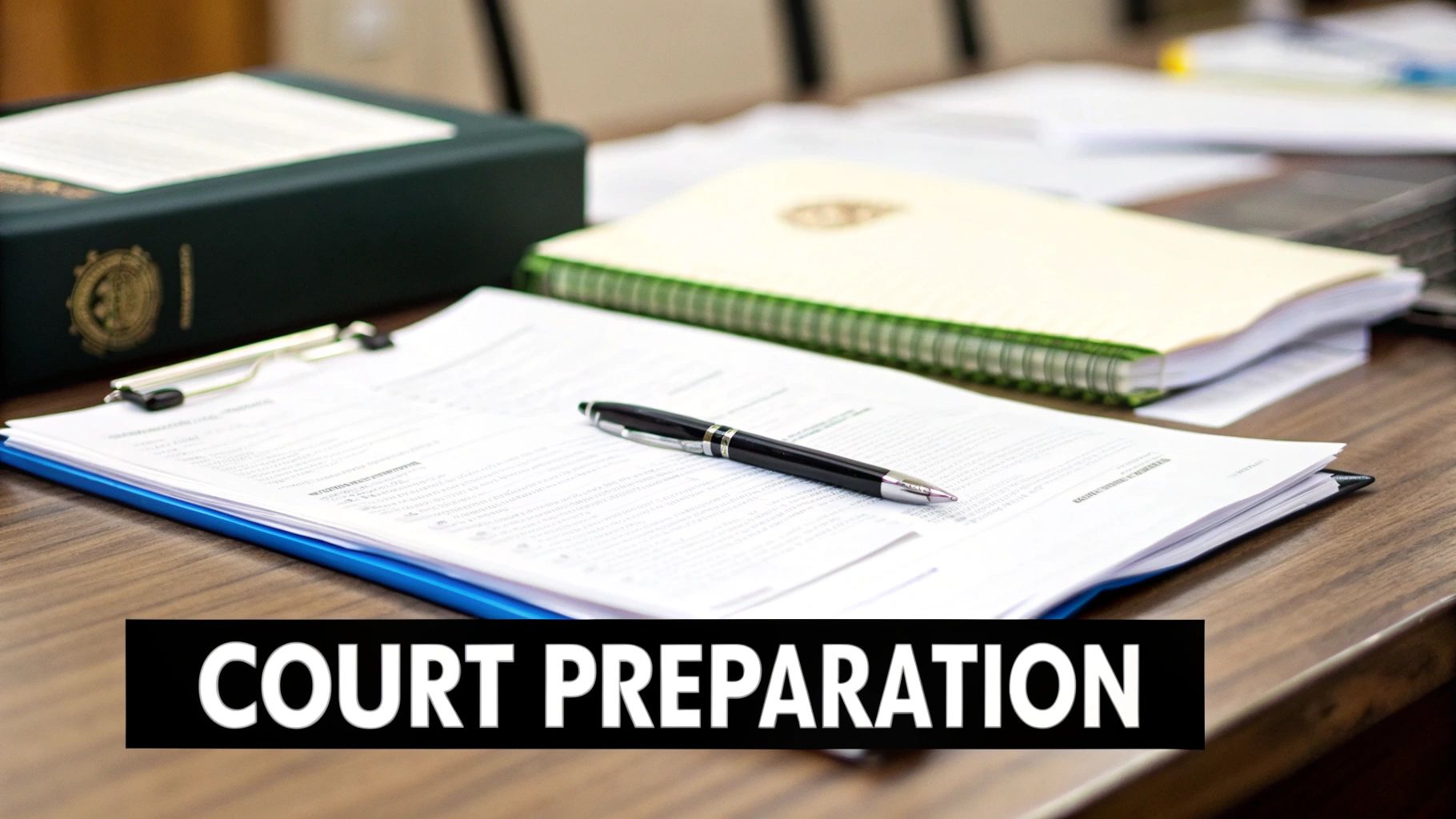
Confidence on the witness stand doesn’t come from memorizing a script. It’s built on a solid foundation of knowing your facts inside and out. The single most effective way to feel composed and ready is to do the prep work long before you’re called to testify.
That process starts with a thorough review of any and all documents related to the case. This can include everything from emails and text messages to official reports, contracts, or even prior statements you’ve made. The goal here is simple: refresh your memory, not invent new details.
Memories can fade or get jumbled over time. Going back through these materials helps bring the sequence of events into sharp focus, ensuring the information you provide is as accurate as possible.
Organizing Your Knowledge for Clarity
After you’ve reviewed the documents, it’s time to organize your thoughts. You aren’t creating a word-for-word speech, but having a clear mental outline of key events can be incredibly helpful.
A simple timeline is often the best tool for this. Jotting down the main events in chronological order can help you recall information logically when questions come your way. This can anchor your memory and keep you from getting sidetracked by irrelevant details.
This level of preparation is more critical than ever. According to a recent survey from Norton Rose Fulbright, nearly half (about 48%) of corporate counsel expect litigation to increase. That means more cases will rely on well-prepared witnesses.
The Pre-Testimony Meeting
It’s standard practice to meet with the attorney who called you to testify. This meeting isn’t about being told what to say; it’s a crucial opportunity to make sure you and the attorney are on the same page about the facts.
During this session, you can expect to:
- Review the Facts: You’ll go over the key points of your testimony to confirm everything is accurate and complete.
- Understand the Questioning Process: The attorney will likely walk you through the types of questions they’ll ask and what you might face from the opposing side.
- Clarify Any Confusion: This is your time to ask anything you’re unsure about, whether it’s the process or your role in it.
This meeting demystifies the courtroom experience and gives you a much better sense of what to expect, which can go a long way in calming your nerves.
What to Focus On Before You Testify
Your appearance in court is often prompted by a formal request, like a subpoena. Understanding how these official documents work provides helpful context. If you want to learn more, you can read more about how subpoenas are served.
The most important takeaway is this: preparation is about becoming an expert on what you already know. Be so comfortable with the facts that you can communicate them clearly and confidently, no matter how the question is asked.
To help you get organized, here is a checklist of practical steps. This isn’t about memorization—it’s about making sure you’ve covered all your bases before the big day.
Effective Preparation Checklist for Testifying
| Preparation Step | Why It Matters | Action Item |
|---|---|---|
| Review All Documents | Refreshes your memory and ensures your testimony aligns with existing records. | Read through all relevant emails, reports, texts, and prior statements you have made. |
| Create a Timeline | Organizes events chronologically, making them easier to recall accurately on the stand. | List key dates and events in the order they occurred. |
| Anticipate Questions | Helps you think through your answers and identify areas you might need to clarify. | Consider what both sides might ask about your knowledge of the events. |
| Meet with the Attorney | Clarifies expectations and allows you to ask questions about the court process. | Schedule a meeting to review facts and discuss the structure of your testimony. |
Ultimately, walking into a courtroom feeling prepared is about trusting what you know. By taking these practical steps, you build a firm grasp of the information you’ll be sharing—and that’s the true source of composure on the stand.
Courtroom Demeanor and Etiquette

How you present yourself in court matters a great deal. While your testimony is the main event, your demeanor and how you handle yourself can subtly influence how a judge or jury receives what you have to say.
The goal isn’t to put on a performance. It’s about showing respect for the gravity of the process. A courtroom is a formal environment, and demonstrating that you understand that can add to your credibility.
Let’s walk through the practical side of courtroom conduct, from what to wear to how you should interact with everyone in the room. Knowing these unwritten rules can help you feel much more comfortable and focused when you take the stand.
Presenting a Professional Image
Your clothing is the first impression you make. There isn’t a strict dress code for witnesses, but professional and conservative attire is generally a good call. It tells everyone you’re taking your role seriously.
Think of it as dressing for an important job interview. For men, slacks and a button-down shirt or a suit work perfectly. For women, a conservative dress, skirt, or pantsuit is appropriate. The key is to pick something clean, comfortable, and not distracting.
It is often suggested to avoid things like:
- T-shirts with slogans or graphics
- Shorts, flip-flops, or hats
- Anything overly casual or flashy
Your clothing should fade into the background. You want your words to take center stage, not your outfit.
Navigating Courtroom Mechanics
Once you’re inside the courtroom, there are specific protocols to follow. These customs are all about maintaining order and showing respect for the judicial system.
Being sworn in is your formal entry point. You’ll be asked to raise your right hand and swear or affirm that you will tell the truth. Taking that oath seriously is a solemn promise to the court.
Another crucial piece of etiquette is how you address the judge. The proper term is always “Your Honor.” Using this title when speaking to or about the judge is a simple but powerful sign of respect that reinforces the formality of the setting.
The Power of Non-Verbal Communication
What you don’t say can be just as impactful as what you do. Your body language sends constant signals about your confidence and sincerity.
Good posture is an easy win. Sit up straight in the witness chair. Try to avoid slouching or fidgeting, as it can come across as nervousness or even disinterest. This helps you appear engaged and attentive.
Eye contact is just as important. When an attorney asks you a question, look at them. When you answer, it’s often best to direct your response to the jury or the judge—they’re the ones deciding the facts. For more on the key differences, check out our guide on bench trials vs. jury trials.
The most credible witnesses are often those who appear calm, respectful, and sincere. Your non-verbal cues should align with your spoken testimony, creating a consistent and believable presentation of the facts.
Ultimately, your demeanor is about showing that you are a serious, respectful person there to help the court find the truth. By following these basic principles, you ensure that your presence supports your testimony and helps you navigate the process with composure.
Answering Questions on the Stand
This is it—the part of testifying that everyone thinks about. The back-and-forth between you and the lawyers is the heart of your time on the stand. All the preparation you’ve done comes into play right here, helping you give clear, factual answers. The way you listen, pause, and speak will make all the difference.
First things first, it’s helpful to understand the rhythm of the courtroom. The questions will come in two main phases: direct examination and cross-examination. They have completely different goals, and knowing what’s coming will help you keep your cool.
Direct Examination Explained
Direct examination is led by the attorney who called you to testify. Their job is to help you tell your story to the judge and jury in a logical, coherent way. It’s a guided conversation.
The questions are usually open-ended, designed to let you explain what you know in your own words. Think of it as the attorney setting you up to provide the facts. You’ll hear questions like:
- “Where were you on the night of June 5th?”
- “What did you see when you arrived?”
- “Could you describe the document you signed?”
Your job here is simple: provide honest, direct answers based on what you remember. Don’t volunteer extra information or offer your personal opinions unless you’re specifically asked. Just stick to the facts.
The Dynamics of Cross-Examination
After the first lawyer is done, the opposing attorney gets their turn. This is cross-examination, and its purpose is to test what you just said. They want to poke holes in your testimony and check its accuracy.
The vibe changes here. The questions will be much more pointed, often leading, and sometimes designed to be answered with a simple “yes” or “no.” It can feel like you’re under a microscope, but remember, this is a standard part of every trial. The trick is to stay calm and polite.
Listen very carefully to what’s being asked. If a question is confusing, don’t guess what they mean. It is perfectly acceptable—and smart—to ask them to rephrase it.
One of the most important things to remember for both direct and cross-examination is this: pause before you answer. Take a breath after you hear the question. This small habit gives you a moment to process what was asked and form a clear, correct response.
That pause does double duty. It also gives your attorney a chance to object if the question is improper. If you jump in with an answer too quickly, you might accidentally validate a question that should have been thrown out. Patience is your best friend on the stand.
The Art of Answering Only What Is Asked
It can’t be stressed enough: answer only the question that was asked. So many witnesses get themselves into trouble by volunteering information. They feel the need to explain their answer or add extra context, but that just opens up new doors for the other attorney to walk through.
Let’s look at an example:
- Question: “Did you see the blue car at the intersection?”
- A Poor Answer: “Yes, I saw the blue car right after I left the grocery store because I was in a hurry to pick up my kids, and I remember thinking it was going too fast.”
- A Better Answer: “Yes.”
The second answer is perfect. It’s direct, it’s truthful, and it completely answers the question. If the lawyer wants to know why you were there or what you were thinking, they will ask. Keep it tight and focused.
This skill is becoming even more crucial as legal battles get more complex. We’re seeing a rise in class action and group litigation, especially across Europe and North America, which means more witnesses are being brought into intricate cases. In fact, new regulations are making it easier to file group litigation in Europe, a trend that’s expected to continue.
Handling Questions You Cannot Answer
Nobody expects you to have a perfect memory. It’s completely fine not to know or remember something. Honesty is always the right move. If you don’t know the answer to a question, the best response is a simple, “I don’t know.”
If you can’t recall a specific detail you once knew, the answer is, “I don’t remember.” These are powerful, perfectly acceptable answers. They are far more credible than taking a wild guess or, even worse, making something up.
Here’s a quick guide for when you’re stumped:
| Situation | Recommended Response | Why It Works |
|---|---|---|
| You genuinely do not have the information. | “I don’t know.” | It’s the truth and stops you from speculating. |
| You can’t recall a specific detail right now. | “I don’t remember.” | It acknowledges the memory existed but isn’t accessible. |
| You would be guessing or estimating. | “I would have to guess.” | This signals your answer isn’t a hard fact. But it’s usually better to stick to what you know for sure. |
| The question is confusing. | “Could you please rephrase the question?” | This ensures you’re answering what the attorney actually means. |
Never let an attorney pressure you into giving an answer you’re not 100% sure about. A credible witness understands the limits of their own knowledge and isn’t afraid to say so. Your commitment to the truth is what makes your testimony effective.
Navigating Cross-Examination Calmly
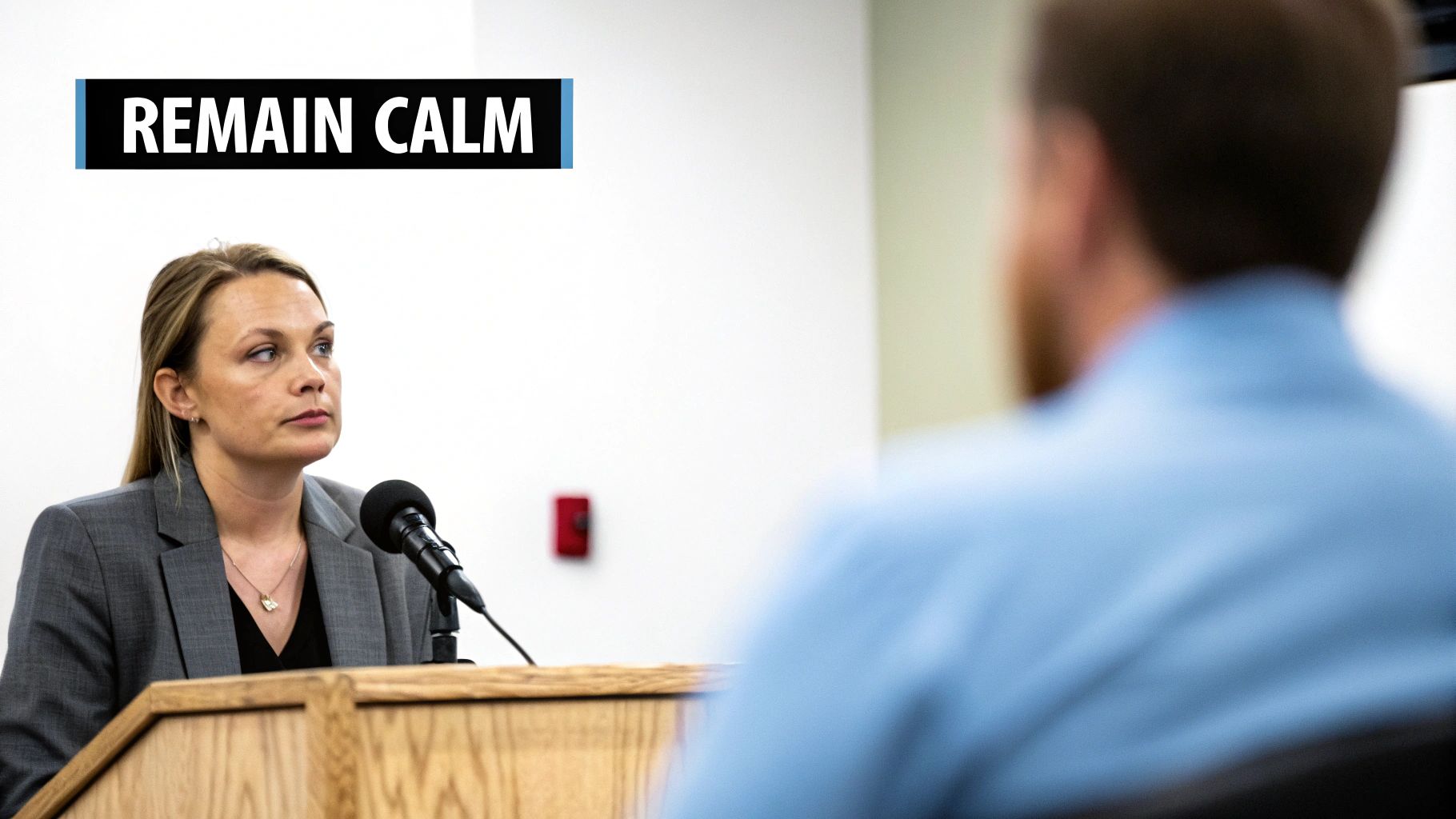
After you’ve given your side of the story during direct examination, the opposing attorney gets their turn. This is cross-examination. For most witnesses, this is the part they dread the most. But if you understand its real purpose, a lot of that anxiety just melts away.
Cross-examination isn’t about attacking you personally. It’s about testing the accuracy, consistency, and completeness of what you just said. The lawyer’s job is to poke holes in the testimony or find inconsistencies that help their case. When you see it for what it is—a standard part of the process—it feels less like a confrontation.
Your most powerful tool here is your demeanor. Staying calm, polite, and consistent is everything. This isn’t a debate or an argument; it’s just a continuation of the question-and-answer format. Your only job is to give truthful, direct answers, just like you did before.
Understanding Common Questioning Tactics
The questions will feel different during cross-examination. Lawyers use specific techniques designed to challenge what you’ve said. If you can spot these tactics, you’ll be able to respond thoughtfully instead of emotionally.
- Leading Questions: This is the most common tactic. The question itself suggests the answer, pushing you toward a “yes” or “no.” For instance, instead of asking, “What color was the car?” they’ll say, “The car was red, wasn’t it?”
- Compound Questions: Watch out for questions that are really two or more questions rolled into one. Something like, “You left your house at 8 a.m. and didn’t see anyone on the street, correct?” can be tricky. It is perfectly acceptable to ask the attorney to break the question down.
- Rapid-Fire Questions: Some lawyers will fire questions off quickly to make you feel pressured and flustered. It’s a deliberate strategy. The best way to handle this is to set your own pace. Pause, think, and answer one question completely before you even think about the next one.
Don’t let these styles get under your skin. Just take a breath, listen carefully to the whole question, and answer only what was asked.
The Importance of Staying Truthful and Consistent
Your credibility is everything on the witness stand. The opposing attorney has likely reviewed every statement you’ve ever made about the case—in depositions, to investigators, or in emails. They will compare those statements to what you say in court. Even tiny, unintentional inconsistencies can be used to make you look unreliable.
That’s why you have to stick strictly to the facts you know. If you don’t know an answer, the correct response is, “I don’t know.” If you can’t recall a detail, simply say, “I don’t remember.” These are perfectly good, complete answers. Never guess or let yourself be pushed into giving information you aren’t sure about.
The cross-examiner’s goal is to control the narrative. Your goal is to stick to the truth. By remaining calm and consistent, you ensure that your testimony remains a reliable source of information for the court, regardless of the questioning style.
Consistency shows the court that your memory is solid and that you are a credible witness who is simply there to help.
Handling Specialized and Technical Topics
Sometimes, testimony gets technical. This is particularly true for expert witnesses, who are brought in specifically to explain complex subjects to the judge and jury. As legal cases get more complicated, the need for these experts is on the rise.
The global expert witness services market shows this trend clearly. It’s expected to grow from around US$737 million to over US$1,083 million by 2031, with a compound annual growth rate of 6.6%. This growth reflects how complex modern lawsuits have become, especially in areas like medical malpractice, finance, and intellectual property. You can see more of these market insights from infinitymarketresearch.com.
Whether you’re a designated expert or just a regular witness discussing a technical point, the rule is the same: use simple, clear language. Avoid jargon. If you absolutely have to use a technical term, be ready to explain what it means in plain English. Clarity is your best friend.
Maintaining Composure Under Pressure
Whatever you do, don’t get into an argument with the cross-examining attorney. Some may try to provoke you, hoping an emotional outburst will make you seem less credible. Don’t take the bait.
Here are a few quick tips to help you keep your cool:
- Stay Polite: Be respectful at all times, even if the attorney is aggressive.
- Listen to Objections: If an attorney stands up and says “Objection!”, stop talking immediately. Wait for the judge to make a ruling before you continue.
- Correct Mistakes Calmly: If you realize you said something wrong earlier, it’s often best to correct it. Just say, “May I clarify something I said earlier?” Honesty builds credibility.
If you focus on these strategies, you can get through cross-examination calmly and effectively. A composed and truthful witness speaks for themselves.
Here are some common questions people have just before they have to testify. Even with the best preparation, it’s completely normal to have a few last-minute worries. Let’s clear up some of the most frequent ones.
At the end of the day, testifying is about telling the truth clearly. Whether you’re in the courtroom or on a video call, the job is to give honest, straightforward information. Knowing the answers to these questions helps you stay focused on that.
Can I Testify From Home or Remotely?
Virtual court hearings have definitely become more common, with platforms like Zoom used to keep cases moving. But just because the technology exists doesn’t mean testifying remotely is a given. It’s not an automatic “yes.”
The decision is up to the judge, who will weigh several factors on a case-by-case basis:
- How important is the witness? Is their testimony central to the case, or is it minor?
- What is the testimony about? If the subject is highly technical or heavily disputed, a judge will want to see the witness in person. It’s just easier to gauge someone’s credibility when they’re in the room.
- Who is the fact-finder? Juries, especially, often need to see a witness in person to make their decision.
- Are there practical issues? The judge will also consider the cost, potential delays, and other logistical challenges of requiring an in-person appearance.
When testimony is critical and likely to be challenged, courts almost always lean toward an in-person appearance. This is particularly true when there’s going to be a tough cross-examination.
A judge has to balance the court’s efficiency with every person’s right to a fair hearing. For the most crucial parts of a trial, being physically present ensures the process is as transparent and thorough as possible.
What Happens If I Receive a Pardon?
A presidential pardon can wipe away the federal legal penalties for a crime, but it also has a major effect on your rights as a witness. The Fifth Amendment gives you the right to avoid incriminating yourself.
However, a well-established legal principle says that once you’ve been pardoned for a federal crime, you’re no longer in legal danger for it. Because of that, you can’t “take the Fifth” if you’re asked to testify about that specific federal issue. By accepting the pardon, you essentially give up your right to stay silent on that topic.
Does a Pardon Remove All Protections?
This is where it gets tricky. A presidential pardon only covers federal offenses. It offers zero protection from prosecution under state laws.
This means if your testimony about a federally pardoned crime could also get you in trouble for a separate state crime, you may still be able to invoke your Fifth Amendment rights. The protection only vanishes when there is no real threat of prosecution from any U.S. government—federal or state. The key question is whether your words could still lead to legal problems in a different jurisdiction.
Navigating the justice system requires clear information and a strong advocate. At Brian Hansford Law, we are dedicated to protecting the rights of individuals in Alpharetta, Cumming, and throughout Forsyth and Cobb Counties. If you are facing criminal charges, let our experience guide you. Visit us at https://challengemycharge.com to learn how we can help safeguard your future.
