
You clean out your glove box, open an old letter, or get stopped for a broken taillight in Alpharetta and suddenly learn there’s still a traffic case hanging over you. A ticket you forgot about. A court date you thought had passed. A license issue you assumed would fix itself with time.
That’s when the same question often arises. Can a traffic ticket expire?
Sometimes the answer is partly yes. Sometimes it’s absolutely not. That’s where people get into trouble.
The statute of limitations on traffic tickets is a real legal concept, but most drivers use it too broadly. They hear “time limit” and assume the whole problem disappears after enough months or years. In practice, the legal system treats prosecution and enforcement as two different things. The time to file or pursue a charge may be limited. The fallout from an unpaid ticket, missed court date, or warrant often isn’t.
That distinction matters whether you’re looking at a speeding ticket in Roswell, a reckless driving charge in Johns Creek, or a DUI-related case in Forsyth County. In North Atlanta courts, old traffic matters can still affect your license, your ability to clear a warrant, and your exposure to arrest if you ignore them.
If you’re also trying to figure out whether your charge counts as a crime, this guide on whether traffic tickets are misdemeanors helps frame why some “simple tickets” carry more risk than people expect.
An Old Ticket Resurfaces What Does It Mean
You get stopped in Roswell for a minor equipment issue. The officer runs your license and tells you there is an old failure to appear out of Cumming. Now a ticket you forgot about years ago is affecting your ability to drive home that night.
That is how these cases usually come back. Not as a dusty file, but as a live problem.
In Alpharetta, Roswell, Milton, and Cumming, drivers often assume an old ticket expired because a lot of time passed. Sometimes the prosecution deadline matters. Just as often, the primary danger is enforcement that never went away. A court can still have an active warrant, unpaid fines, or a license suspension tied to a case that feels ancient to you.
Why the age of the ticket matters
A statute of limitations is the deadline for the government to start prosecuting a case. If the state missed that deadline, the age of the charge can become a real defense issue.
But the first practical question is not just, "How old is the ticket?" It is, "What happened procedurally?" Was the case ever filed? Did you miss a court date? Did the court report the matter to DDS? Those answers usually matter more than the calendar date on the citation.
That distinction gets missed online all the time. For a driver, it changes everything.
A basic speeding citation may be handled one way. A charge that qualifies as a misdemeanor can carry more exposure and different strategy concerns. If you are unsure where your ticket falls, this guide on whether a traffic ticket is a misdemeanor in Georgia gives useful context.
Why the age of the ticket may not save you
An old ticket can still produce a current arrest risk.
If the court already acted before any filing deadline ran, time usually does not erase the fallout. In North Atlanta courts, I regularly see old traffic matters show up through a license suspension, a failure to appear, a bench warrant, a collections problem, or a refusal to renew driving privileges until the case is cleared.
The trade-off is straightforward. Waiting may help if the state never filed a charge and the limitation period expired. Waiting hurts you if the court already opened the case and your problem is now enforcement. In that situation, delay can mean another suspension period, another stop that turns into an arrest, or a harder negotiation because the court sees a long history of noncompliance.
Practical rule: If an old ticket resurfaces, find out three things immediately. Whether the case was filed. Whether a warrant or failure to appear exists. Whether DDS has already taken action against your license.
That is the difference between a legal deadline that may help your defense and an enforcement problem that will stay active until you address it directly.
Understanding Georgia's Legal Shot Clock
The cleanest way to understand the statute of limitations on traffic tickets is to separate the process into two tracks. One track is charging the case. The other is collecting the consequences.

Prosecution has a clock
For prosecution, the government generally has a limited time to accuse you formally. That’s the “shot clock” part. If the state doesn’t file within the applicable period, the defense may have grounds to attack the case.
This is the point many online articles stop. They explain the filing deadline and leave readers thinking they’ve solved the whole issue.
Enforcement can outlive prosecution
That’s where real life gets messier. A legal discussion aimed at this issue notes that the distinction between limitation periods and enforceability is often missed. Once charges are filed before the deadline, the case can keep moving through court regardless of how much time passes afterward, and unpaid tickets can still trigger fines, license suspensions, and insurance consequences even after people think the deadline has expired, as explained in this discussion of traffic-ticket limitation periods and enforceability.
That means “the statute ran” and “the ticket disappeared” are not the same sentence.
A simple way to think about it
Use this framework when you’re assessing risk:
Was the charge filed in time
If yes, the statute of limitations may not help at all, even if the case feels old now.Did the court already enter a failure to appear or similar action
If yes, you may be dealing with a warrant or license consequence, not just an unresolved citation.Is the issue criminal, civil, or administrative
Drivers often lump these together, but courts and licensing agencies don’t.
Old case does not always mean weak case. Sometimes it means the paperwork was already filed, and now you’re dealing with the consequences of not resolving it sooner.
What works and what doesn’t
What works is getting the court record, checking filing dates, and confirming the current case status before making assumptions.
What doesn’t work is relying on internet folklore, especially the idea that if you ignore a ticket long enough, it ages out. In municipal and state courts around Alpharetta, Roswell, Marietta, and Cumming, that approach usually makes the eventual fix more expensive and more disruptive.
Georgia's Timelines Misdemeanors Felonies and DUI
A driver gets pulled over in Roswell, pays no attention to the citation for months, then hears years later that the case is still causing trouble. The first question is not whether the ticket feels old. The first question is what was charged, when it was filed, and whether the problem now is prosecution or enforcement.
Georgia traffic cases do not all run on the same clock. A speeding ticket, a reckless driving charge, a DUI, and a felony hit-and-run allegation can sit in very different legal categories. That classification matters because the deadline to start a case is one issue, while the court's power to enforce a case that was already filed is a different issue entirely.
The charge category controls the starting analysis
In Georgia, many routine traffic prosecutions are handled as misdemeanors. That usually includes offenses such as speeding, reckless driving, and many standard traffic crimes heard in municipal, probate, state, or superior court. More serious allegations, including felony fleeing, serious-injury cases, or some hit-and-run charges, can move into felony territory fast.
DUI creates confusion because drivers often treat it like a regular ticket. It is not. A DUI can trigger a criminal case and a separate license problem on different timelines, and those timelines do not always end together.
If you are trying to assess long-term exposure, it also helps to know how long traffic tickets stay on a Georgia driving record, because record consequences and charging deadlines are related but they are not the same question.
A practical table for traffic-related offense categories
| Offense Category | General Statute of Limitations (OCGA) | Common Examples |
|---|---|---|
| Misdemeanor traffic offenses | Depends on the applicable Georgia criminal limitation rule | Speeding, reckless driving, many standard traffic misdemeanors |
| Felony traffic-related offenses | Longer than misdemeanor timeframes under the applicable Georgia criminal limitation rule | Serious hit-and-run allegations, felony fleeing, cases involving serious injury |
| DUI and related traffic crimes | Depends on how the charge is classified and when the accusation is filed | DUI, DUI less safe, DUI involving drugs or alcohol |
That table helps frame the issue. It does not answer the case by itself.
DUI cases often involve two clocks at once
In practice, DUI cases create some of the worst misunderstandings. A driver may focus on the criminal court date in Alpharetta or Cumming and miss the fact that the license side already started running through DDS procedures. By the time the person calls a lawyer, the prosecution deadline may not be the immediate problem at all. The actual problem may be a suspension, a missed hearing, or a bench warrant tied to a case that was filed on time.
That distinction matters in North Atlanta courts because local courts often move traffic calendars quickly, and old DUI files can still produce very current consequences.
What I check first in an older traffic or DUI case
When someone calls my office about an old ticket or old DUI, I want four things confirmed before anyone starts talking about a statute of limitations defense:
Exact charge name
"Traffic ticket" is too broad. The court file needs to show the precise offense.Date the accusation or citation was filed
The stop date matters, but the filing date usually matters more for limitation analysis.Current case posture
Open case, closed case, failure to appear, bench warrant, probation issue, or unresolved fine all lead to different strategy choices.Current license status
Drivers often assume no recent court notice means no active problem. DDS records often tell a different story.
Real trade-offs in misdemeanor, felony, and DUI cases
A timing challenge can be strong. It can also be a dead end.
If the state filed a misdemeanor traffic charge within the allowed period, the statute of limitations may do nothing for you, even if the case has been sitting for a long time. At that point, the better path may be reducing the charge, avoiding points, lifting a suspension, recalling a warrant, or fixing a failure to appear without making the case worse. If the filing was late, though, the dates may become the center of the defense.
That is the difference many online articles miss. The prosecution deadline limits when the government can start the case. It does not mean an already filed case expires on its own, and it does not stop North Atlanta courts from enforcing fines, warrants, or license consequences years later if the case was properly started.
Exceptions That Pause or Extend the Timeline
Even when a case starts with an ordinary limitation period, the analysis doesn’t stop there. Deadlines can be affected by exceptions, and once a court enters certain actions, arguing about the original clock may not solve the present problem.
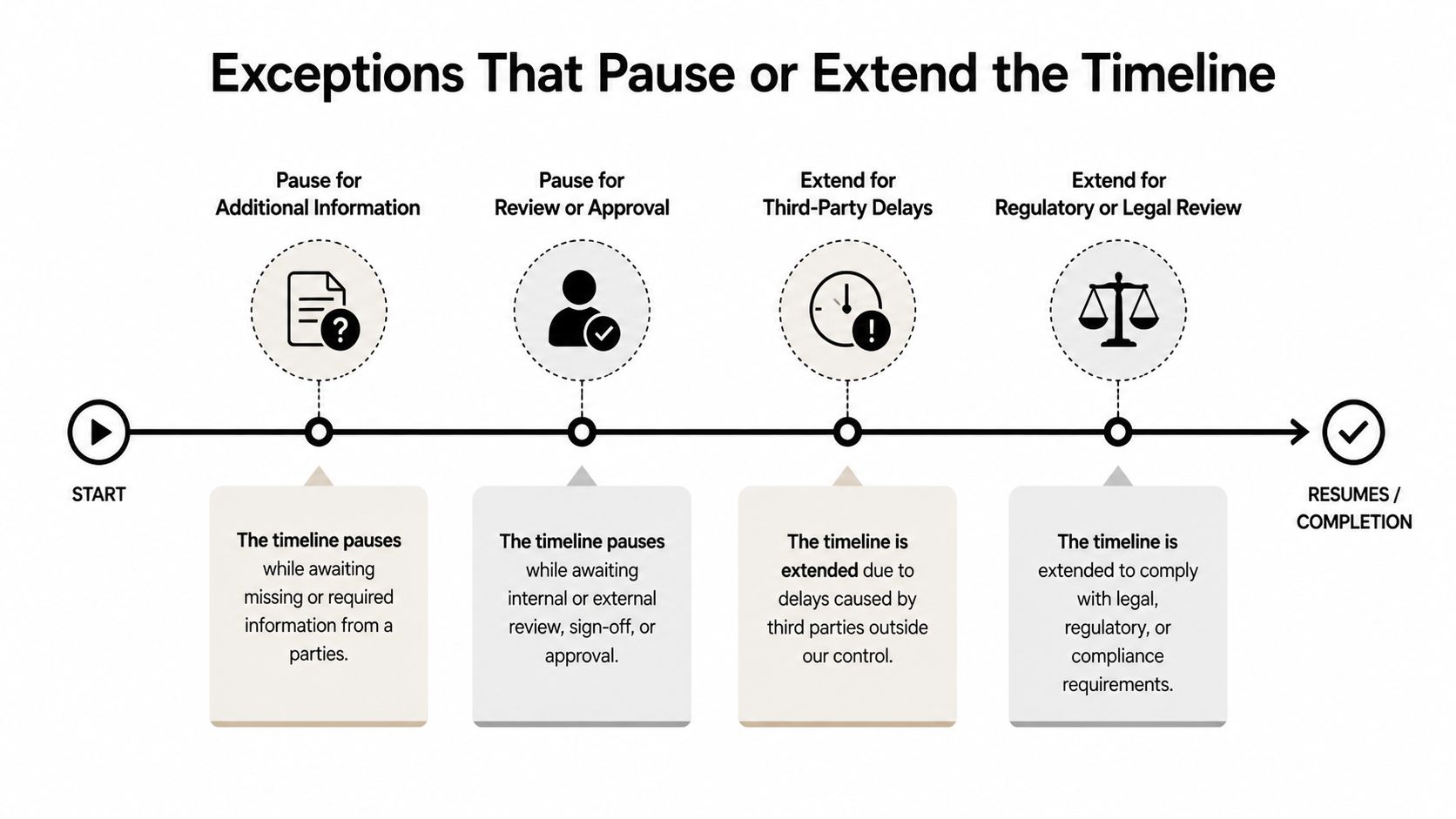
Serious cases often get more time
A broad review of traffic-ticket limitations notes that serious offenses such as hit-and-run commonly operate under longer timelines than routine moving violations because authorities may need more time to identify and pursue the accused, and it also explains that unpaid obligations can keep enforcement alive far beyond the initial accusation stage, as discussed in this analysis of exceptions and ongoing enforceability in traffic cases.
That matters in Georgia because people often compare their old speeding ticket to a much more serious traffic-related charge and assume the same deadline applies. It may not.
Warrants change the problem
Once a warrant is issued for failure to appear or for unpaid obligations, the issue usually stops being “can they still start this case?” and becomes “how do we clear the warrant and control the damage?”
That same discussion explains the practical reality: once a warrant is active, it remains active until a judge vacates it. In plain terms, waiting it out is not a strategy.
A warrant doesn’t get tired. If it’s still in the system, it can surface at the worst time, including a routine stop or a background-related review.
Common ways the clock gets complicated
Here are the situations that most often confuse people:
The case was filed before the deadline
If prosecutors filed on time, the later age of the case may not matter.The charge is more serious than the driver realizes
Leaving the scene, injury-related allegations, or repeat-offense situations may not follow the assumptions people make about basic tickets.The person missed court instead of resolving the citation
Missing court often creates a second layer of trouble that outlasts the original citation.
What doesn’t work
Drivers sometimes believe one of these approaches will solve an old case:
- Move and assume the court won’t find them.
- Renew a license in another state and assume the old issue won’t follow.
- Wait for the computer system to drop the record.
Those approaches often fail because courts, clerks, and licensing systems treat unresolved cases as live problems until someone resolves them properly.
What usually works better
A more effective response is procedural, not hopeful:
- Pull the court record
- Confirm whether a warrant exists
- Check the current license status
- Address the case through counsel before a new stop turns it into an arrest situation
That sequence is especially important in North Atlanta, where people often have cases scattered between a municipal court and a county court and assume they’re all connected in one easy file. They usually aren’t.
How North Atlanta Courts Handle Traffic Cases
A ticket in North Atlanta doesn’t move through a single system. Where the case lands matters. The culture of the court matters. The prosecutor’s approach matters. The local procedures matter.
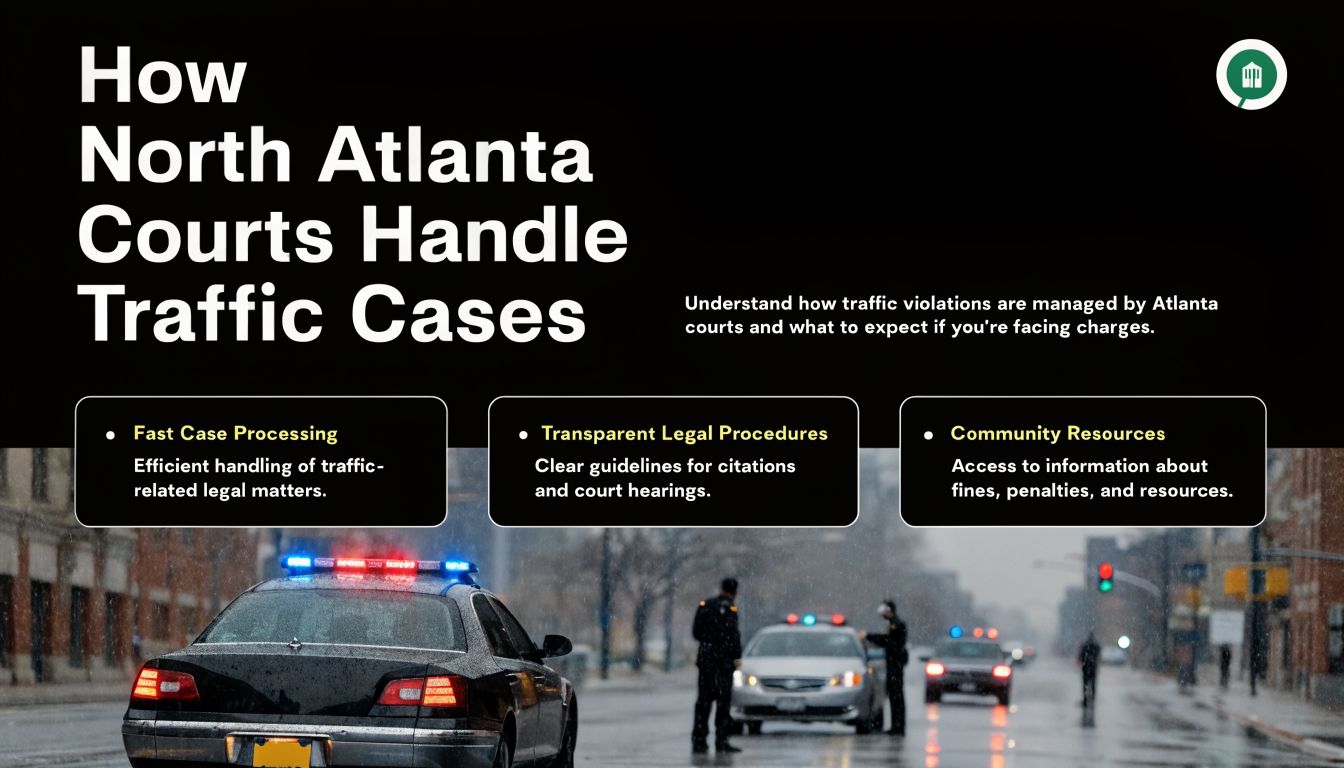
Municipal courts and county-level courts are not the same experience
Municipal courts in places like Alpharetta, Roswell, Johns Creek, and Sandy Springs often handle city-issued traffic matters. State courts in counties such as Fulton, Forsyth, Cobb, and Gwinnett often handle broader misdemeanor traffic calendars and more serious driving offenses.
That distinction affects the pace of the case and the practical options available. A municipal docket may move differently from a county state court. A local solicitor may have one approach to reductions, while another court may require a different showing before modifying a charge.
Why local practice matters more than most people think
A national discussion of unpaid ticket fallout reports that approximately 20% of U.S. drivers have unresolved traffic violations, affecting roughly 48 million people nationwide, and it also notes that in Florida around 1 million drivers have active license suspensions due to unpaid tickets, with the state suspending approximately 500,000 licenses annually under its failure-to-pay framework, illustrating how unresolved traffic matters can keep harming drivers long after they think the original deadline passed, as summarized in this review of unpaid ticket consequences and limitation issues.
Georgia drivers should read that for the principle, not for a one-to-one state comparison. The practical takeaway is the same. Unresolved tickets don’t become harmless just because they’re old.
Side-by-side comparison of court realities
| Court setting | What drivers often expect | What often happens in practice |
|---|---|---|
| Municipal court in a city like Alpharetta or Roswell | “It’s just a city ticket” | The court may still treat nonappearance and compliance issues very seriously |
| State court in a county like Fulton or Forsyth | “I’ll sort it out later” | Larger dockets and formal procedures can make delayed cleanup harder, not easier |
Strategic differences by court type
In local practice, these differences show up fast:
Calendar pressure
Some courts move crowded calendars quickly. That can help if your lawyer is prepared. It can hurt if you show up cold and expect a long conversation at the bench.Negotiation culture
Some prosecutors focus on efficient resolutions. Others want specific documents, clean compliance history, or completed conditions before discussing reductions.Clerk procedures
One court may be easy to verify with a case search and clerk contact. Another may require more legwork to confirm what was filed and when.
A good traffic defense in Roswell is not just “know the law.” It’s also “know how that courthouse actually processes cases.”
What drivers should do before the first appearance
Before stepping into court, get clear on these points:
- Which court has the case
- Whether the case is city or county initiated
- Whether a missed date already changed the status
- Whether the issue is only a ticket, or a ticket plus a license problem
That local reality is why generic internet advice often fails people. A person searching for a speeding ticket lawyer in Cumming or a DUI attorney in Alpharetta usually doesn’t need abstract doctrine. They need to know how their specific court handles old cases, missed dates, and license-related fallout.
Using Legal Deadlines in Your Defense Strategy
A statute of limitations defense can be powerful, but it’s rarely something you guess your way into. It has to be built from the charging document, the filing history, and the exact posture of the case.
How timing becomes an actual defense
If the government filed too late, a defense lawyer may challenge the case through a procedural motion, often framed as a motion to dismiss or a plea in bar depending on the posture and the legal issue involved. The court won’t usually raise that issue for you. Someone has to identify it, support it, and push it.
That’s one reason waiting is risky. If you miss the window to raise the right argument, or if you walk into court without understanding whether the deadline issue is even valid, you can weaken your case.
Why timing is only one part of a good traffic defense
Most strong traffic and DUI defenses don’t start with the statute of limitations. They start much earlier.
A practical defense usually asks:
- Was the stop lawful
- Can the state prove the driver was the person involved
- Is the officer’s observation reliable
- Is there a path to reduce the charge and protect the license
- Did a missed court date create a fixable procedural problem
For many people searching for a DUI lawyer, reckless driving lawyer, speeding ticket lawyer, or license suspension lawyer in North Atlanta, that’s the decision point. The question isn’t just whether the charge is old. The question is whether someone is taking immediate steps to contain the damage.
What works versus what usually backfires
Here’s the blunt version.
What works:
- Get the file reviewed early
- Fix warrant issues before a new stop
- Use deadlines as one tool, not the whole plan
- Prepare for court with the right documents and a realistic strategy
What usually backfires:
- Calling the court and making assumptions from a quick conversation
- Showing up hoping the officer won’t appear
- Treating a DUI or reckless driving case like a payable fine
- Trying to self-diagnose from generic advice meant for another state
If you’re weighing whether to handle court alone, this guide on whether you need a lawyer for traffic court is a useful starting point.
Defense insight: The best use of a limitation issue is often as leverage inside a broader strategy, not as a magic wand. If the deadline argument is weak, the rest of the defense still has to carry the case.
The practical goal in North Atlanta courts
In Alpharetta, Roswell, Cumming, Marietta, and nearby courts, the most effective approach is usually to act before the case hardens into a warrant, a suspension issue, or a repeat-offender problem. That’s especially true where a traffic charge overlaps with DUI exposure, a probation concern, or a record issue that could affect work or insurance.
A good defense lawyer doesn’t just ask whether the state missed a deadline. The lawyer asks what can still be won now.
Frequently Asked Questions About Georgia Ticket Deadlines
Can I be arrested for an old speeding ticket from Milton
Yes, that can happen if the problem is no longer just the speeding citation. If you missed court, failed to appear, or let the case turn into a warrant-related issue, the arrest risk may come from the warrant status rather than the age of the original ticket.
If I moved out of state, does the Georgia ticket stop mattering
Usually no. Moving doesn’t automatically clear the court case or the driving consequences. If a Georgia court still shows the matter as unresolved, you may continue to feel the effects when you try to renew a license, clear your record, or deal with a later stop.
Does an old ticket automatically disappear after enough time
No. That’s the most common misunderstanding behind the statute of limitations on traffic tickets. A filing deadline may limit prosecution in some situations, but old court obligations, warrants, and license consequences can still remain active until someone resolves them properly.
What if I never got notice of the court date
That issue may matter, but don’t assume it fixes everything by itself. The first step is to confirm what the court file shows about notice, address records, and case status. If the court entered a failure to appear, the remedy usually requires formal action to reopen or address the case.
If I already paid part of a fine, does that solve the case
Not necessarily. Partial payment doesn’t always mean full resolution, and it doesn’t automatically remove related court or licensing consequences. You need the actual court status, not a bank-memory version of what happened.
Can a DUI case be treated like an ordinary ticket deadline issue
Usually not. DUI cases create higher stakes, and they often involve separate license-related consequences that need immediate attention. If your case involves alcohol, drugs, refusal issues, or a serious accident, don’t evaluate it as if it were a routine speeding matter.
What should I do first if I think an old case is still open
Start with the basics:
- Find the exact court
- Confirm the charge and case number
- Check for a warrant or failure to appear
- Review your license status
- Get legal advice before contacting the court casually if the case looks active
The worst move is to guess.
If you’ve got an old traffic ticket, DUI, reckless driving charge, or license suspension issue in Alpharetta, Roswell, Cumming, Johns Creek, Milton, Marietta, or the surrounding North Atlanta area, Brian Hansford Law can help you get clear answers fast. Brian Hansford is a former prosecutor with more than 25 years of legal experience, and the firm handles criminal defense and traffic-related cases with a practical focus on protecting your license, your record, and your position in court. Reach out for a free consultation if you need same-day guidance on what the court can still do and how to fight back.
