
If you are facing criminal charges in Alpharetta, GA, understanding your plea options is one of the most critical first steps you will take. A “no contest” plea, known legally in Georgia as nolo contendere, is a strategic tool that means you are not admitting guilt but are accepting the court’s punishment. For someone arrested in Alpharetta or the surrounding North Fulton area, this choice can make a significant difference in the outcome of your case and your future. Do not wait to get answers. Call Brian Hansford now for a confidential case review.
Why This Matters: Understanding a No Contest Plea in Your Alpharetta Case

When you’re arrested in Alpharetta, Johns Creek, or anywhere in North Fulton, the legal terms can be overwhelming and stressful. One of the first major decisions you’ll make is how to plead to the charges. While “guilty” and “not guilty” are clear, “no contest” is a nuanced option often misunderstood by those facing the Fulton County court system.
A no contest plea, or nolo contendere, is a Latin phrase meaning “I do not wish to contend.” By entering this plea, you are telling the judge at the Alpharetta Municipal Court or Fulton County State Court that you will not fight the charges. You are agreeing to accept the sentence just as if you had pleaded guilty.
The key difference—and where its strategic value lies—is that you are not formally admitting you committed the crime. This distinction is vital, especially if a related civil lawsuit could arise from the same incident.
Charge Breakdown: Comparing Your Plea Options in Alpharetta
Your plea sets the entire path for your criminal case. Whether you were arrested by the Alpharetta Police Department or an officer in Milton or Roswell, your choices are the same, but the strategy behind each one can change everything.
Here’s a breakdown of how they differ:
-
Not Guilty Plea: This is your declaration of innocence. It puts the full burden on the North Fulton prosecutor to prove your guilt beyond a reasonable doubt and initiates the trial process. It is the only way to fight the charges in court and protect your name.
-
Guilty Plea: This is a direct admission that you committed the offense. When you plead guilty, you give up your right to a trial, and the judge moves straight to sentencing. That admission of guilt can then be used against you in other legal proceedings.
-
No Contest (Nolo Contendere) Plea: This unique plea allows you to accept the criminal penalty without admitting you did anything wrong. In the eyes of the criminal court, the outcome is the same as a guilty plea—a conviction and a sentence. The real benefit comes into play outside the criminal courtroom.
A no contest plea is not a get-out-of-jail-free card or a way to avoid a criminal record. In Georgia, it still results in a conviction. Its primary purpose is to shield you from civil liability that could arise from the same incident.
For example, let’s say you were in a car accident in Sandy Springs and are now facing a DUI charge. If you plead guilty, that plea can be used as clear evidence of your fault in a personal injury lawsuit filed by the other driver. A no contest plea, however, cannot be used to prove your liability in that civil case. This protection can be invaluable.
To help you see the differences side-by-side, here’s a look at how these pleas function in the Fulton County court system, which serves Alpharetta and surrounding cities.
Plea Options in Fulton County Courts At a Glance
| Plea Type | Meaning | Impact on Criminal Case | Impact on Civil Case |
|---|---|---|---|
| Not Guilty | You assert your innocence and deny the charges. | The case proceeds to trial where the prosecution must prove its case. | No impact; your innocence is presumed. |
| Guilty | You admit to committing the crime as charged. | The case proceeds directly to sentencing; you are convicted. | Can be used as an admission of fault to establish liability. |
| No Contest | You accept punishment without admitting guilt. | The case proceeds to sentencing; you are convicted. | Cannot be used as an admission of fault to establish liability. |
As you can see, the major advantage of a no contest plea is its inability to be used against you in a civil lawsuit. For anyone concerned about a potential lawsuit, this is a critical factor to consider when building your defense strategy.
Defense Strategy: The Strategic Difference Between No Contest and a Guilty Plea

In a criminal case in Alpharetta, both a no contest plea and a guilty plea will result in a conviction and sentencing. The critical difference, however, comes down to how that plea can be used against you in the future. This isn’t a small detail—it’s a key strategic decision that can save you from major financial consequences.
A guilty plea is a direct admission on the court record. You are telling the judge in Fulton County State Court, “Yes, I did it.” That admission can then be brought into a separate civil lawsuit as evidence that you were at fault.
A no contest plea is different. You are not admitting guilt. Instead, you’re telling the court you won’t fight the charge and will accept the punishment. The biggest advantage here is that your no contest plea generally cannot be used as an admission of fault if you get sued in civil court.
Understanding the Civil Liability Shield
Let’s say you are charged with DUI after a car accident on Holcomb Bridge Road in Roswell. If you plead guilty in criminal court, the person injured in that crash can use your guilty plea as proof that you were responsible for their injuries in a personal injury lawsuit. It makes their case against you much stronger.
Now, imagine the judge at the Alpharetta Municipal Court accepts your no contest plea for that same DUI. In this scenario, the other person’s lawyer cannot use your plea to prove you were at fault. They still have to prove their entire case with other evidence, like the accident report or witness statements. Your plea is off the table.
This “civil liability shield” is the core strategic advantage of a no contest plea. It builds a firewall between your criminal conviction and your potential financial responsibility in a civil court.
This protection is essential for any charge that could lead to a civil lawsuit for damages. We see this often in North Fulton communities with charges like:
- DUI/Reckless Driving: Especially when there’s an accident involving injuries or property damage.
- Assault and Battery: The alleged victim can sue for medical expenses and pain and suffering.
- Theft or Property Crimes: The property owner might sue you for the value of what was taken or damaged.
- Serious Traffic Offenses: An incident in a busy area like Johns Creek or Sandy Springs can easily spin off into complicated civil claims.
When Georgia Law Allows a No Contest Plea in Alpharetta
A no contest plea isn’t something you can just demand in Georgia. Its use is limited by state law, and more importantly, it absolutely requires a judge’s permission. If you’re facing charges in Alpharetta, Johns Creek, or anywhere in North Fulton, you need to understand how these rules work in local courtrooms.
Under Georgia Code O.C.G.A. § 17-7-95, a nolo contendere plea is usually an option for most misdemeanor charges. But there’s a big catch: you can generally only use this type of plea once every five years. For serious felonies, it’s almost never on the table.
It’s important to know that you don’t have an automatic right to plead no contest. A judge in Alpharetta, Cumming, or Dunwoody must approve your request. The court will look at the specifics of your case, your criminal history, and the arguments your attorney makes. This is where having a criminal defense attorney who is in these courtrooms every day becomes crucial. We know the local judges and prosecutors, and we can frame the request in a way that aligns with their patterns and increases your chances of approval. Whether your case is in Alpharetta Municipal Court or Fulton County Superior Court, the final decision is up to the judge.
The Critical Exception for DUI Charges in Georgia
If you’re facing a DUI in Alpharetta, Milton, or Cumming, there’s a crucial detail about no contest pleas you cannot afford to miss. A judge might agree to accept a nolo contendere plea for your DUI, but it will not save your driver’s license from the separate administrative suspension process.
Let me be clear: even if the criminal court accepts your no contest plea for a DUI, the Georgia Department of Driver Services (DDS) will still treat it as a conviction and proceed with suspending your driver’s license.
This is a common and costly mistake. The protection a no contest plea gives you in a potential civil lawsuit does not apply to the administrative penalties from the DDS. The criminal court and the DDS are two different worlds with two different sets of rules. A DUI conviction—no matter the plea—triggers an automatic license suspension under Georgia law.
The Court Process in Fulton County for a No Contest Plea

Walking into a courtroom in Alpharetta, Roswell, or anywhere in North Fulton can be a nerve-wracking experience. If you’re considering a no contest plea, it helps to know exactly what the process looks like. This isn’t just a single moment in court; it’s a series of strategic steps. The process starts with a confidential conversation between you and your attorney. This is where we review the evidence the state has against you and determine if a nolo contendere plea is the right call for your case.
The Plea Negotiation Stage in North Fulton
If we agree that a no contest plea makes sense, my next job is to negotiate with the prosecutor handling your case. As a former prosecutor in North Fulton myself, I know precisely how these discussions go and what the state is looking for. My goal is to position your case in a way that makes this plea seem like a smart, efficient outcome for everyone involved. These negotiations can happen even before your first court appearance, known as an arraignment. A successful negotiation is crucial because the prosecutor’s agreement (or lack thereof) heavily sways the judge’s decision. You can learn more about what happens at an arraignment hearing.
Most criminal cases in Fulton County are resolved through plea agreements, not trials. The decision to enter any plea is almost always part of a negotiation with the prosecutor. An attorney who knows the North Fulton prosecutors can negotiate for more than just reduced charges—they can negotiate for the type of plea that best protects your future. It’s also worth looking into the key differences between an Alford Plea and a No Contest Plea.
The Formal Plea Hearing in Court
Once we have a plan, the plea is formally entered during a court hearing. Depending on the charge, this could be in the Alpharetta Municipal Court for a local ordinance or misdemeanor, or it could be in the Fulton County State or Superior Court for more serious offenses.
At this hearing, the judge will start what’s called a plea colloquy. This is simply a structured conversation between you and the judge. The judge needs to make absolutely sure you know what you’re doing and that you’re doing it by choice.
A plea colloquy is a safeguard. The judge will ask a series of questions to confirm you understand the rights you are giving up—most importantly, the right to a trial—and the direct consequences of your plea.
You’ll be asked if you understand the charge, the possible penalties, and that a no contest plea will still result in a conviction on your criminal history. This is a required step to ensure your plea is intelligent and voluntary, not forced. Plea agreements are the engine of the criminal justice system; they resolve the overwhelming majority of cases. Federal data, for example, shows that only 2% of criminal defendants go to trial, and most of those who do are ultimately convicted. You can read the research about these federal trial statistics on pewresearch.org. While Fulton County courts have their own stats, the principle is the same: trials are the exception, not the rule. A strategic plea helps you avoid the risk and stress of a trial.
Why Choose Brian Hansford for Your Defense in Alpharetta
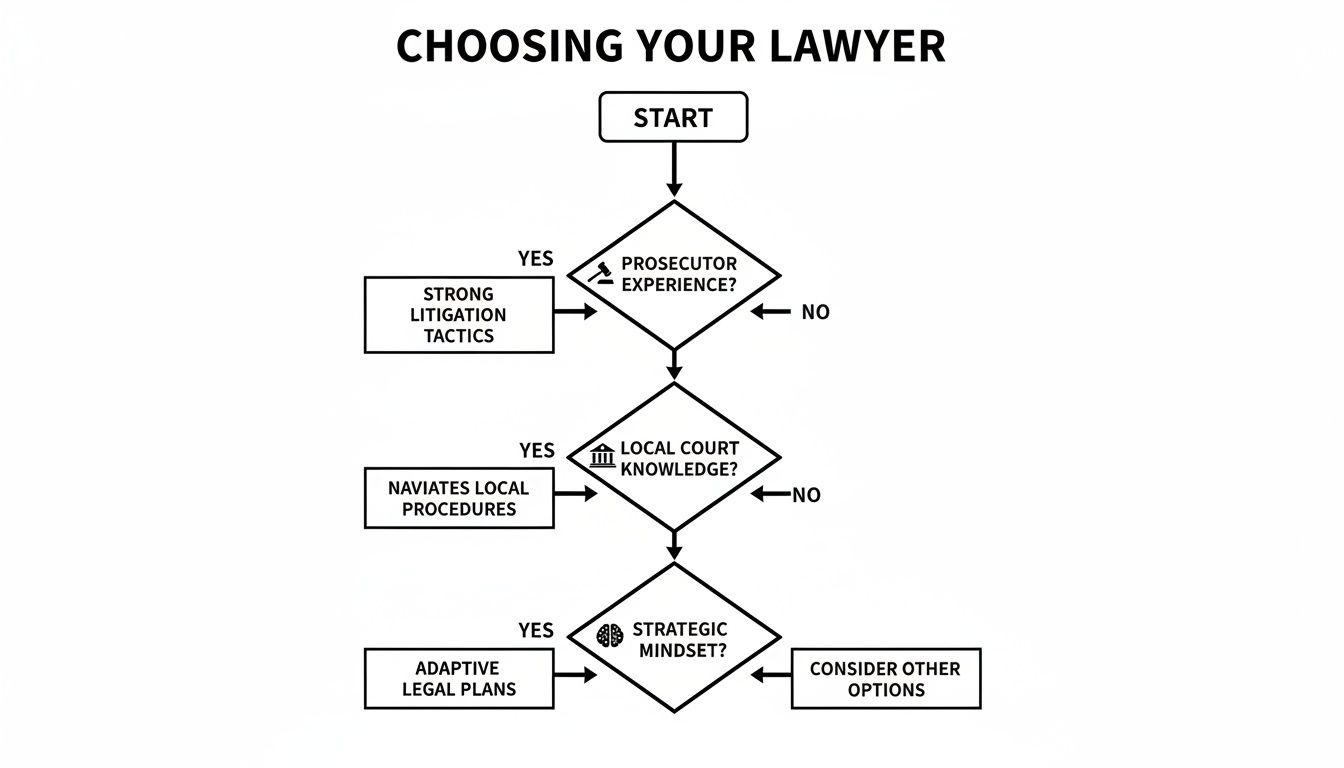
Deciding on a plea is one of the most critical decisions you will make in your criminal case. You need an attorney who truly knows the Fulton County system—not just from a law book, but from years of hands-on experience. As a former North Fulton prosecutor, I have a unique perspective on how the other side thinks. I know firsthand how the Fulton County District Attorney’s office builds its cases and when it’s willing to consider a plea like nolo contendere. This background allows me to build a calm, protective, and highly effective defense strategy from day one.
An Authority in North Fulton Courts
When you’re facing charges in Alpharetta, Roswell, or Milton, you don’t just need a lawyer; you need a local expert. I am a well-known and respected figure in the very courts where your case will be decided, including:
- Alpharetta Municipal Court
- Fulton County State Court
- Fulton County Superior Court
I understand the local rules, the judges, and the prosecutors. This isn’t about being a familiar face—it’s a real strategic advantage used to protect your rights, negotiate from a position of strength, and create a defense that fits the specific courtroom you’re in. Working with me means you’re not just another case file. You get a dedicated local advocate committed to protecting your record, freedom, and future.
Your defense starts long before you ever step into a courtroom. It begins with an attorney who can see the full picture, predict the prosecution’s next move, and put you in the best position for a favorable outcome—whether that means a no contest plea or another path entirely.
My prosecutorial experience gives me the insight to know when a nolo contendere plea can protect you from a civil lawsuit or when a different strategy, like seeking a dismissal under Georgia’s First Offender Act, makes more sense. Whether your case is in Johns Creek, Sandy Springs, or Cumming, I provide the clear-eyed guidance needed to handle the complexities of your charge. Research reveals that fewer than 1% of defendants in federal criminal cases were acquitted in 2022, which shows just how high the stakes are. You can read more about these federal case trends on pewresearch.org.
Don’t leave this critical decision to chance. Call me today for a case review and put my experience to work for you.
Frequently Asked Questions About No Contest Pleas in Alpharetta, GA
Facing a criminal charge in Alpharetta raises many questions. Here are direct answers to common concerns about no contest pleas. While helpful, this information is not a substitute for a confidential consultation about your specific case.
Q: Does a no contest plea go on my criminal record in Georgia?
A: Yes. In Georgia, a no contest (nolo contendere) plea results in a conviction and will appear on your criminal record. It is not a way to avoid a conviction. A local Alpharetta attorney can advise if your charge is eligible for record restriction (expungement) later under programs like the Georgia First Offender Act, but this is a separate process.
Q: Can I use a no contest plea for a DUI in Alpharetta, GA?
A: You can request to plead no contest to a DUI in Alpharetta Municipal Court or Fulton County State Court, but the judge does not have to accept it. Critically, even if accepted, it will not stop the administrative license suspension from the Georgia Department of Driver Services (DDS). The DDS will treat it as a conviction for license purposes.
Q: How do I know if a no contest plea is the right choice for my Alpharetta case?
A: This is a strategic decision that depends on the specific charge, your criminal history, and the risk of a civil lawsuit. This must be discussed with a criminal defense lawyer who regularly practices in the courts of Alpharetta, Roswell, and Milton. They can analyze the evidence and explain the best options to protect your future.
Q: Is a no contest plea better than going to trial in Fulton County?
A: Not always. A no contest plea avoids the risk, stress, and expense of a trial. However, if you have a strong defense, fighting the charge at trial may be your best option. An experienced Alpharetta defense attorney can evaluate the prosecutor’s evidence and help you weigh the risks versus rewards of taking your case before a jury in Fulton County.
Q: How many times can I plead no contest in Georgia?
A: For most misdemeanor charges in Georgia, you can generally use a nolo contendere plea only once every five years. The rules can be complex, and a judge in the Alpharetta Municipal Court or Fulton County State Court always has the final say. It’s crucial to confirm your eligibility with an attorney before considering this plea.
Q: What’s the difference between a no contest and an Alford plea in Alpharetta?
A: A no contest plea means you don’t contest the charges but don’t admit guilt. An Alford plea, which is rarer in Georgia courts, allows you to maintain your innocence while acknowledging the prosecutor has enough evidence to likely secure a conviction at trial. Both result in a conviction, but the legal basis and strategic use differ. To understand more, read our guide on appealing a plea bargain.
The stakes are too high to navigate the legal system alone. Do not speak to police without representation. Deadlines in Fulton County move quickly. At Brian Hansford Law, I bring years of experience as a former North Fulton prosecutor to your defense. Call now for an immediate consultation to protect your record. https://challengemycharge.com
