
That official-looking document on your doorstep titled "subpoena" can definitely be intimidating. The formal language and court seal are enough to make anyone's heart skip a beat. But before panicking, it's important to understand what a subpoena really is—and just as importantly, what it isn't.
Think of it less as an accusation and more as a mandatory request for information. It’s a fundamental tool the legal system uses to gather evidence, and it carries the full weight of a court's authority.
Decoding the Court Order on Your Doorstep

So, what does a subpoena actually mean? At its core, it’s a command issued by a court, usually at the request of an attorney involved in a legal case. Its purpose is not to accuse someone of wrongdoing. Instead, it’s used to obtain evidence considered relevant to a pending legal matter.
This evidence typically comes in one of two forms, which determines the type of subpoena received. A person might be asked to share what they know by giving testimony, or they could be required to provide physical items like records, files, or other data.
The Two Main Types of Subpoenas
A subpoena will clearly state what is being requested. While there are nuances, it helps to know the two fundamental categories from the get-go. Each one serves a distinct purpose in the evidence-gathering process.
Here’s a quick-glance table breaking down the two main types and what they command a person to do.
| Type of Subpoena | What It Commands | Common Example |
|---|---|---|
| Ad Testificandum | Commands a person to appear and provide spoken testimony at a specific time and place. | Being called to testify in court about an incident that was witnessed. |
| Duces Tecum | Commands a person to produce specific documents or physical evidence. | A request for work emails, financial records, or security camera footage. |
Knowing which type has been received is the first critical step. It clarifies the immediate obligation—whether a person needs to prepare to speak under oath or start gathering specific documents. Sometimes, a subpoena can be a hybrid, demanding both testimony and the production of evidence.
Understanding this basic distinction is the foundation for figuring out what to do next.
Understanding Different Kinds of Subpoenas
While most people have heard the word "subpoena," they often think of it as a single, straightforward court order. In reality, it’s not a one-size-fits-all document. The specific action it commands depends entirely on its type, and figuring that out is the first crucial step.
These commands generally fall into two main categories, each serving a unique purpose in the evidence-gathering process.
One of the most common types is a subpoena ad testificandum. This is a direct command for a person to show up in person and give spoken testimony under oath. Think of it as a formal summons to tell what is known or what was seen at a deposition, a court hearing, or a trial.
The Order to Testify vs. The Order to Produce
On the other hand, a subpoena duces tecum doesn't require a person to speak at all; it requires them to produce things. This type of order compels a person to gather and turn over specific physical or digital items that could be used as evidence. The list of what can be requested is incredibly broad, but common examples include:
- Financial records or internal memos from a business.
- Digital communications like emails, text messages, or social media DMs.
- Security camera footage or photographs.
- Personal files, including medical records.
It’s also fairly common to get a hybrid subpoena that combines both demands. This order would require a person to appear to testify and bring specific documents with them, allowing the attorneys to ask questions directly related to the evidence provided.
A subpoena is not a suggestion; it's a formal command from the court. The type of subpoena dictates the nature of that command—whether it’s a call for a person's voice (testimony) or for their records (documents).
When a Government Agency Issues the Order
A third and particularly powerful type of subpoena operates a bit differently: the administrative subpoena. Unlike the subpoenas issued in a typical court case between two parties, these are sent directly by government agencies without needing a judge's sign-off first. This authority allows agencies like the FBI, IRS, and SEC to conduct investigations and enforce regulations much more efficiently.
These administrative orders are a massive part of the legal landscape. Federal agencies issue thousands of them every year as a core part of how they investigate potential wrongdoing. This direct authority gives them a powerful tool to compel people and companies to turn over information. It is possible to read more about government reports on the matter from the Department of Justice.
Understanding which type of subpoena has been received is the critical first step. It clarifies what is being asked—testimony, documents, or both—and tells where the request is coming from, whether it's an attorney in a lawsuit or a federal agency conducting an investigation.
How Subpoenas Work in a Georgia Criminal Case
In Georgia’s criminal justice system, a subpoena isn't just a piece of paper. It’s a powerful tool used by both prosecutors and defense attorneys to gather the essential building blocks for their case—witness testimony and physical evidence. Without them, there would be no formal way to compel someone to show up or hand over information.
The process usually kicks off when an attorney identifies a person or piece of evidence they believe is critical. They draft the subpoena, spelling out exactly who or what is needed, and then get it issued by the court clerk. Once the clerk stamps it with the court's official seal, a simple request becomes a legally binding order.
This order is then "served," meaning it's officially delivered to the recipient. This is typically handled by a professional process server or a sheriff's deputy to create a legal record that the person received the command.
A Subpoena in Action
So, how does this play out in the real world? Imagine a criminal case in Forsyth County where someone witnessed a key event. The prosecutor would likely issue a subpoena to that person, legally requiring them to appear in court and testify about what they saw. This ensures their story becomes part of the official court record.
On the flip side, a defense lawyer in Cobb County might learn about security cameras near the scene of an alleged crime. That attorney could issue a subpoena to the business owner, ordering them to produce the video footage from that day. This evidence could be exactly what’s needed to prove their client’s side of the story.
As you can see, subpoenas are fundamental to legal strategy. They are used to:
- Secure witness testimony to support a particular version of events.
- Obtain physical evidence like documents, videos, or phone records.
- Verify timelines and alibis by gathering records from neutral third parties.
- Introduce expert opinions by compelling a specialist to come to court and testify.
At its core, a subpoena uses the court's authority to level the playing field. It ensures both sides have a fair shot at gathering the information they need to present a complete case, whether in Alpharetta, Cumming, or anywhere else in Georgia.
The Legal Power Behind the Paper
The power of a subpoena comes from deep roots in our legal system. The term itself, 'subpoena,' is Latin for 'under penalty'—a concept that has been a cornerstone of common law for centuries.
While federal cases have their own set of rules, Georgia has specific procedures for criminal matters. This means when a subpoena is received for a state case in areas like Roswell or Marietta, it carries the full weight and authority of the Georgia courts. For those subpoenaed to provide testimony, it can be useful to understand more about how to testify in court.
Your Rights and Obligations After Receiving a Subpoena
Getting a subpoena handed to you immediately kicks off a few non-negotiable obligations. The most important one? It must be responded to. Ignoring it is not an option. A subpoena is a direct court order, and failing to act on it has serious consequences.
But just because a response is required doesn't mean a recipient is powerless. The law provides rights and avenues to push back if the subpoena is out of line. Knowing what those are is the first step in the process.
Can You Challenge a Subpoena?
Yes, it is possible. A person is not required to comply with a subpoena that’s unfair, improper, or unreasonable. If the request is a massive fishing expedition, asks for things that have nothing to do with the case, or puts an undue burden on a person or their business, a formal objection can be made.
The most common way to do this is by filing a “motion to quash” with the court. This is a formal request asking a judge to either cancel the subpoena entirely or change its terms to something more reasonable.
For example, say a subpoena demands ten years of a business’s financial records for a case that only involves a single transaction from last month. A judge would likely agree that the request is too broad and either narrow it down or throw it out completely.
This flowchart gives a good visual of how the process usually plays out.
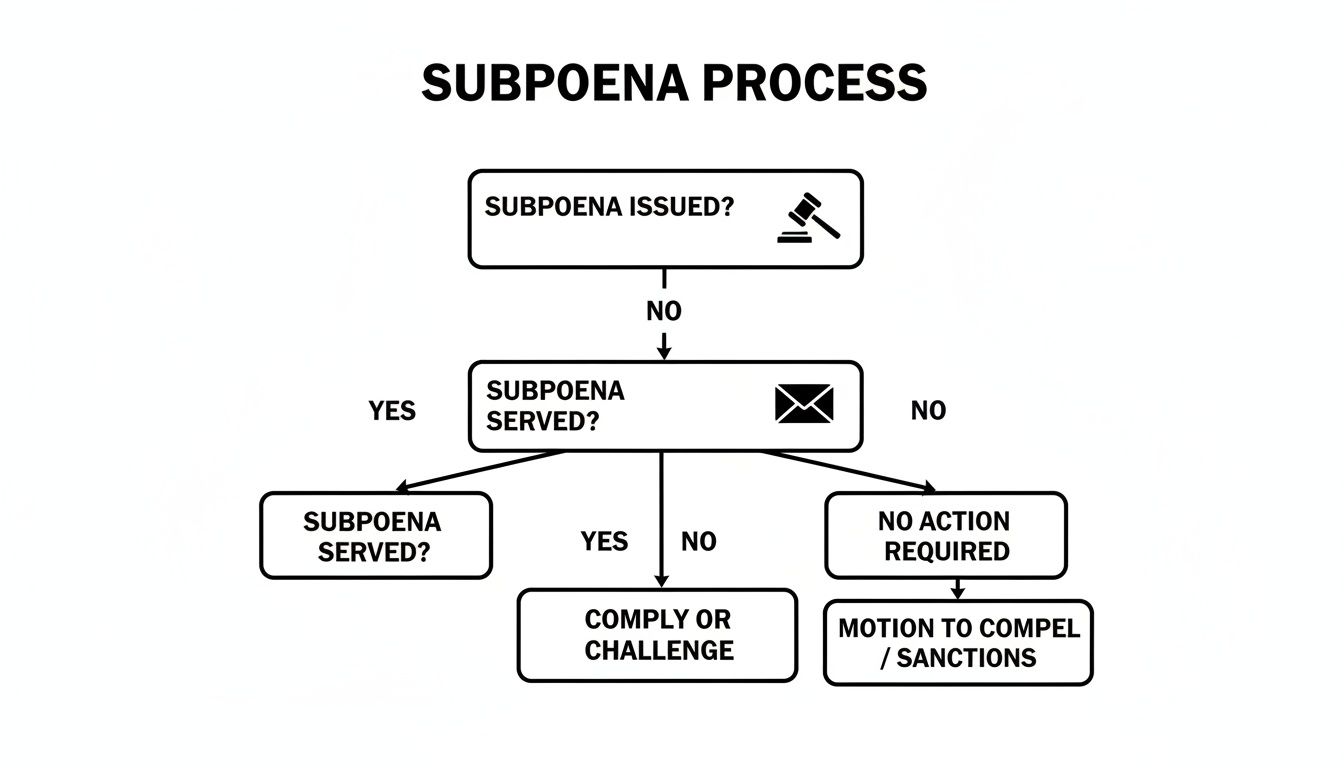
As you can see, once the subpoena is received, a decision can be made: comply, try to negotiate, or formally challenge it. Each path leads to a different outcome.
Understanding Legal Privileges
Another critical right revolves around "privileges." Some information is legally protected and simply cannot be demanded by a subpoena, period. This protection is in place to encourage open and honest communication in certain key relationships.
The most well-known privileges are designed to protect the confidential conversations held with specific professionals. What is said to them—and the records they keep—are shielded from being disclosed in most legal fights.
A few of the most common privileges include:
- Attorney-Client Privilege: Protects confidential talks between a person and their lawyer when seeking legal assistance.
- Doctor-Patient Privilege: Shields the private medical information shared with a physician.
- Spousal Privilege: Keeps confidential communications between a husband and wife private.
Asserting a privilege is a powerful way to protect sensitive information. If a subpoena demands documents that are clearly privileged, an attorney can formally object on those grounds, letting the court know the law protects those items from being turned over.
The way a subpoena is delivered can also be a point of contention. To dig deeper into that, one can learn about how subpoenas are served. In the end, knowing what obligations exist—and what they don't—is everything.
The Serious Consequences of Ignoring a Subpoena

Treating a subpoena like it's just more junk mail is one of the worst mistakes anyone can make in a legal case. A subpoena isn't a request—it's a direct command from the court. Simply ignoring it is never a safe bet.
The consequences for failing to show up or produce documents can escalate quickly, starting with a judge finding a person in contempt of court.
This isn’t just a legal term for a slap on the wrist. When a judge holds someone in contempt, it means they've officially determined that a court order has been willfully disobeyed. The entire legal system takes direct defiance of a judge's command very seriously.
This formal finding opens the door to some pretty severe penalties designed to force compliance. These consequences can include:
- Heavy Fines: A judge can impose daily fines that keep adding up until the order is finally complied with.
- Jail Time: In more extreme cases, a judge has the authority to order a person to jail until they agree to follow the subpoena's command.
- Paying the Other Side's Legal Fees: The non-compliant person might also get stuck with the bill for the attorney's fees the other party had to spend just to get them to follow the rules.
More Than Just Formal Penalties
Ignoring a subpoena does more than just cause trouble with the judge; it can seriously damage a person's position in the main legal case. It paints a clear picture of them as uncooperative and can destroy credibility.
Worse, the court might issue a bench warrant for an arrest. It is possible to learn more about how law enforcement handles different types of arrest warrants in GA in our related article.
The bottom line is this: a subpoena carries the full weight of the court's authority. Not complying isn't seen as a passive choice but as an active defiance, and the court will act to enforce its own orders and protect the integrity of the process.
Frequently Asked Questions About Subpoenas
Getting a subpoena can be unsettling, and it almost always brings up more questions than answers. While every case has its own unique facts, let's walk through some of the most common questions to help clear up the confusion.
Just remember, this information is for educational purposes. It's not a substitute for discussing a situation's specific details with a qualified legal professional.
Common Questions and General Answers
Does a person have to respond if the subpoena was just left on their door?
The rules for how a subpoena must be "served" are very specific, and they change depending on the jurisdiction. Even if someone thinks it wasn't delivered correctly, ignoring it is a huge gamble. A court could easily decide the service was valid, and failing to show up could lead to serious trouble. The safest approach is to treat any subpoena received as a valid court order until a lawyer can review exactly how it was delivered.
What if the subpoena asks for documents a person doesn't have?
A person is only required to produce documents that are in their possession, custody, or control. If the requested items simply don't exist or they don't have them, they can't be forced to create them. A formal response, however, is still necessary. An attorney can send a formal written response to the person who issued the subpoena explaining the situation, sometimes including a sworn statement. This creates an official record showing compliance.
A subpoena commands a person to produce what they have, not to create what they don't. Responding truthfully and formally about the absence of requested documents is a key part of compliance.
As a witness in a criminal case is there any danger?
Generally speaking, being a witness doesn't mean a person is the target of the investigation. Their role is simply to provide truthful testimony or evidence. The real risk for a witness comes from two things: failing to comply with the subpoena (which can lead to contempt of court) or providing false testimony (which is a crime called perjury). If there is any reason to believe testimony could be self-incriminating, discussing Fifth Amendment rights with an attorney is an important step.
When should someone contact a lawyer about a subpoena?
The best time to contact an attorney is immediately after a subpoena is received. The deadlines in these situations are often short and unforgiving. Acting quickly preserves all options, whether that's filing a motion to challenge the subpoena or negotiating to limit what has to be provided. An experienced lawyer can review the document, explain what it means, protect a person's rights, and handle all communications.
If you've received a subpoena in Alpharetta, Cumming, Forsyth County, or the surrounding areas and need to understand your next steps, Brian Hansford Law is here to help. With over 25 years of experience, including time as a former prosecutor, Brian Hansford can provide the clarity and defense you need. Contact us today at https://challengemycharge.com.
